
استمع إلى القصيدة
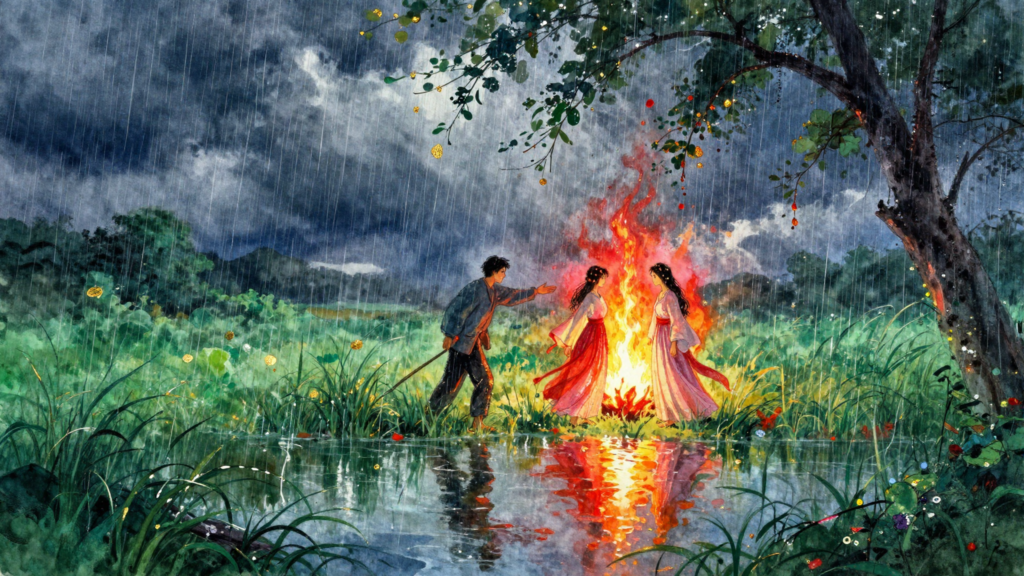
كانت مبتلة تحت المطر.. وهي عاشقة للمطر.. فراسلتني: «أريد شعراً في العشق والمطر».. فأرسلت لها:
مِثْلَمَا تُرْعِشُ زَخَّاتُ الْمَطَرْأَخْضَرَ الْعُشْبِ وَأَغْصَانَ الشَّجَرْ
يُرْعِشُ الْقَلْبَ إِذَا عَاوَدَهُذِكْرُ مَنْ يَهْوَاهُ مِنْ بَيْنِ الْبَشَرْ
عَبَقُ الْمُزْنِ إِذَا مَا انْهَمَرَامِثْلُ عَرْفِ الْعِشْقِ لَمَّا انْتَشَرَا
فِي فُؤَادِ الصَّبِّ صَبَّتْ أَنْهُرَامِنْ جَوىً شَدَّدَ مَفْصُومَ الْعُرَى
ذَكَّرَتْنِي قَطَرَاتُ الْمَطَرِشَادِناً لَمْ أَقْضِ مِنْهُ وَطَرِي
شَارِدٌ مِنِّي.. وَإِنْ لَمْ يَطِرِيَخْتَفِي بَيْنَ ظِلَالِ الشَّجَرِ
مَرَّ دَهْرٌ وَأَنَا أَحْتَاجُهَاوَهْيَ يَمٌّ دُونَهَا أَمْوَاجُهَا
كَيْفَ أَمْضِي نَحْوَهَا مُبْتَهِجاًوَغُيُوثُ الْمُزْنِ قَدْ تَهْتَاجُهَا
نَارُ حُبِّي أُضْرِمَتْ لَا تَنْطَفِيلَوْ هُطُولُ الْمُزْنِ مِنْ عَيْنِي يَفِي
كُنْتُ أَمْطَرْتُ وَلَمْ أَنْصَرِفِإِنَّمَا دَمْعِي بِنَارِي يَحْتَفِي
كَمْ تُرَى أَمْطَرْتُ مِنْ عَيْنِي دُمُوعِيوَضِرَامُ الْحُبِّ يَجْتَاحُ ضُلُوعِي
بَاتَ هَمُّ الْحُبِّ فِي اللَّيْلِ ضَجِيعِيوَنَفَى شَوْقِي عَنِ الْعَيْنِ هُجُوعِي
مُبْتَغَى الْقَلْبِ، وَأَهْوَى ضَمَّهَاعَلَّ يُشْفَى الْقَلْبُ إِمَّا شَمَّهَا
مَطَرُ الْحُبِّ إِذَا مَا عَمَّهَاأَشْتَهِي لَوْ أَنَّ بَاعِي لَمَّهَا
مَطَرُ الْحُبِّ إِذَا بَلَّلَهَاتَنْتَشِي الْمُهْجَةُ مِنْهَا وَلَهَا
لَيْتَنِي كُنْتُ الَّذِي عَلَّلَهَاوَاحْتَوَاهَا وَاجْتَنَى مُبْتَلَّهَا..
The Rain of Passion
She was drenched in the rain, and she is in love with the rain. She wrote to me: “I want a poem about passion and rain.” So I sent her this1:
- Just as the showers of rain set trembling
the green grass and the branches of the trees, - so the heart trembles when it is visited again
by thoughts of the one it loves out of all humanity. - The rain-clouds’ fragrance, when they pour,
is like the scent of passion when it’s spread: - into the ardent lover’s heart they’ve poured2
rivers of longing, binding fast each broken thread3. - The drops of rain have brought to mind for me
a fawn of whom I never had my fill, - that strays from me, and even when it does not flee,
hides in among the shadows of the trees. - An age has gone by while I have needed her;
she is a sea, with her waves drawn up before her. - How can I set out towards her with a glad heart
when downpours from the clouds may whip up and stir her? - The fire of my love is ablaze and will not go out;
if only the downpour from my eyes were enough, - I would have rained, and never once left off;
but my tears only pay homage to my fire4. - How many tears, do you suppose, I’ve rained
from my eyes, while love’s blaze sweeps through my breast! - The grief of love has been my bedfellow by night,
and longing banished from my eyes their rest. - She is the heart’s desire; I long to hold her,
in hope the heart might heal if it could scent her; - and when the rain of love falls over her,
I wish my arms could gather in and fold her. - When the rain of love has drenched her through,
my heart’s core is drunk on her, and for her. - If only I were the one who soothed her5, who held her,
and gathered what the rain had wetted of her…
Notes
- The poem is in a light, song-like form: each pair of verses makes a stanza whose four half-lines nearly always share one rhyme, and the rhyme changes with every stanza, as the showers come and go. Where the Arabic rhymes on the pronoun -hā, ‘her’, as in the last stanzas, so does the English. ↩
- The verse plays on al-ṣabb, ‘the ardent lover’, and ṣabbat, ‘poured’: the two words share a root whose basic sense is to pour, as if the lover were one whose heart is poured out. ↩
- Mafṣūm al-ʿurā, literally ‘the handholds that had broken’, recalls the Qurʾanic ‘firmest handhold, which never breaks’ (al-ʿurwa al-wuthqā lā infiṣāma lahā, 2:256). Passion restores ties that had been severed. ↩
- The two verses form one sentence. Yaḥtafī means to welcome and honour, even to celebrate: the lover’s tears, far from putting out the fire in his breast, attend on it like guests at a feast. The coexistence of flood and flame in the lover is an old conceit of Arabic love poetry. ↩
- ʿAllala means to soothe and divert someone, as one distracts a child or a sick person, and also to give a second draught of water (ʿalal, after the first, nahal). In a poem of rain and wetness both senses are present. ↩
English translation prepared by artificial intelligence and reviewed against the Arabic for accuracy of meaning and rhetoric.