
استمع إلى القصيدة
أَهِيمُ بِوَجْهِكِ الْأَبْهَى وَأَهْفُوإِلَى حِضْنٍ بِهِ حُلْمِي يَرِفُّ
إِلَى رُوحِ الْجَمَالِ وَقَدْ تَسَامَىسُمُوَّ السَّامِقَاتِ وَلَا يُسِفُّ
إِلَى سُبُحَاتِ رُوحِكِ وَهْيَ تَرْقَىوَمِنْ أَدْرَانِ هَذَا الْكَوْنِ تَصْفُو
تُؤَرِّجُ فِي فَضَا الْأَجْوَاءِ عِطْرًاوَلَيْسَ لِمِثْلِهِ فِي الْكَوْنِ وَصْفُ
شَكَوْتُ لَهَا جَوَايَ بِنَبْضِ قَلْبٍشَفِيفِ الْوَجْدِ فِيهِ الْحُبُّ يَضْفُو
وَرُوحِي فِي هَوَاكِ سَرَى يُغَذِّيمَسِيرَ الشَّوْقِ وَالْأَجْوَاءُ وَجْفُ
يَبُثُّكِ وَجْدَ مَا عَانَى بِدَهْرٍلَعَلَّ الْعِبْءَ عَنْ قَلْبِي يَخِفُّ
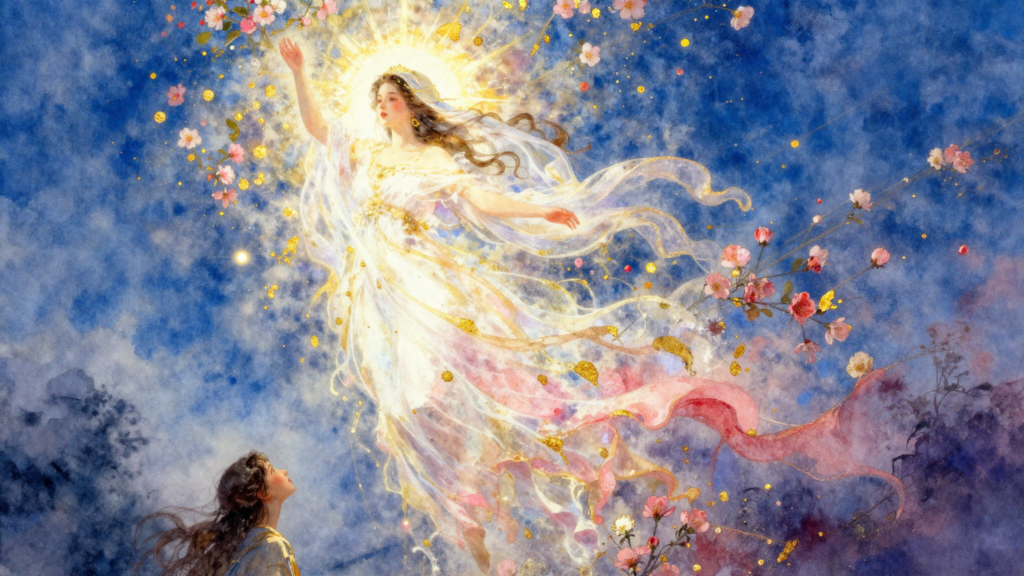
Your Most Radiant Face1
- I am lost in love with your most radiant face1, and yearn
for an embrace in which my dream beats its wings in flight, - for the spirit of beauty, soaring as the tall palms2 soar,
and never stooping from its height, - for the radiant glories3 of your spirit as it rises
and, cleansed of this world's defilements, turns clear and bright. - It perfumes the open air with a fragrance
whose like no words in all creation could describe. - I complained to her4 of my burning ardour, with the pulse
of a heart grown sheer with passion, where love overflows. - And in your love my spirit travelled on,
feeding the march of longing through the trembling night. - It pours out to you the passion it has suffered for an age,
in the hope the burden on my heart may grow more light.
Notes
- Abhā is the elative of bahiyy, ‘radiant, splendid, beautiful’: ‘most radiant, most beautiful’. The word gives the collection its title, Anti Abhā, ‘You Are More Radiant’. ↩
- Al-sāmiqāt are the towering things, above all tall palms and lofty peaks. Asaffa is said of a bird that flies so low it skims the ground, and figuratively of a person who stoops to what is base; so the spirit of beauty both flies high and never lowers itself. ↩
- Subuḥāt, ‘glories’, is a word of mystical resonance: in a well-known hadith, the subuḥāt of God's face are the dazzling radiance that would burn whatever His sight reached, were the veil lifted. Here it is applied to her spirit, which rises and is purified of the world's defilement (adrān). ↩
- The poem moves between ‘you’ and ‘her’: here he speaks of the beloved in the third person, as though recounting to himself, before addressing her again (iltifāt, a classical rhetorical shift). Sarā, ‘travelled’, in the next verse, is to travel by night; the air (al-ajwāʾ) trembles around the journey. ↩
English translation prepared by artificial intelligence and reviewed against the Arabic for accuracy of meaning and rhetoric.