
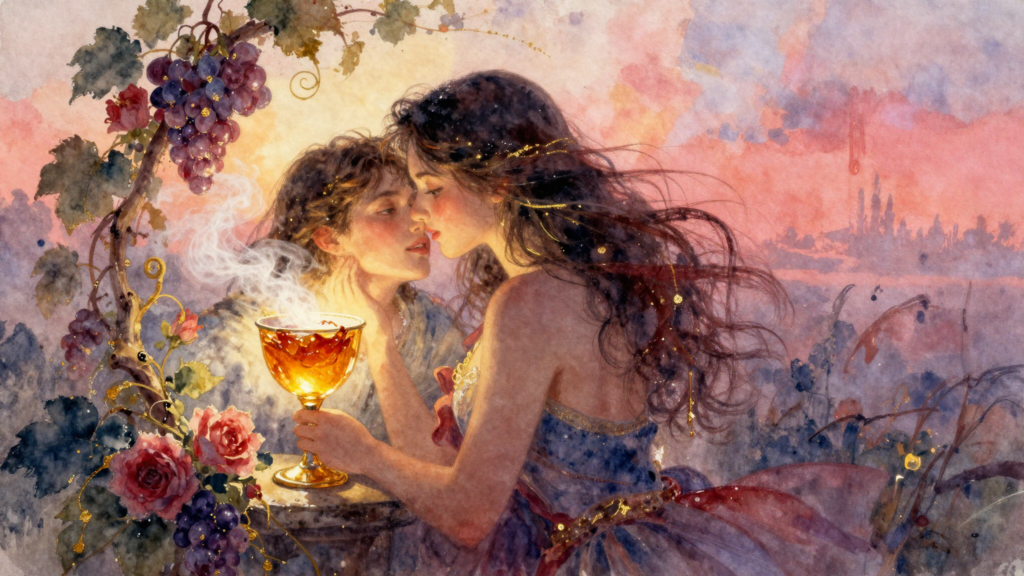
استمع إلى القصيدة
إِنْ لَمْ تَكُونِي فِي الصَّبَاحِ عَلَى فَمِيتَرْوِينَ مِنْ لَهَفِي وَشَوْقِي الْمُفْعَمِ
لَا كَانَ ذَاكَ الصُّبْحُ بَلْ لَا أَشْرَقَتْشَمْسٌ عَلَى دُنْيَا وَلَمْ تَتَبَسَّمِ
تَسْقِينَنِي شَهْدَ الرُّضَابِ سُلَافَةًمِنْ فِيكِ، يَا مَحْلَاهُ دَنَّ مُتَيَّمِ
ذُوبِي عَلَى شَفَتِي فَلَيْسَ لِغَيْرِهَاخُلِقَتْ شِفَاهُكِ، فَاعْصُرِيهَا وَالْثَمِي
رَشْفَاتُ مَبْسِمِكِ الرَّطِيبِ عَلَى الضُّحَىأَزْكَى سُلَافٍ، فَاسْكُبِيهِ وَلَمْلِمِي
سُكْرِي بِشَهْدِكِ صَحْوَتِي، وَضَلَالَتِيفِي مُقْلَتَيْكِ هِدَايَةُ الْقَلْبِ الظَّمِي
أَصْحُو عَلَى سُكْرٍ، وَأَسْكَرُ صَاحِيًاأَبَدًا فَمَا أَشْهَى رَحِيقَكِ فِي فَمِي
لَا تَحْرِمِينِي مِنْ جَنَاكِ فَإِنَّ لِيقَلْبًا إِذَا حُرِمَ الْجَنَى لَمْ يَسْلَمِ
On My Lips
- If you are not upon my lips when morning comes,
quenching my ardour, and my longing brimming to the lip, - then let that morning never be! No, let no sun
rise on any world, nor ever smile! - You give me the honeyed dew of your mouth to drink, first-pressed wine1
from your own lips: how sweet, this wine-jar for the enthralled lover's sip! - Melt upon my lips: your lips were made for none but them;
so press them, as grapes are pressed, and kiss, lip to lip. - The sips of your moist mouth in the bright forenoon
are the purest wine: so pour it out, then gather every drip. - My drunkenness on your honey is my sobriety; my straying2
in your eyes is guidance for the thirsting heart. - I wake to drunkenness, and grow drunk wide awake,
for ever: how delicious is your nectar3 on my lip! - Do not deny me your fruit, for I have a heart
that, once denied the fruit, will not survive.
Notes
- Ruḍāb is the moisture of the beloved's mouth, which classical Arabic love poetry likens to honey and to wine. Sulāf is the first juice to run from the grapes, the finest wine. Her mouth is thus the wine-jar (dann) from which the lover drinks. The exclamation yā maḥlāh, ‘how sweet it is!’, has a warm, colloquial ring. ↩
- The verse rests on paradox and antithesis (ṭibāq): drunkenness is sobriety, and straying (ḍalāla) is right guidance (hidāya). Being lost in her is, for him, the only true waking. ↩
- Raḥīq is choice, pure wine, the word used in the Qur'an for the sealed wine of Paradise (Qur'an 83:25). The verse turns the paradox of the previous one into a lasting state: waking and drunkenness have become one. ↩
English translation prepared by artificial intelligence and reviewed against the Arabic for accuracy of meaning and rhetoric.