
استمع إلى القصيدة
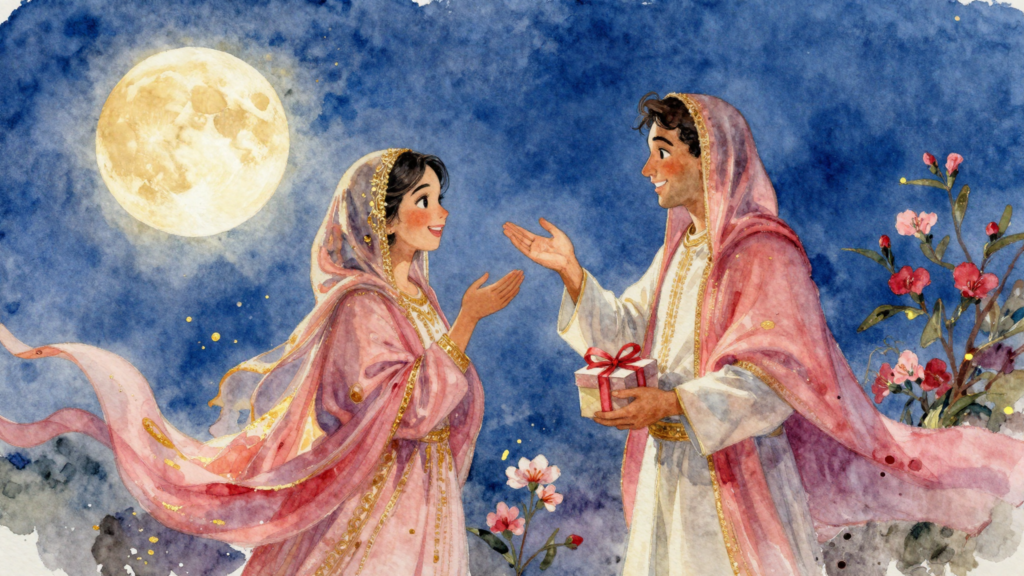
«عِيدِيَّتِي وَجَبَتْ» قَالَتْهُ فِي تِيهِفَقُلْتُ: رُوحِي لَكُمْ فِي الْعِيدِ أُهْدِيهِ
قَالَتْ: أَتُهْدِي الَّذِي مَا عُدْتَ تَمْلِكُهُ؟فَقَدْ مَلَكْنَاهُ مُذْ أَسْكَنْتَنَا فِيهِ!
فَقُلْتُ: آتِيكِ بِالْبَدْرِ الَّذِي ائْتَلَقَتْأَنْوَارُهُ وَالدَّرَارِي الْغُرُّ تُزْجِيهِ
قَالَتْ: أَيُشْبِهُ وَجْهِي فِي بَشَاشَتِهِلَمَّا تُغَازِلُنِي أَمْ لَا يُدَانِيهِ؟
فَقُلْتُ: وَجْهُكِ لَا أَدْرِي لَهُ شَبَهاًفَأَنْتِ مُعْجِزَةٌ مِنْ غَيْرِ تَشْبِيهِ
إِذاً سَأُهْدِيكِ دُرّاً جِدَّ مُؤْتَلِقٍ.قَالَتْ: أَلَمْ تَرَ مَا فِي الثَّغْرِ أُخْفِيهِ؟
فَقُلْتُ أَشْهَدُ أَنْ لَا دُرَّ يُشْبِهُهُفَمَنْ يُدَانِي نَضِيداً رُصِّعَتْ فِيهِ
فَبَسْمَةٌ مِنْكِ تُحْيِينِي وَتُنْعِشُنِيدَوَاءُ قَلْبِي وَيَشْفِي مَا أُعَانِيهِ!
إِذاً سَأُهْدِي حَرِيراً تَرْفُلِينَ بِهِقَالَتْ: عَلَى الرَّأْسِ مِنْهُ مَا يُحَاكِيهِ!
فَقُلْتُ شَعْرُكِ أَحْلَى فِي تَمَوُّجِهِوَفِي تَدَفُّقِهِ أَوْ فِي تَهَادِيهِ!
إِذاً فَتُفَّاحَةٌ جَاءَتْ بِمَوْسِمِهَا.قَالَتْ: فَخَدِّيَ أَحْلَىٰ إِذْ أُجَلِّيهِ
فَقُلْتُ: أُهْدِيكِ رُمَّاناً عَلَى طَبَقٍقَالَتْ: بِصَدْرِيَ أُخْفِيهِ وَأَحْمِيهِ!
نَعَمْ شَهِدْتُ وَقَدْ أَذْعَنْتُ مُعْتَرِفاًرُمَّانَهَا الْحَيَّ أَحْلَى حِينَ تُبْدِيهِ!
إِذاً سَأُهْدِيكِ لَحْنَ الْحُبِّ أُغْنِيَةًقَالَتْ: وَصَوْتِي شَجِيّاً لَا يُحَاكِيهِ؟
فَحِرْتُ مَاذَا سَأُهْدِيهَا وَقُلْتُ إِذاًقُولِي لَنَا، اقْتَرِحِي شَيْئاً لِنُهْدِيهِ
لَقَدْ كَبَا فَرَسِي وَلَسْتُ أَعْرِفُ لِيفِي حَيْرَتِي سُبُلاً تَحْمِي مِنَ التِّيهِ
تَبَسَّمَتْ غَنَجاً، قَالَتْ قَصِيدَ هَوىًأَبْيَاتُهُ فِي الْهَوَى آيَاتُ تَالِيهِ
أَحْلَى لَدَيَّ مِنَ الدُّنْيَا وَبَهْجَتِهَالِأَنَّهَا مِنْكَ، مِنْ قَلْبٍ أُصَافِيهِ!
فَلَسْتُ أَرْغَبُ فِي مَالٍ وَلَا نَشَبٍأَبْيَاتُ شِعْرِكَ أَحْلَى مَا سَتُهْدِيهِ!
My Eid Gift Is Due1
- “My Eid gift's due!” she said, with a proud and teasing air2.
I said: “My soul is what I'll give you for the Eid.” - She said: “You'd give away what you no longer own?
We've owned it ever since you gave us a home in it!” - I said: “Then I will bring the full moon, its lights ablaze,
with the bright stars that drive it on, a shining company.” - She said: “Is it like my face, and my face's cheer
when you flirt with me? Or does it not come near?” - I said: “I know of nothing like your face;
you are a miracle, beyond all simile3.” - “Then I will give you pearls, so very bright.”
She said: “Have you not seen what my mouth hides from sight?” - I said: “I bear witness4 that no pearl is like it:
who could come near the ordered rows you have set in it? - For one smile from you revives me, gives me life:
it is my heart's medicine, and heals what ails me!” - “Then I will give you silk to trail about in.” She said:
“Upon my head I have something that rivals it!” - I said: “Your hair is lovelier in its waves,
in how it flows, and how it sways so languidly!” - “An apple, then, come in its season.” She said:
“My cheek is sweeter, when I let you see.” - So I said: “I'll give you pomegranates on a plate.”
She said: “I hide them in my bosom, and I guard them!” - Yes, I bore witness4, and I gave in, confessing:
her living pomegranates are sweeter when she lets them be seen! - “Then I will give you the melody of love, a song.”
She said: “Can it rival my voice, in all its tender poignancy?” - I was at a loss what I should give her, and I said:
“Well then, you tell us: name something for us to give.” - My horse has stumbled5, and in my bewilderment
I know no paths to keep me from being lost2. - She smiled coquettishly, and said: “A poem of love,
whose lines, in love, are sacred verses6 to the one who recites it, - is sweeter to me than the world and all its delight,
because it comes from you, from a heart I love sincerely! - For I want neither wealth nor riches:
your lines of verse are the sweetest gift you'll give to me!”
Notes
- ʿĪdiyya is the Eid gift, usually money or presents given to children and loved ones on the morning of the feast. Wajabat, 'is due', is the language of obligation: she claims it as her right. ↩
- Tīh means proud, coquettish haughtiness, the air of a woman who knows she is adored. The same word also means losing one's way in a trackless waste, and it returns in that sense at the end of verse 16, where the lover, out of ideas, cannot find his way out of his bewilderment. Her tīh in the first verse leads to his tīh in the sixteenth. ↩
- Tashbīh is the rhetoricians' term for the simile, the figure on which much of Arabic love poetry rests. To call her 'a miracle without tashbīh' is to say that the poet's usual tool fails him: nothing can be likened to her. The phrase also echoes the language theologians use of what is beyond all comparison. ↩
- Ashhadu an lā …, 'I bear witness that there is no …', is the form of the Muslim profession of faith, and the lover uses it playfully to declare that no pearl can compare with her teeth. In verse 13 he 'bears witness' again, conceding defeat. ↩
- Kabā al-faras, 'the horse stumbled', recalls the proverb li-kulli jawādin kabwa, 'every fine steed stumbles once', said of a gifted person who for once falls short. The lover admits that his inspiration has failed him. ↩
- Āyāt, the plural of āya, means 'signs' and is also the word for the verses of the Qur'an, while tālī is one who recites, the word used for reciting scripture. For her, the lines of his love poem are as sacred as scripture is to the one who recites it. ↩
English translation prepared by artificial intelligence and reviewed against the Arabic for accuracy of meaning and rhetoric.