
استمع إلى القصيدة
صَبِيحَةُ جُمْعَةٍ وَصَبَاحُ وَجْهٍلِلَيْلَى تُورِثُ الْقَلْبَ انْشِرَاحَا
صَبَاحُ الْحُلْمِ مُؤْتَلِقًا بَدِيعًاكَأَنَّ الشَّمْسَ تُلْبِسُهَا وِشَاحَا
غَدَوْتُ بِهِ عَلَى أَمَلٍ بِأَنِّيسَأَلْثِمُهَا وَأَحْضُنُهَا صَبَاحَا
وَأَمْلَأُ خَافِقِي مِنْ أُنْسِ جِيدٍوَأَجْعَلُ مِنْ قَفَاهَا مُسْتَرَاحَا
وَأَرْشُفُ مِنْ رَحِيقِ الشَّهْدِ حَتَّىتَذُوبَ بِهِ مَرَاشِفُهَا انْزِيَاحَا
وَأَطْرَافُ الْأَنَامِلِ دَاعَبَتْهَابِلُطْفٍ فِي مُجَسَّدِهَا مِرَاحَا
تَغِيبُ أَنَامِلِي فِي لَيْلِ شَعْرٍأُمَشِّطُهُ بِأَطْرَافِي ارْتِيَاحَا
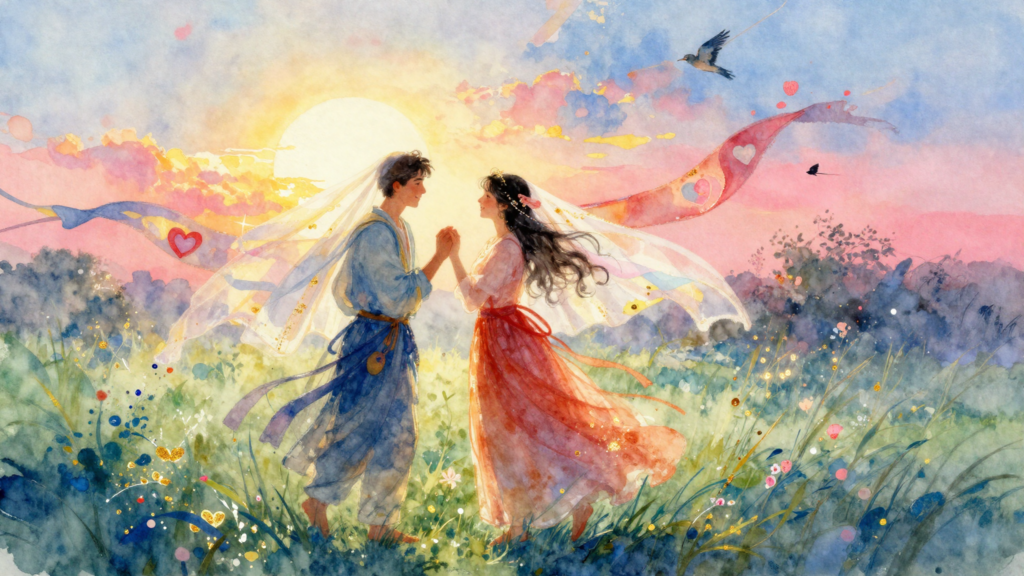
وَأَنْصِبُ فَوْقَهَا رَايَاتِ حُبٍّتُرَفْرِفُ حِينَ أَذْرَعُهَا مِرَاحَا
حَلَمْتُ وَمَا لِحُلْمِي مِنْ جَنَاحٍوَإِنْ يَصْدُقْ فَمَا أَحْلَاهُ رَاحَا
A Friday Morning
- A Friday morning, and the morning of a face1,
Layla's, that leaves the heart wide open in delight. - The morning of a dream, resplendent, wonderful,
as though the sun had draped her in a sash2 of light. - I set out in it, hoping that I'd kiss her
and hold her close that morning in my arms, - and fill my beating heart with the delight of her neck,
and make her nape the place where I alight, - and sip the nectar of the honey till her lips
would melt in it, and slip away, and yield, - while my fingertips caressed her gently,
at play, roaming her body, - my fingers vanishing in a night of hair
I comb out with my fingertips, at ease, - and plant upon her banners of love
that flutter as I range3 her in delight. - I dreamt, and my dream has no wings4;
but should it come true, how sweet a wine it would be!
Notes
- Ṣabāḥ wajh, 'the morning of a face', is a face as bright as morning; the poem sets the actual morning beside the morning that is her face. Laylā is the archetypal name of the beloved in Arabic love poetry, and it also recalls layl, 'night', so that the brightness of 'Layla's morning' holds a quiet contrast. ↩
- Tulbisuhā means 'dresses her': the sun drapes Layla in a sash of light. ↩
- Adhruʿuhā, 'I range over her', literally 'I measure her out' as one measures ground in arm-lengths (dhirāʿ) or crosses it. With the banners planted 'on her', the lover is pictured as a conqueror claiming territory. ↩
- The last verse reveals that the whole scene was a dream. Mā li-ḥulmī min janāḥ means 'my dream has no wing': it cannot take flight and become real. But the same letters, read junāḥ, mean 'sin, blame', as in the Qurʾanic phrase lā junāḥa ʿalaykum, 'there is no blame on you'; so the half-verse also says 'there is no sin in my dream'. Rāḥ, finally, is wine. ↩
English translation prepared by artificial intelligence and reviewed against the Arabic for accuracy of meaning and rhetoric.