
استمع إلى القصيدة
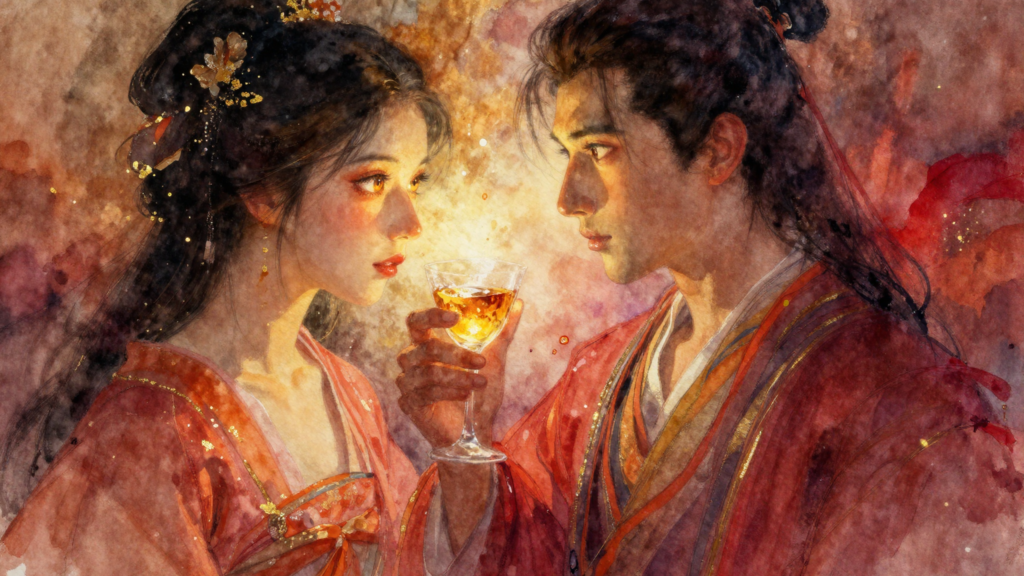
عَيْنَاكِ آنَسَتَا رُوحِي، وَإِحْسَاسِيهُمَا شَرَابِي وَتَسْكَارِي وَإِينَاسِي
قَدْ حُرِّمَ الْخَمْرُ بِالنَّصِّ الصَّرِيحِ فَهَلْلِمُحْتَسِي خَمْرَةِ الْعَيْنَيْنِ مِنْ بَاسِ؟
لَمْ أَدْنُ مُذْ حُرِّمَتْ «بِنْتُ الْكُرُومِ» تُقىً«بِنْتُ الْكِرَامِ» كَفَتْنِي، رَنَّحَتْ رَاسِي
وَمَا رَأَيْتُ لِبِنْتِ الْكَرْمِ مُعْجِزَةًلَكِنَّ خَمْرَكِ يَسْبِي مُهْجَةَ الْحَاسِي
سَكِرْتُ لَكِنْ عَلَى وَعْيٍ، وَمَا بَرِحَتْأَطْيَافُ حُسْنِكِ فِي عَيْنَيَّ أَقْدَاسِي
طَافَتْ بِقَلْبِي حُمَيَّاهَا وَمُذْ حَمِيَتْأَمْسَيْتُ أَضْرِبُ أَخْمَاسًا لِأَسْدَاسِ
مَاذَا يُجَافِيكِ عَنْ قَطْفِ الْغَرَامِ جَنًىوَضَمِّ صَدْرِيَ لَوْلَا قَلْبُكِ الْقَاسِي؟
Daughter of the Noble1
- Your eyes have brought my soul and all my senses ease:
they are my drink, my drunkenness, my solace. - Wine has been banned by an explicit text2; but is there any harm
in one who drinks the wine of eyes? - Since “the daughter of the vines” was banned, I've not gone near her, out of piety;
“the daughter of the noble” is enough: she sets my head to spin. - I never saw a miracle in the daughter of the vine;
but yours enslaves the very heart of all who drink your wine. - I'm drunk, but fully conscious; and the phantoms3 of your beauty
have never ceased to be, before my eyes, my holiest shrine. - Its heady fire went circling through my heart, and since it grew hot4,
I have been counting fives against the sixes5. - What keeps you distant from the fruit of love, from holding me
close to your breast, if not your heart, so hard?
Notes
- Bint al-kurūm, 'the daughter of the vines', is a traditional Arabic name for wine. The poem sets against it bint al-kirām, 'the daughter of the noble', a woman of good family. The two phrases share the same consonants and differ only in their vowels (jinās), and the whole poem rests on the exchange: he has given up the forbidden wine for the woman, whose eyes intoxicate him no less. ↩
- The prohibition of wine rests on explicit verses of the Qurʾan, above all 5:90–91. The question that follows is playful: the law forbids wine, but says nothing about the wine of eyes. ↩
- Aṭyāf (singular ṭayf) are the phantoms of the beloved, the images of her that visit the lover by night, a central motif of classical Arabic love poetry. ↩
- Ḥumayyā is the heady strength of wine, the heat that rises from it to the head; ḥamiyat, 'it grew hot', comes from the same root. The play keeps the wine image going while the heat passes into love. ↩
- Yaḍribu akhmāsan li-asdās, 'to strike fives against sixes', is an Arabic proverbial phrase for a man at his wits' end, turning a matter over and over and calculating in vain. It is said to come from herdsmen reckoning the watering days of camels. Here it describes the lover's bewilderment. ↩
English translation prepared by artificial intelligence and reviewed against the Arabic for accuracy of meaning and rhetoric.