
استمع إلى القصيدة
بِأَنْفَاسِ رُوحِي نَدىً بَلَّلَكْوَبِالْخَدِّ وَالثَّغْرِ قَدْ قَبَّلَكْ
فَهَلْ لِي بَقِيَّةُ مَا قَدْ تَرَكْلِأَسْلُكَ فِي نَهْجِ مَا قَدْ سَلَكْ
أَشُمُّ بِوَرْدَيْكِ عِطْرَ النَّدَىوَأَقْطِفُ مِنْ شَفَتَيْكِ الْعِلَكْ
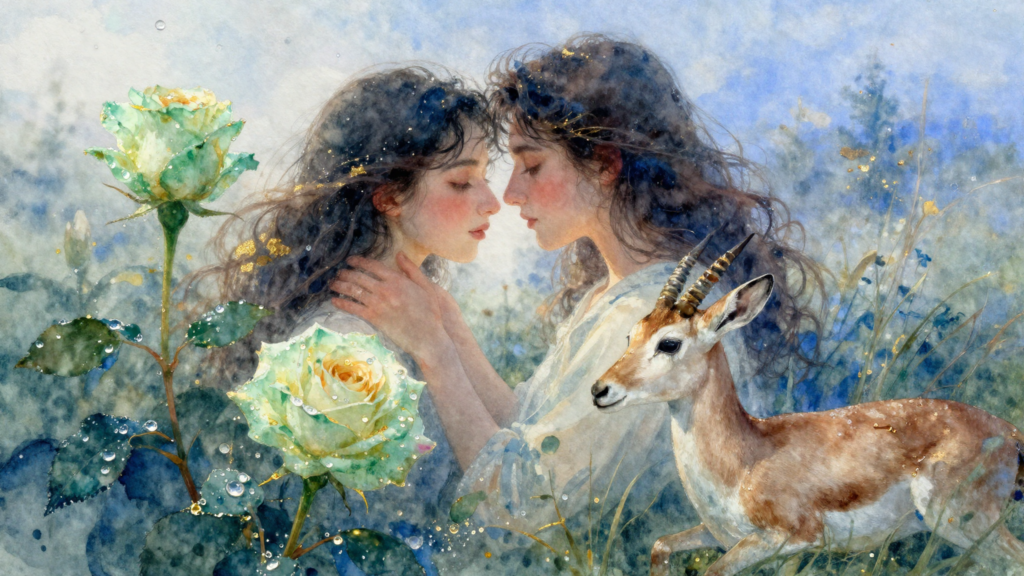
أَغُوصُ بِعَيْنَيْ غَزَالِ الْفَلَاأُقَبِّلُ وَجْهاً كَرُوحِ الْمَلَكْ
وَأَسْبَحُ فِي مُلْتَقَى وَجْنَتَيْكِوَأَطْرَافُ كَفِّي سَرَتْ فِي الْحَلَكْ
وَفِي الْجِيدِ أَرْسُمُ مِنْ لَهْفَتِيمَوَاجِيدَ تَرْوِي حَدِيثَ الْفَلَكْ
بِسِرِّي أُتَمْتِمُ مُسْتَمْتِعاًأُسَبِّحُ مَنْ بِالسَّنَا جَمَّلَكْ
وَمِنْ ثَمَّ أَغْزُو عِشَاشَ الْقَطَابِصَدْرِكِ أَرْصُدُ مَا قَدْ فَلَكْ
وَلَسْتُ أَرُوعُ الْحَمَامَ النَّؤُومَوَلَكِنْ أُنَاقِرُهُ مَا مَلَكْ
أُعَفِّرُ وَجْهِي عَلَى نَاهِدَيْكِأُلَطِّفُ فِي حَلْمَتَيْكِ الدَّلَكْ
هُمَا نَاهِدَاكِ وَلَكِنْ بِحَقٍّهُمَا لِي ابْتِدَاءً، وَمِنْ بَعْدُ لَكْ
فَخَلِّي لِتَرْوَى عُيُونِي رِوَاءًوَإِلَّا فَإِنَّ فُؤَادِي هَلَكْ
With My Soul's Breath
- The breath of my soul, as dew, has moistened you,
and on your cheek and mouth has kissed you too1. - So may I have whatever it has left,
to take the path it took, and go where it went? - In your two roses2 I breathe the scent of dew,
and from your lips I gather their sweet gum. - I dive into the eyes of the desert gazelle,
and kiss a face like an angel's very soul. - I swim where your two cheeks meet,
and my fingertips have journeyed through the jet-black night3. - And on your neck, in yearning, I inscribe
raptures that tell the story of the turning sky. - In secret I murmur, rapt with delight,
glorifying the One who made you beautiful with light. - And then I raid the sand grouse4 in their nest
and watch what swells to roundness on your breast. - I do not startle the sleepy dove;
I only bill with it5, with all that it has to give. - I rub my face upon your breasts,
and gently stroke your nipples. - They are your breasts, and yet, in truth,
they are mine first, and only after, yours. - So let me be, that my eyes may drink their fill,
or else my heart will perish.
Notes
- The dew that has moistened and kissed her is made of the poet's own breath, and it has gone before him; the next verse asks to follow where it has gone. ↩
- ‘Your two roses’ are her cheeks. ʿIlk (here ʿalak) is chewing gum, the fragrant resin, such as mastic, that was chewed to sweeten the breath: her lips are as sweet and fragrant as that resin. ↩
- Ḥalak is intense blackness, as of a raven's wing or the darkest night. The fingertips that journey through the dark are running through her black hair; sarat, ‘travelled’, is the verb for a night journey. ↩
- Falaka, ‘to become round’, is said of a young woman's breast as it swells and rounds; the word also echoes al-falak, the celestial sphere, the ‘turning sky’ of verse 6 (jinās). The sand grouse (qaṭā) and the dove of the next verse are metaphors for her breasts, kept in the imagery of birds at rest in their nests. ↩
- Munāqara is the mutual pecking of doves, the billing of mates. The sleepy dove is her breast, and its nipple is the dove's beak: his lips meet it as two beaks meet in billing. Mā malak, literally ‘what it possessed’, refers to the dove: he takes all that it has to give. ↩
English translation prepared by artificial intelligence and reviewed against the Arabic for accuracy of meaning and rhetoric.