
استمع إلى القصيدة
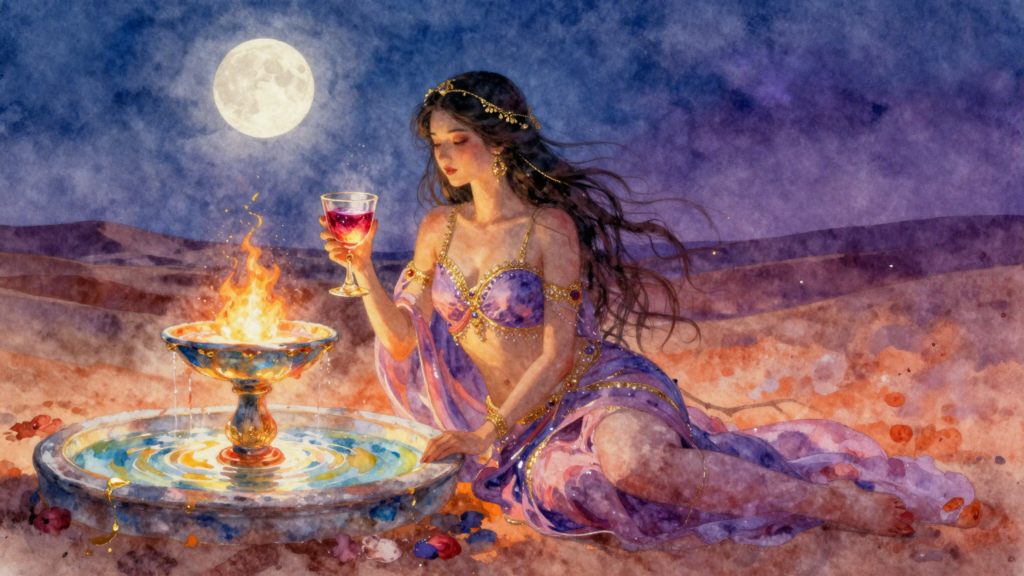
حُورِيَّةٌ مِنْ بَنَاتِ الْخُلْدِ تَنْبَجِسُنَافُورَةً يَرْتَوِي مِنْ مَائِهَا الْيَبَسُ
وَحِينَ وَافَيْتُ فِي الصَّحْرَاءِ ظِلَّ هَوًىوَجَدْتُهَا فِي انْتِظَارِي وَهْيَ تَخْتَلِسُ
آذَنْتُهَا فَارْتَمَتْ فِي الظِّلِّ وَافْتَرَشَتْخُصْلَاتِهَا وَاحْتَمَى بِبَدْرِهِ الْغَلَسُ
آنَسْتُ نَارَ هَوًى فِي أُفْقِهَا اتَّقَدَتْفَجِئْتُ- بَعْضَ جَوًى لِلنَّفْسِ- أَقْتَبِسُ
وَحِينَمَا عَصَرَتْ لِي كَرْمَهَا عَرَفَتْأَنِّي مِنَ السُّكْرِ يَسْتَوْلِي بِيَ الْهَوَسُ
بَحَثْتُ عَنْ ثَغْرِهَا فِي نَهْدِهَا بِفَمِيأَلَيْسَ بِالسُّكْرِ حَتَّى الْجِسْمُ يَلْتَبِسُ؟
لَمْ أَسْتَدِلَّ عَلَى الثَّغْرِ الشَّهِيِّ سِوَىعِنْدَ ابْتِسَامَتِهَا إِذْ شَعْشَعَ الْقَبَسُ
فَقُلْتُ مُعْتَذِرًا: قَدْ أَشْبَهَتْ شَفَتَانَهْدَيْكِ عُنَّابَ ثَغْرٍ زَانَهُ اللَّعَسُ
وَعَاقَرَتْنِي دِنَانُ الْوَصْلِ وَانْتَبَهَتْلِلْفَجْرِ لَمَّا بَدَا، وَالنَّاسُ تَأْتَنِسُ
قَالَتْ صَبَاحُكَ حُبٌّ يَا فَتَى قُبَلٍكَأَنَّمَا مِنْ حُمَيَّاهَا سَرَى النَّعَسُ
مِيعَادُنَا الْبَدْرُ وَالصَّهْبَا مُشَعْشَعَةٌوَالشَّوْقُ مُلْتَهِبٌ إِذْ قَدْ غَفَا الْحَرَسُ
A Maiden of Paradise
- A houri, a daughter of the Everlasting Garden1, gushing out
as a fountain, where the parched ground drinks away its drought. - When, in the desert, I arrived at a shade of love, I found
her waiting there for me, and stealing glances all around. - I let her know; she threw herself down in the shade, her tresses strewn
beneath her, and night's last dark2 took shelter by its moon. - I perceived a fire of love ablaze on her horizon, so I came
to bring my soul a firebrand3 of burning passion from its flame. - And when she pressed her vineyard4 for me, she knew full well
that drunkenness would seize me in a frenzied spell. - With my mouth I searched her breast to find her mouth:
does drunkenness not leave even the body in doubt? - I found no clue to where that luscious mouth might lie
but in her smile, when the firebrand3 flared up high. - So I said, to excuse myself: “The lips of your breasts
resemble the jujube-red5 of a mouth that dusky lips adorn!” - The wine-jars of our union drank with me6; then she awoke
to the dawn as it broke, as people stirred and sought each other's company. - She said: “May your morning be love7, you youth of kisses!”, as though
drowsiness had crept upon her from its heady glow. - “Our tryst: the full moon, and ruddy wine8 mixed sparkling bright,
and longing all aflame, when the guards have dozed off in the night.”
Notes
- Ḥūriyya is one of the ḥūr, the maidens of Paradise promised in the Qur'an, and al-khuld, 'eternity', is the Garden of Eternity (jannat al-khuld). The verb tanbajisu, 'gushes forth', is the one the Qur'an uses of the twelve springs that burst from the rock when Moses struck it in the wilderness (Qur'an 7:160; compare 2:60). She is water springing up in a desert, and the next verse duly places the meeting in the desert. ↩
- Ghalas is the darkness at the very end of the night, still black but touched with the first light. Her dark hair spread out beneath her is that darkness, and her face within it is the full moon; the darkness 'takes shelter' around its moon as the hair frames the face. ↩
- The wording recalls Moses in the Qur'an, who saw a fire in the desert and said to his family, 'I have perceived a fire (ānastu nāran); perhaps I may bring you a firebrand (qabas) from it' (Qur'an 20:10; compare 28:29). The poet uses the same verb and the same word qabas. What Moses sought for light and warmth, the lover seeks as passion (jawā, the burning of love); in verse 7 the same 'firebrand' glows again in her smile. ↩
- Karm is the grapevine or vineyard. Pressing it is making wine, and in Arabic love poetry the beloved's kisses and caresses are the wine that makes the lover drunk. Drunkenness in this poem is that intoxication of love. ↩
- ʿUnnāb, the jujube, is a small, glossy red fruit to which classical poets liken the beloved's lips and hennaed fingertips, and laʿas is a dusky red, faintly dark colour of the lips, admired in classical Arabic poetry as a mark of beauty. The 'apology' is playful: the lover excuses his mistake of the previous verses by claiming that the two were alike in colour. ↩
- ʿĀqara means to drink wine constantly, to be addicted to it. Normally a man drinks from the wine-jars; here the jars are the ones that drink with him, as though union itself were his drinking companion through the night. ↩
- Ṣabāḥuka ḥubbun, 'your morning is love', plays on the everyday greeting ṣabāḥ al-khayr, 'a morning of good'. Ḥumayyā is the heady strength of wine, the heat it sends to the head; 'its' refers to the wine of union in the previous verse, so her words come thick and drowsy, as if from wine. ↩
- Ṣahbāʾ is wine of a reddish or fair colour, a common name for wine in Arabic poetry, and mushaʿshaʿa is wine mixed with water so that it sparkles. The guards (al-ḥaras) recall the watchers who keep lovers apart in classical love poetry. The verse is her parting words, setting the next tryst and following on from her greeting. ↩
English translation prepared by artificial intelligence and reviewed against the Arabic for accuracy of meaning and rhetoric.