
استمع إلى القصيدة
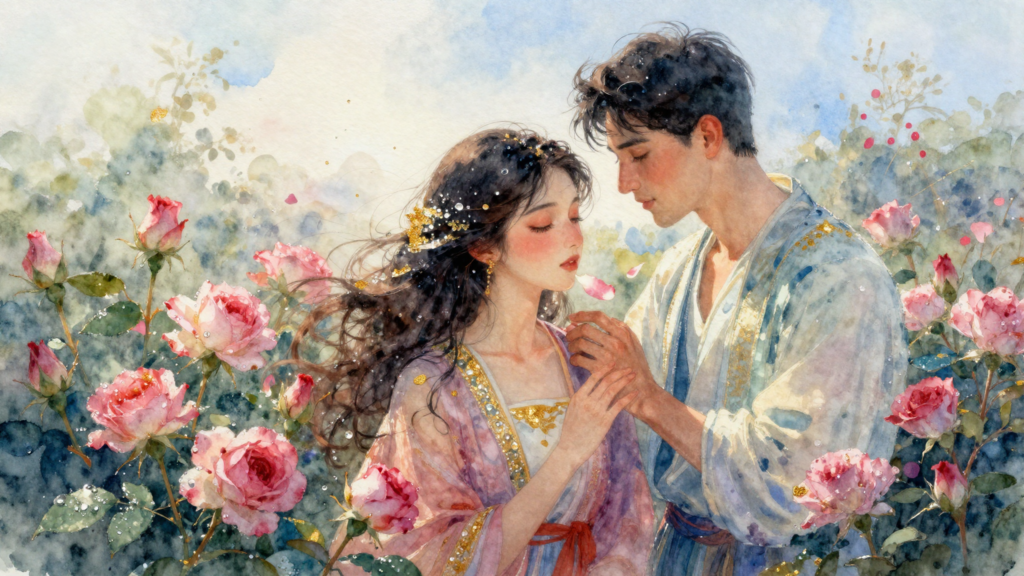
أَنَا وَالْوَرْدُ وَالنَّسِيمُ الْعَلِيلُوَالنَّدَى الطَّلُّ وَالصَّبَاحُ الْجَمِيلُ
قَدْ زَحَفْنَا إِلَى خُدُودِكِ نُزْجِيقُبَلَ الْحُبِّ رَشْفُهَا سَلْسَبِيلُ
وَاكْتَسَى الْحُسْنُ مِنْكِ ثَوْبَ جَمَالٍمِلْؤُهُ الشَّوْقُ شَاقَهُ التَّقْبِيلُ
وَتَمُدِّينَ مِنْ ذِرَاعَيْكِ حِضْنًافَارِهَ الدَّلِّ رَفْرَفًا يَسْتَمِيلُ
وَالنُّعَاسُ الْخَفِيفُ مَا زَالَ حَيًّايَرْتَوِيهِ كَالْمُزْنِ طَرْفٌ كَحِيلُ
وَالْعِنَاقُ اللَّذِيذُ أَشْهَى وَأَزْكَىحِينَ يُسْدِيهِ فِي الصَّبَاحِ خَلِيلُ
فَجَرَى مَا جَرَى وَكَانَ حَدِيثٌفِي الْهَوَى طَابَ وَالْحَدِيثُ يَطُولُ
The Roses and I
- I, and the roses, and the languid breeze1,
the light dew, and the lovely morning - have crept up to your cheeks, driving love’s kisses on;
to sip them is to drink of Salsabil2. - And the loveliness in you put on a robe of beauty,
brimful of longing, stirred by kisses to a thrill. - And you stretch out your arms in an embrace,
lavish in coquetry, a fluttering couch3 that bends the will. - And a light drowsiness is still alive,
which a kohl-dark eye4 drinks in, as rain-clouds drink their fill. - And a delicious embrace, when a lover grants it
in the morning, is more tempting, and sweeter still. - Then what happened happened5, and there was talk of love,
and it was sweet; but that’s a long tale to tell.
Notes
- Al-nasīm al-ʿalīl, literally ‘the ailing breeze’: in Arabic poetry a soft, faint breeze is called ʿalīl, ‘sick’, because it blows weakly and languidly. It is the breeze of dawn, the classic messenger between lovers. ↩
- Salsabīl is the name of a spring in Paradise (Qurʾān 76:18). The kisses taste like the water of Paradise. The verb nuzjī means to drive something gently onward, as wind drives clouds or a herdsman his camels: the morning and its companions herd the kisses to her cheeks. ↩
- Rafraf is anything that flutters and spreads, such as the fringe of a tent; it is also familiar from the Qurʾān (55:76), where the blessed recline on rafraf khuḍr, ‘green cushions’, in Paradise. After the Salsabil of verse 2, the word makes her embrace, spread open like wings, a couch of Paradise that invites him to rest. Yastamīl, ‘it wins over’, is to draw the heart and bend it towards oneself. ↩
- Ṭarf kaḥīl is an eye whose lids are dark as if lined with kohl, a mark of beauty. The eye is heavy with the morning’s drowsiness, as a rain-cloud (muzn) grows heavy with the water it has drunk. ↩
- Fa-jarā mā jarā, ‘what happened happened’, is a discreet formula that draws a veil over the scene. It recalls the famous line of the Abbasid poet Ibn al-Muʿtazz: ‘And there happened what happened, which I shall not mention; so think well, and do not ask for the story.’ The closing wa-l-ḥadīthu yaṭūl, ‘and the talk is long’, is also an everyday Arabic idiom, like the English ‘but that’s a long story’, a smiling refusal to say more. ↩
English translation prepared by artificial intelligence and reviewed against the Arabic for accuracy of meaning and rhetoric.