
استمع إلى القصيدة
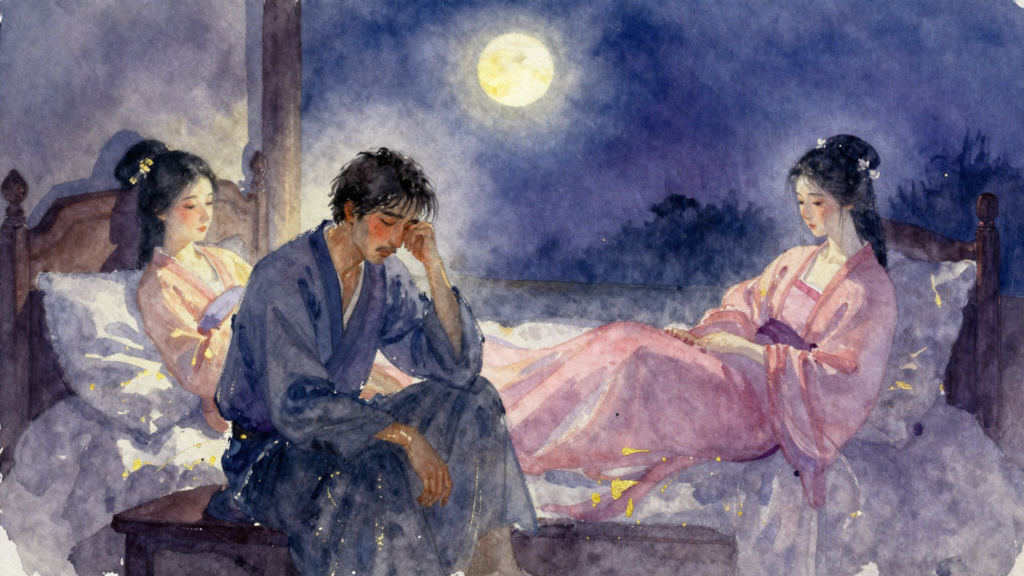
تَقُولُ مُشْتَاقَةٌ -دَعْوَى تُرَدِّدُهَا-وَشَوْقُهَا لِسَرِيرٍ تَرْتَمِي فِيهِ
النَّوْمُ أَحْلَى لَدَيْهَا مِنْ مُعَانَقَةٍوَمِنْ حَدِيثٍ فُؤَادُ الصَّبِّ يَرْوِيهِ
أَلَيْسَ فِي صَدْرِ مَنْ تَهْوَاهُ رَاحَتُهَاعَنْ كُلِّ مُرْهِقِ جِسْمٍ بَاتَ يُضْنِيهِ؟
“تَعْبَانَةٌ”؟ وَأَنَا وَاللَّهِ فِي رَهَقٍمِنْ بُعْدِهَا! مَنْ تُرَى عَنِّي سَيَنْفِيهِ؟
قَدْ كُنْتُ مُنْتَظِرًا كَفًّا تُعَالِجُهُوَكُنْتُ أَطْمَحُ فِي حِضْنٍ يُوَاسِيهِ
لَكِنَّ حِضْنَ الَّتِي أَهْوَى تَشَوُّقُهُلِغَيْرِ حِضْنِي إِذَا مَا شَاءَ يَحْوِيهِ!
لَوْ أَنَّهَا رَضِيَتْ بِي كُنْتُ أَمْنَحُهَامِنْ رَاحَةِ الْبَالِ مَا لَمْ تَحْلُمَنْ فِيهِ!
Her Claim1
- She says she’s longing, a claim1 she keeps repeating,
but what she longs for is a bed to fling herself on, and rest. - Sleep is sweeter to her than any embrace,
and sweeter than the talk a lovesick heart has confessed. - Is it not so, that from all that wears a body thin
her ease is found upon her lover’s breast? - “Tired”2? And I, by God, am sunk in weariness
with her so far away3! Who is there to lift it from my chest? - I had been waiting for a hand to come and tend it,
and hoped for arms in which it could be soothed, caressed. - But she I love: her bosom longs for arms
not mine, that hold it close whenever she thinks best4! - If only she’d accept me, I would give her
such peace of mind as she has never dreamt of in her rest5!
Notes
- Daʿwā is a claim, above all one asserted without proof; in law it is a suit brought before a judge. The title passes judgement on her declaration of longing: it is only a claim, and the poem goes on to show the evidence against it. ↩
- Her word is quoted in colloquial Arabic, taʿbāna, ‘tired’, rather than in the classical form. Setting her everyday excuse in quotation marks inside a classical verse gives the line a teasing, mock-aggrieved edge: he throws her own word back at her. ↩
- Read as min buʿdihā, ‘from her remoteness’. The unvowelled text also allows min baʿdihā, ‘since she left’. Either way his exhaustion comes from her absence, which answers her fatigue with his own. ↩
- The embrace other than his is that of the bed of verse 1, which takes her in whenever she wishes. The complaint is playful: the lover is jealous not of another man but of her sleep. ↩
- The poem closes on the verb ‘dream’ (taḥlumanna, in the emphatic form). It turns her love of sleep against her: he promises a rest that her sleep, with all its dreams, could never give. ↩
English translation prepared by artificial intelligence and reviewed against the Arabic for accuracy of meaning and rhetoric.