
استمع إلى القصيدة
الصَّوْمُ جُنَّةُ هَذَا الْقَلْبِ عَنْ زَلَلٍوَهْوَ الَّذِي جُنَّ مِنْ حُسْنٍ تَعَرَّضَ لِي
وَمَا وَجَدْتُ بِشَرْعِ اللَّهِ مِنْ حَرَجٍعَلَى الْمَجَانِينِ فِي قَوْلٍ وَلَا فِعْلِ
وَأَنْتَ أَدْرَى بِأَنَّ الْعِشْقَ أَعْظَمُ مِنْمَا بِالْجُنُونِ إِذَا مَا قِيسَ فِي الْعِلَلِ
وَصَوْتُهَا الْيَوْمَ أَشْجَانِي وَأَطْرَبَنِيوَحُسْنُهَا الْيَوْمَ أَشْهَى لِي مِنَ الْعَسَلِ
وَإِنَّنِي شَيْخُ عُشَّاقِ الْجَمَالِ إِذَابَدَا تَوَلَّهْتُ مَشْدُوهًا كَمُخْتَبِلِ
وَحَسْبُ قَلْبِي جُنُونًا أَنَّهُ وَلِهٌبِحُسْنِ فَاتِنَةٍ لَمْ تَبْدُ لِلْمُقَلِ
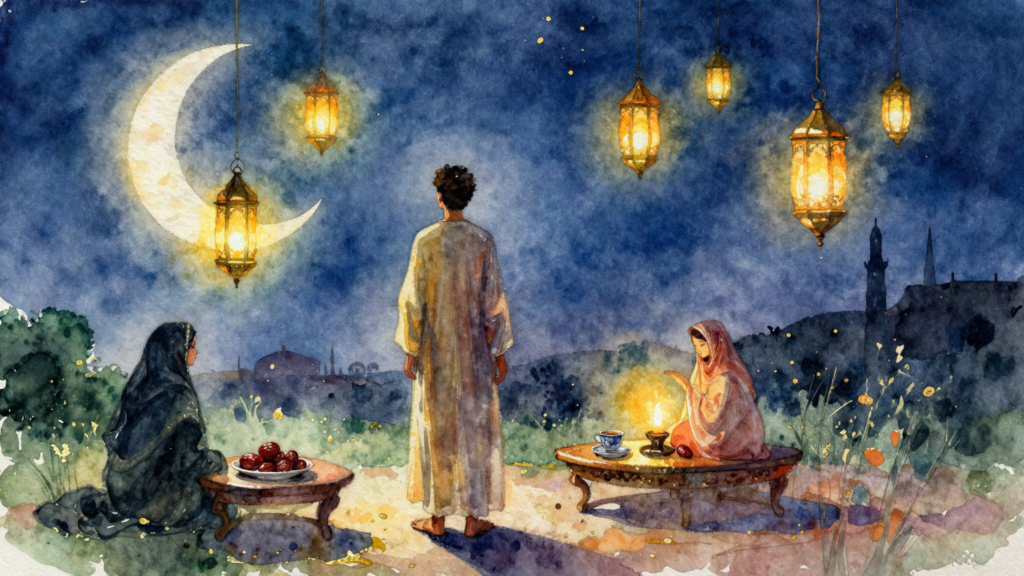
مَنْ لِي بِقُبْلَتِهَا عِنْدَ الْأَذَانِ لِكَيْيَكُونَ أَوَّلُ فِطْرِي رَشْفَةَ الْقُبَلِ
تَذُوبُ فِي حِضْنِهَا الْأَشْوَاقُ لَاهِثَةًكَأَنَّمَا أُفْرِجَتْ مِنْ أَسْرِ مُعْتَقَلِ
الْجُوعُ شَوْقُ نُفُوسٍ لِلِّقَاءِ، غَدَتْظَمْأَىٰ مَرَاشِفُهَا لِلْعَلِّ وَالنَّهَلِ
فَهَلْ إِذَا أَذَّنَ اسْتَقْبَلْتُ ضَمَّتَهَاحَتَّى أَشُمَّ أَرِيجَ الْجِيدِ وَالْخُصَلِ؟
أَرْجُو لِيَغْفِرَ لِي رَبُّ الْبَرِيَّةِ إِذْحَدَّثْتُ عَنْ حُسْنِهَا الدُّنْيَا وَعَنْ خَبَلِي
أَدْعُوهُ لِي وَهْوَ غَفَّارُ الذُّنُوبِ بِأَنْيَمُنَّ بِالْعَفْوِ فِيمَا خُضْتُ مِنْ زَلَلِ
Fasting Is a Shield1
- Fasting is a shield1 that guards this heart from error,
yet this same heart went mad1 for a beauty I chanced to find. - And I have found in God's law no blame imposed
upon the mad2, for words or deeds of any kind. - And you know better than anyone that passion, weighed
among the ailments, is graver than madness. - Her voice today3 has filled me with both grief and rapture,
and her beauty today is sweeter to me than honey. - I am the elder of all beauty's lovers: when it shows,
I fall into rapture, dumbstruck, like a man who has lost his mind. - And it is madness enough for my heart that it is enthralled
by the beauty of an enchantress never shown to any eye. - Who will grant me her kiss at the call to prayer4,
so that the first thing to break my fast is a sip of kisses? - In her embrace my longings melt, still panting,
as though released from prison, where they lay confined. - Hunger is the souls' longing for the meeting, souls whose lips
have grown parched to drink their fill, draught after draught5. - So when the call is sounded, shall I meet her embrace,
and breathe the fragrance of her neck and of her hair? - I hope the Lord of all creation will forgive me, since I've told
the world about her beauty, and about my maddened mind. - I pray to Him, Forgiver of all sins, that He
will grant His pardon for the errors I have waded into.
Notes
- Al-ṣawmu junna, ‘fasting is a shield’, echoes a well-known Prophetic hadith, al-ṣiyāmu junna (reported by al-Bukhārī and Muslim): fasting guards the believer against sin. The poem plays on the root j-n-n, which gives both junna, ‘shield, protection’, and junna, ‘he went mad’. The heart that fasting should shield is the heart that has ‘gone mad’, and the next verse builds on this. ↩
- An allusion to the hadith that ‘the pen is lifted from three’, that is, their deeds are not recorded against them, among them ‘the madman until he recovers his reason’. Having declared his heart mad, the poet claims, with a smile, the legal exemption granted to the mad. ↩
- Al-yawm, ‘today’, repeated, points to a day of fasting in Ramadan, when the faster abstains from food and drink: her beauty is ‘sweeter than honey’ precisely on a day when honey itself is forbidden until sunset. ↩
- The call to the sunset prayer (maghrib) marks the end of the day's fast, and it is customary to break the fast at once, often with dates or water. The poet wishes that his first ‘breaking of the fast’ (fiṭr) might be a kiss. ↩
- Nahal is the first draught a thirsty camel or man drinks, and ʿall the second, drunk after it. The pair, a fixed phrase (al-ʿall wa'l-nahal), means drinking one's fill. The day's hunger and thirst become, in the poem, a figure for the soul's thirst for the beloved. ↩
English translation prepared by artificial intelligence and reviewed against the Arabic for accuracy of meaning and rhetoric.