
استمع إلى القصيدة
أُحِبُّ حَدِيثَهَا المَبْثُوثَ هَمْسًاوَأَعْشَقُ رُوحَهَا رَوْحًا وَأُنْسَا
كَأَنَّ أَرِيجَهَا عَبَقُ الرَّوَابِيإِذَا مَا أَمْطَرَتْ وَرْدًا وَوَرْسَا
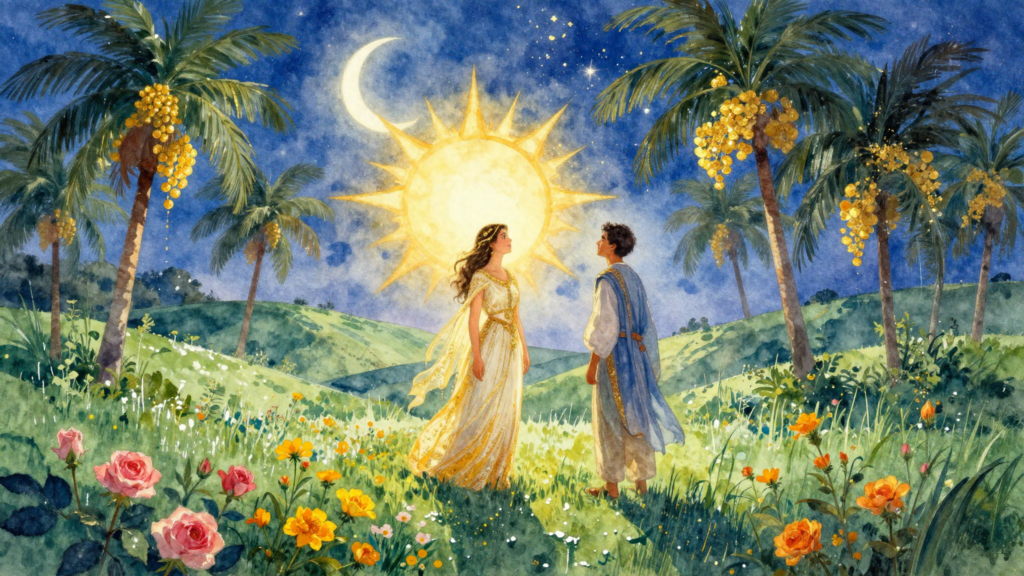
كَأَنَّ شُعُورَهَا سَعَفَاتُ نَخْلٍتَدَلَّتْ تَحْمِلُ الأَعْذَاقَ غَرْسَا
وَتَعْشَقُنِي وَأَعْشَقُهَا وَلَكِنْتَرَانِي أَخْلِسُ النَّظَرَاتِ خَلْسَا
فَلَا تَقْوَى النَّوَاظِرُ أَنْ تَرَاهَامُتَابِعَةً.. إِذِ الأَبْصَارُ تَخْسَا(1)
إِذَا خَرَجَتْ تَمِيسُ بِثَوْبِ عِزٍّوَلَا تُبْدِي لَهَا فِي الخَطْوِ حِسَّا
شَقِيقَةُ أَنْجُمٍ آخَتْ بُدُورًاوَمِنْ عَجَبٍ تَرَى الأَقْمَارَ إِنْسَا
هِيَ الشَّمْسُ الَّتِي زَانَتْ سَمَاءًإِذَا شَعَّتْ يَغِيبُ الكُلُّ خَنْسَا(2)
فَتَظْهَرُ وَحْدَهَا أَسْمَى جَمَالٍوَتَكْنِسُ غَيْرَهَا فِي الحُسْنِ كَنْسَا
هَشَشْتُ لَهَا فَهَشَّتْ لِي كَأَنِّيبِدَهْرِي لَمْ أُصَبَّحْ أَوْ أُمَسَّى
وَتَأْسِرُنِي بِوَجْهٍ فَاقَ حُسْنًاإِذَا أَشْبَهْتُهُ بَدْرًا وَشَمْسَا
تُصَبِّحُنِي بِبَسْمَتِهَا ابْتِهَاجًافَتَفْتَرُّ الدُّنَى دُرًّا وَلَعْسَا
تُغَادِينِي بِدَنْدَنَةِ الحَكَايَاتُمَوْسِقُ مَا بَدَا مِنْ قَبْلُ هَمْسَا
كَأَنَّ حَدِيثَهَا أَنْغَامُ لَحْنٍأُذِيبَ بِهِ سَنَى الأَقْمَارِ قَبْسَا
تَرُجُّ فُؤَادِيَ المَمْهُورَ حُبًّافَتَحْسَبُ أَنَّ بِي جِنًّا وَمَسَّا
أُعِيذُ جَمَالَهَا حَسَدَ الغَوَانِيتَمُرُّ بِهِنَّ، يَصْطَكِّينَ ضِرْسَا
وَقِدْمًا تَحْسُدُ الحَسْنَا حِسَانٌيَغِرْنَ مِنَ الجَمَالِ إِذَا اسْتُحِسَّا
سَفِينُ هَوَايَ قَدْ مَخَرَتْ بُحُورًاوَطَافَتْ فِي شَوَاطِئَ ثَمَّ كَلْسَا(3)
وَلَمَّا أَنْ رَأَيْتُكِ فِي حَيَاتِيجَعَلْتُ هَوَاكِ مُتَّكَأً وَمَرْسَى
وَمَا أَحْلَاكِ مَرْفَأَ قَلْبِ ظَامٍوَمَا أَنْسَى فَلَا إِيَّاكِ أَنْسَى
I Love the Way She Talks
- I love her talk, breathed out in whispers low,
and I adore her soul1, all ease, all closeness, in every way. - Her fragrance is the scent of rolling hills
whenever they rain down roses and wars2 like spray. - Her tresses are like palm fronds hanging low,
weighed down with date clusters, as if planted there to stay3. - She loves me, and I love her; and yet
she sees me only steal a glance, then glance away, - for no eye has the strength to follow her:
sight wearies, falters, and gives way (1), - when she steps out and sways, robed in her noble pride,
and not a whisper of her footstep gives her away. - Sister to stars, she took the full moons for her kin:
and what a wonder, moons of human clay! - She is the sun that graces a sky: when she shines,
the others all hang back (2)4, and yield the day. - So she alone appears, the loftiest beauty,
and sweeps all rival beauty clean away. - I brightened at her, and she brightened back, as though
in all my days none greeted me at dawn or close of day5. - She holds me captive with a face that far
outshines the full moon and the sun, whenever I compare. - She greets my morning with a joyful smile,
and all the world smiles back6, dark lips and pearls in bright array. - At dawn she comes to me, humming her tales,
and turns to music all that whispers once would say. - Her talk is like the notes of a melody
into which the moonlight melted as a firebrand's blaze. - It shakes my heart, dowered with love7, till one would think
the jinn had touched me8, and my mind had gone astray. - I pray God guard her beauty9 from the envy of the fair,
who grind their teeth when she goes by them on her way. - Fair women have envied a beauty since time began,
jealous of beauty the moment it's on display. - The ships of my love have ploughed through many seas,
and roamed on shores out there, burnt down to lime (3), where no life could stay. - And when I saw you there within my life,
I made your love10 a place to lean, a mooring and a bay. - How sweet you are, a harbour for a thirsting heart!
You I shall not forget, forget what else I may.
- (1) Takhsā: from khasaʾa al-baṣaru, said when sight grows weary and exhausted; the hamza has been lightened.
- (2) Khansā: verbal noun of khanasa ʿanhu yakhnisu and yakhnusu, khansan and khunūsan: to hang back, to withdraw, as with inkhanasa (al-Qāmūs al-muḥīṭ).
- (3) Kalsā: al-kils is lime, the substance left after limestone has been heated intensely. The poet used the word kalsāʾ, dropping the hamza for ease, in the sense of ‘turned to lime’: the stones of these shores have become lime from the fierceness of the heat, so that no life is left in them.
Notes
- The Arabic plays on rūḥ, ‘spirit, soul’, and rawḥ, ‘ease, relief, a refreshing breeze’, two words written with the same letters. Her rūḥ is itself rawḥ and uns, the comfort of intimate companionship: her very soul is a breath of relief to him. ↩
- Wars is a plant of Yemen with yellow blossoms, used in Arabia as a fragrant dye and perfume, often paired with saffron. Roses and wars together give both colour and scent to the image of the rain-washed hills. ↩
- Likening a woman's long, thick, black hair to the heavy, drooping clusters of the date palm is a classical image, best known from Imruʾ al-Qays's Muʿallaqa. The poet enlarges it to whole fronds weighed down with fruit. Gharsan, ‘as planted’, suggests that the tresses grow there as naturally as the fruit on the palm. ↩
- Khans, ‘hanging back, withdrawing’, recalls the Qur'anic oath fa-lā uqsimu bi'l-khunnas, ‘I swear by the stars that recede’ (Qur'an 81:15), understood as the planets that seem to hang back and hide by day. When her sun rises, every other light retreats and hides, as the stars do at sunrise. ↩
- Ṣabbaḥa and massā mean to greet someone with ‘good morning’ and ‘good evening’ (also, to come upon someone at morning or evening). Her welcoming face is so joyful to him that it is as if no one had ever greeted him before. The verse can also be read as ‘as though my days (dahr) had never come upon me, morning or evening’: her welcome wipes away all that time has done to him. ↩
- Iftarra means to smile so that the teeth show. The world smiles as she does, with ‘pearls’, her teeth, and with laʿas, a dark reddish tinge of the lips much prized in classical Arabic love poetry. ↩
- Al-mamhūr ḥubban, ‘dowered with love’. The mahr is the dowry a husband pays his bride; the heart is here a bride whose dowry is love, bound to her by a marriage contract of its own. ↩
- Mass, ‘touch’, is the traditional word for the madness caused by the jinn touching a person. The verb taḥsabu can mean ‘one would think’ or ‘she thinks’: either the onlooker or the beloved herself takes his trembling heart for possession. ↩
- Uʿīdhu, ‘I place under God's protection’, echoes the protective formula uʿīdhuki bi'llāh, said over something precious to ward off the evil eye and envy. Its object here is her beauty itself. ↩
- Here the poem turns from speaking about her, in the third person, to speaking to her directly (iltifāt, a classical rhetorical shift). The sea voyage of the previous verse ends: after many seas and scorched shores, her love is where his ship at last leans and drops anchor. ↩
English translation prepared by artificial intelligence and reviewed against the Arabic for accuracy of meaning and rhetoric.
تعليق واحد