
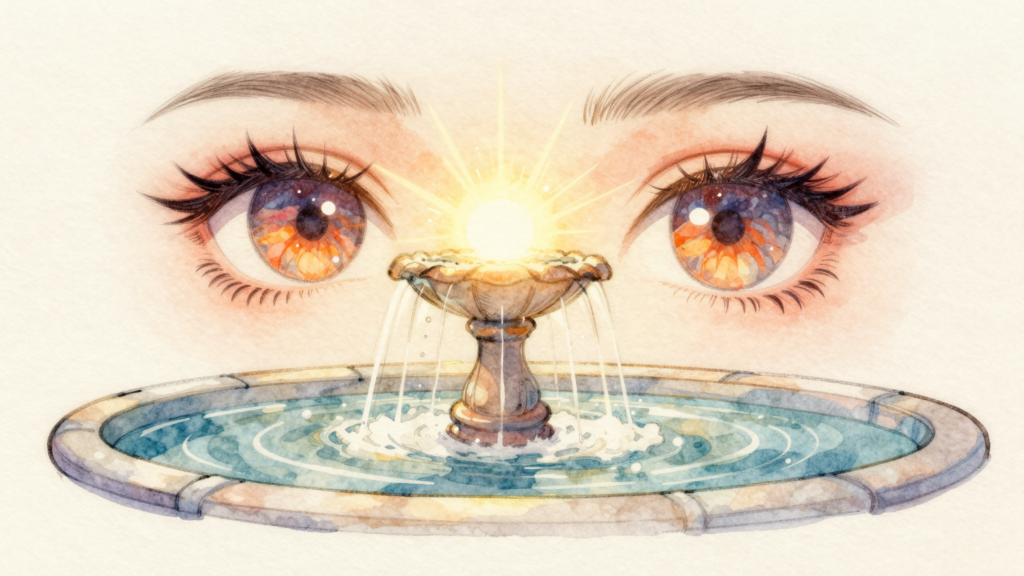
لِلْحُبِّ وَالشَّوْقِ فِي عَيْنَيْكِ أَسْرَارُيَا كَوْثَرَ الْعِشْقِ تَسْتَهْدِيكِ أَقْمَارُ
فِي مُقْلَتَيْكِ خُمُورٌ مَنْ مُعَتِّقُهَا؟شَمْسُ الْأَصِيلِ أَمِ النَّجْوَى وَأَسْرَارُ؟
لَقَدْ مَحَوْتِ بِقَلْبِي كُلَّ خَاطِرَةٍعَدَا هَوَاكِ فَمِنْهُ الْيَوْمَ أَشْتَارُ
فِي بَسْمَةِ الثَّغْرِ نُورٌ لَاحَ مِنْ شَفَقٍآنَسْتُ فِيهِ هَوَى قَلْبٍ سَيَنْهَارُ
تَدَارَكَتْهُ شَظَايَا فِي تَشَتُّتِهِفَلَمْلَمَتْهُ عُيُونِي فَهْيَ أَزْهَارُ
كُنْتُ الْمُقَيَّدَ قَبْلاً فِي تَخَيُّلِهَافَحَرَّرَتْنِي فَلَا قَيْدٌ وَلَا عَارُ
تَنْثَالُ رَائِعَةً خُصْلَاتُهَا وَلَقَدْشَعَرْتُ أَنِّي بِهَا ضَالٌّ وَمُحْتَارُ
تَذُوبُ رَائِعَةً نَظْرَاتُهَا خَجَلاًوَلِي بِخَافِقِهَا لَحْنٌ وَأَوْتَارُ
كَيْفَ الدُّنُوُّ إِلَى دَرْبِ الْهَوَى وَبِهِشَوْكُ الْفِرَاقِ وَآهَاتٌ وَأَبْحَارُ
يَا كَوْثَرَ الْحُبِّ إِنَّ الْحُبَّ أَسْرَارُفَهَلْ تُحِبِّينَ إِنِّي كِدْتُ أَحْتَارُ
فِي لَحْظَةٍ مِنْ حَدِيثِ الْوُدِّ رَعْشَتُهَاسَرَتْ بِأَوْصَالِنَا فِي جَوْفِهَا نَارُ
كِدْنَا نَذُوبُ بِهَا شَوْقاً يُمَازِجُهُسِرُّ الْهَوَى وَعُيُونُ الْوَجْدِ قِيثَارُ
يَا لَحْظَةَ الْأُنْسِ مَهْلاً قَدْ تُشَتِّتُنَاكَمَا تُجَمِّعُنَا فِي الْحُبِّ أَقْدَارُ
فَلَا تَبُوحِي بِنَا مَا كُنْتِ شَاهِدَةًبَلْ فَاكْتُمِينَا فَإِنَّ الْحُبَّ أَسْرَارُ
وَإِنْ أَطَلَّ فُضُولِيٌّ لِيَعْرِفَنَاقُولِي لَهُ إِنَّ دَرْبَ الْحُبِّ إِعْصَارُ
يَا كَوْثَرِي وَيَنَابِيعِي مُحَنْظَلَةٌهَلَّا غَدَوْتِ مَعِيناً مِنْهُ أَشْتَارُ
بغداد — 27/11/1989م
Kawthar of Passion1
- Your eyes hold secrets, love's and longing's, deep inside;
O Kawthar of passion, moons come seeking you as guide. - Your eyes hold wines: who aged them? The late sun's glow,
or intimate whispers, and secrets murmured low? - You've wiped out every thought within my heart but one:
my love for you, the hive2 I draw my honey from. - The smile upon your lips holds light that broke from twilight;
in it I glimpsed3 the passion4 of a heart about to fall. - Shard after shard came overtaking it as it scattered;
my eyes gathered it up, and they are flowers5. - Before, I was a captive to her image in my mind;
she set me free: no fetter now, and no disgrace6. - Her locks come pouring down in splendour, and I've found
myself astray among them, and bewildered, turned around. - Her glances, splendid, melt away in shyness;
and in her beating heart I have a melody, and strings. - How can one near the road of love, when on it lie
the thorns of parting, and the seas, and sigh on sigh? - O Kawthar of love, love is secrets through and through:
do you love? I am all but lost in wondering if you do. - In one moment of tender talk, its trembling came
and ran through all our limbs, and in its depths there was a flame. - We all but melted in it, with a longing mingled
with passion's secret, and the eyes of ardour were a lyre. - O moment of our closeness, slow: the fates may tear apart
those whom, in love, the fates once gathered heart to heart. - Do not reveal what you have witnessed of us; no,
keep us concealed, for love is secrets. - And if some meddler peers in, trying to find us out,
tell him the road of love is a whirlwind. - O my Kawthar, while my own springs run bitter as the colocynth,
will you not be a flowing spring7 where I may gather honey8?
Baghdad, 27 November 1989
Notes
- Al-Kawthar, from a root meaning 'abundance', is the name of a river in Paradise, promised to the Prophet (PBUH) in the Qur'anic sura that bears its name (108:1), whose water is said to be whiter than milk and sweeter than honey. Kawthar is also a woman's name. The title and the refrains 'O Kawthar of passion', 'O Kawthar of love' and 'O my Kawthar' can be read either way: the beloved is a paradisal river of love, and she may also bear that name. The last verse, with its springs and honey, returns to the river image. ↩
- Ashtāru is to gather honey from the hive. Her love, the only thought left in his heart, has become his hive; the verb returns in the last verse. ↩
- Ānastu, 'I perceived, I made out', is the verb used in the Qur'an when Moses sees a light in the distance: 'I perceive a fire' (20:10; 28:29). The echo gives the light in her smile the quality of a sign glimpsed from afar. ↩
- Hawā, 'passion, love', shares its root with hawā yahwī, 'to fall, to plunge down', and Arab lexicographers held that passion is so called because it makes its victim fall. 'The hawā of a heart about to collapse' is therefore at once that heart's love and its fall: a double meaning (tawriya) that English cannot hold in one word. ↩
- The verse continues the image of the collapsing heart: as it falls apart it breaks into shards, and his eyes gather the heart up again. Fa-hiya azhār, 'and they are flowers', can refer to the shards, now turned into flowers, or to his eyes, which are themselves flowers. Whether the heart is the poet's or the beloved's is left open. ↩
- ʿĀr is shame or disgrace: freed by her, he is neither shackled nor shamed. The shift from 'you' to 'her' in this verse is a familiar turn in Arabic poetry (iltifāt), in which the poet moves from addressing the beloved to speaking of her. ↩
- Maʿīn is flowing spring water, a Qur'anic word for the pure drink of Paradise. Read as muʿīn, the same letters mean 'helper'. The poet asks her to be both: a sweet spring for one whose own springs are bitter, and a support. Colocynth (ḥanẓal) is the proverbially bitter desert gourd. ↩
- The verb is vocalised in the source as ghadawtu, 'I became', which would make the question 'why do I not become a spring…?'. The translation reads it as ghadawti, 'you became', addressed to Kawthar, which fits the plea of the verse and the image of her as a river. The honey echoes verse 3. ↩
English translation prepared by artificial intelligence and reviewed against the Arabic for accuracy of meaning and rhetoric.