
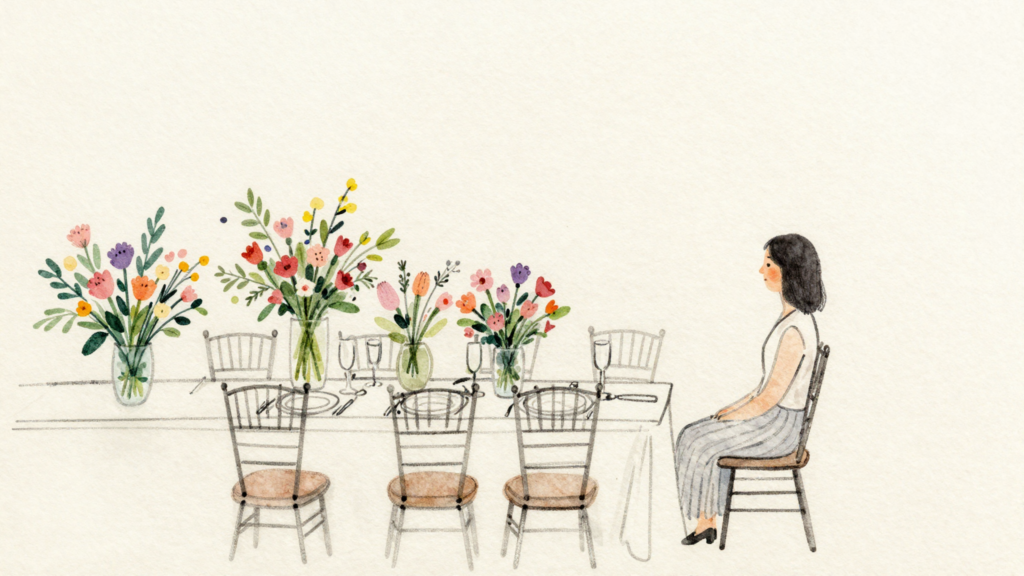
نُثِرَتْ زُهُورٌ مِنْ بَسَاتِينِ الْهَوَى فِي حَفْلِ عُرْسِ
وَمَشَى الْعَرُوسَانِ الْهُوَيْنَى فِي ثِيَابٍ مِنْ دِمَقْسِ
فَرِحَيْنِ يَنْتَعِشَانِ مَا بَيْنَ ابْتِسَامٍ بَعْدَ هَمْسِ
مَضَيَا إِلَى عُشِّ السَّعَادَةِ أَوْ إِلَى وَكْرٍ لِنَحْسِ
وَالدَّرْبُ مَفْرُوشُ الْحَوَاشِي مُونِقٌ مِنْ كُلِّ جِنْسِ
أَلَقُ السِّرَاجِ يَحُوطُهُ وَكَأَنَّهُ أَضْوَاءُ شَمْسِ
يَتَثَاءَبُ الزَّمَنُ السَّعِيدُ وَتَزْدَهِي لَحَظَاتُ أُنْسِ
مَلَأَ السُّرُورُ كُؤُوسَهُ وَبِهِ انْتَشَى مَكْئُوبُ نَفْسِ
وَاللَّحْنُ وَالنَّغَمُ الشَّجِيُّ لُغًى تُخَاطِبُ كُلَّ حَدْسِ
حَتَّى انْتَهَى بِهِمَا الْمَطَافُ إِلَى سَنَا مِحْرَابِ قُدْسِ
وَتَحَقَّقَ الْحُلْمُ الَّذِي عَاشَاهُ فِي الدُّنْيَا بِأَمْسِ
قَفَلَ الْجَمِيعُ مُوَدِّعِينَ نُفُوسُهُمْ سَكْرَى بِكَأْسِ
إِلَّا أَنَا فَوَقَفْتُ أَسْفَحُ أَدْمُعِي وَيَطِيرُ حِسِّي
وَلَقَدْ أُدَارِي دَمْعَتِي بَيْنَ الْأَمَانِي وَالتَّأَسِّي
وَتَرَكْتُ رَكْبِي سَائِرًا وَكَأَنَّمَا لَا الْجِنْسُ جِنْسِي
وَسَرَى سُؤَالٌ شَارِدُ الْكَلِمَاتِ فِي أَجْوَاءِ نَفْسِي
وَ… مَتَى تَثُوبُ حَبِيبَتِي؟ وَمَتَى تُرَى سَيَكُونُ عُرْسِي؟
مقديشو — 28/7/1989م
A Wedding Celebration
- Flowers from the gardens of love lay scattered at a wedding feast,
- and bride and groom, in robes of silk, walked slowly on, and at their ease,
- joyful and glowing, passing from a whisper to a smile, they went
- on to a nest of happiness, or else an ill-starred den1.
- The path was carpeted along its borders, bright with blooms of every kind,
- and lamplight gleamed around it, just as if it were the sun’s own light.
- Happy time lay yawning2, and the moments of good company shone bright;
- joy filled its cups, and one whose heart was heavy grew drunk on its delight.
- The melody, the plaintive strains, were tongues that spoke to every inward sense,
- until at last the procession’s course3 brought them to a holy sanctum’s radiance,
- and the dream the two had lived with in this world, long since, now came to pass.
- Then all went home with their farewells, their souls as drunk as from a glass,
- all but me: I stood there shedding tears, my senses taking flight;
- between my hopes and grieving solace4, I try to keep my tears from sight.
- I let my company ride on, as though their kind were not my kind5,
- and a question, with its words astray, stole by night6 through the reaches of my mind:
- and… when will my beloved return7? And when, I wonder, will my wedding be?
Mogadishu, 28 July 1989
Notes
- The verse sets two homes against each other (muqābala): ʿushsh al-saʿāda, ‘the nest of happiness’, and wakr li-naḥs, ‘a den of ill omen’. Both ʿushsh and wakr are a bird’s nest, but wakr is also used of a lair or a den of vice. In the middle of the celebration the poet quietly reminds us that no one knows which of the two a marriage will turn out to be. ↩
- The time of happiness ‘yawns’ like someone relaxed and drowsy: it stretches out, slows down and lingers, as time does when all is at ease and no one wants the night to end. ↩
- Miḥrāb is the niche in a mosque that marks the direction of prayer, and in older usage the finest, innermost chamber of a house or palace. Miḥrāb quds, ‘a sanctuary of holiness’, most likely pictures the bridal chamber as a hallowed shrine, because the union is a sacred, lawful bond. Ḥattā intahā bihimā al-maṭāf, ‘until the circuit brought them to its end’, is an idiom for arriving at last; maṭāf is also the word for going round in a ritual circuit, which suits the procession’s arrival at a sanctuary. ↩
- Taʾassī has two senses. It is consoling oneself by the example of others (from uswa, ‘example’), telling oneself that others have waited too; and it is grieving (from asā, ‘sorrow’). He wavers between hope and a solace that is itself a kind of grief. ↩
- Rakb is a company of riders travelling together; here, the wedding guests going home. The rhyme word jins, ‘kind’, has already closed verse 5, of the flowers ‘of every kind’ along the path. It returns here with a different weight: among these joyful people he feels he is of another kind altogether, set apart by his solitude. ↩
- Sarā is to travel by night. The question moves through his soul silently and in the dark, as a night traveller moves. ↩
- Thāba means to return, and also to come back to one’s senses or to what is right. ‘When will my beloved return?’ thus carries a wistful hint that she has strayed from him and may yet relent. The ellipsis after ‘And…’ marks the hesitation before the question he hardly dares to ask. ↩
English translation prepared by artificial intelligence and reviewed against the Arabic for accuracy of meaning and rhetoric.