
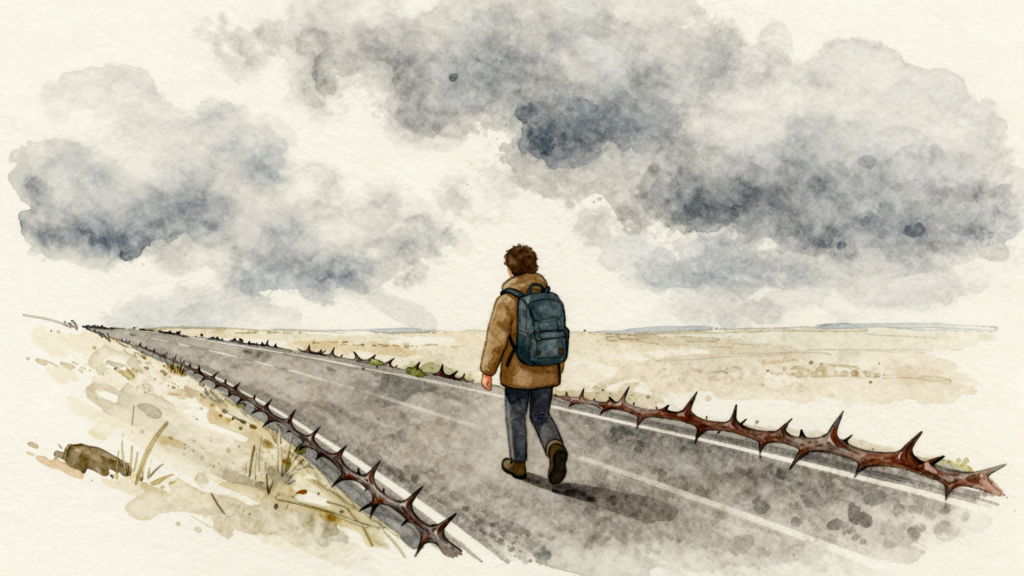
أَلَمَّ الشَّتَاتُ شَتَاتَ فُؤَادِيوَأَمْضِي لِدَرْبِيَ دَرْبَ الْقَتَادِ
سَمَائِي غُيُومٌ وَأَرْضِي هُمُومٌوَلَيْسَ أَمَامِي سِوَى الشَّوْكِ حَادِي
وَمِنْ فَوْقِ رَأْسِي تَدَلَّتْ هُمُومٌتُطَوِّقُ شَنْقاً نَسِيمَاتِ وَادِي
رُعُودٌ وَتَمْلَأُ أَجْوَاءَ نَفْسِيفَتَظْمَا وَلَيْسَ بِهَا رِيُّ صَادِي
تَلَاشَتْ وَرَائِي هَنَاءَاتُ قَلْبِيوَسَطَّرَ دَهْرِي الْأَسَى فِي فُؤَادِي
أَأَرْجِعُ خَلْفِي لِأَصْدَاءِ ضِحْكِيوَكَيْفَ وَمَا إِنْ مَلَكْتُ قِيَادِي
خُطَايَ قُوَاهَا وَهَتْ كَيْفَ أَمْشِيلِبُعْدِ مَسِيرِي وَقِلَّةِ زَادِي
فَآمَالُ قَلْبِي بَعِيدَاتُ نَيْلٍوَآمَالُ غَيْرِي تُرَى فِي الْمَزَادِ
جُهُودِي تُبَعْثَرُ لَا أَجْتَنِيهَاوَمَجْهُودُ غَيْرِي كَثِيرُ الْحَصَادِ
تَوَلَّى الْأَمَانِي وَأَجْرِي وَرَاهَافَتُمْعِنُ فِي الْبُعْدِ حَتَّى التَّمَادِي
وَبَيْنَ الْعَوَاصِفِ تَذْرُو هَبَاءًأَمَانِي الْفَقِيرِ كَذَرِّ الرَّمَادِ
إِذَا رَاحَ يَطْلُبُ آثَارَهَا فِيسُهُولٍ يُقَالُ لَهُ: فِي النِّجَادِ
فَيَعْدُو وَيَصْعَدُ فَوْقَ النُّجُودِلِيَسْعَدَ بِالْوَصْلِ بَعْدَ الْبِعَادِ
فَيَأْتِي إِلَيْهَا وَيَلْهَثُ شَوْقاًأَخِيراً يُقَالُ لَهُ: فِي الْوِهَادِ
كَذَاكَ أَعِيشُ فَأَضْنَى بِعَيْشِيجِرَابِي تُصَفِّرُ مِنْ خُلْوِ زَادِ
حُظُوظٌ تَقَسَّمَ بَيْنَ الْبَرَايَاأَنِينٌ لِشَاكٍ وَحُزْنٌ لِشَادِي
جَمَحْتُ فَلَمَّا طَغَى بِي جُمُوحِيوَلَمْ يُجْدِ شَيْئاً سَلِسْتُ قِيَادِي
وَتَاجَرْتُ بِالْجِدِّ بَيْنَ الْكُسَالَىفَرَاجَ الْخُمُولُ وَبَارَ اجْتِهَادِي
وَأَظْلَمْتُ حَيْثُ الْجَهَالَةُ نُورٌوَصَارَتْ عُلُومِي كَمِثْلِ الرَّمَادِ
مقديشو — 22/11/1988م
An Echo of Sorrow
- A scattering befalls me, my own heart's scattering1;
I take my road, a road where tragacanth2 is spread. - My sky is clouds, my earth is cares; before me goes
no singing driver3 but the thorns that lie ahead. - Above my head hang cares that loop a noose
around the valley's gentle breezes, hanging them till dead. - And thunders fill the skies within my soul,
and so it thirsts4: for thirsty lips no quenching drop is shed. - My heart's delights have faded out behind me,
and time has written sorrow, line by line, upon my heart. - Shall I turn back to echoes of my laughter?
And how, when I have never held the reins by which I'm led? - My steps have lost their strength: how shall I walk,
so long the road before me, and so scant my stock of bread5? - The hopes within my heart lie far beyond my reach,
while others' hopes are laid at auction6, open to each bid. - My efforts scatter, and I reap no fruit from them,
while other people's labour brings a heavy harvest in. - My wishes turn their backs; I run behind them,
and they recede, go farther, farther, ever on ahead. - Amid the storms that winnow them like dust,
the poor man's wishes drift like specks of ash7 the wind has spread. - If he sets out to seek their traces on
the plains, he's told: “Up on the highlands8.” - So up he runs, and climbs above the heights,
to win the joy of union when the parting's at an end; - he reaches them, and pants with longing; then
at last he's told: “Down in the hollows.” - And so I live, and living wears me thin;
my empty bag just whistles9, without a crumb of bread. - Such are the lots dealt out to all creation:
a moan for the complainer, and for the singer, grief. - I bolted10; but when my bolting ran away with me
and gained me nothing, I gave up the reins and let myself be led. - I traded in hard work among the idle:
sloth11 found its buyers, while my labour lay unsold. - I sank in darkness, where ignorance is light,
and all my learning came to be like ashes.
Mogadishu, 22 November 1988
Notes
- The two halves of the verse are built alike: a verb, then a noun repeated in apposition (al-shatāt … shatāt fuʾādī, 'scattering … the scattering of my heart'; darbī … darb al-qatād, 'my road … the road of tragacanth'). The repetition presses the point home: the scattering is nothing other than his heart's. There is also an ironic echo: lamm al-shatāt, from the same root as alamma ('came upon, befell'), is the common phrase for 'gathering up what is scattered'. Here the only thing that 'comes together' upon him is scattering itself. ↩
- Qatād, the tragacanth, is a desert shrub covered in long, hard thorns. It is proverbial in Arabic: dūnahu kharṭ al-qatād, 'before it comes stripping the tragacanth by hand', is said of something that can be reached only through great pain. A road of tragacanth is a road of suffering at every step. ↩
- The ḥādī is the camel-driver who sings the ḥudāʾ, a rhythmic chant that urges the camels on through the desert. The poet has no singer to cheer his journey; only thorns drive him forward, goading rather than encouraging. ↩
- The image turns on a broken promise: thunder normally heralds rain, and rain quenches the desert. The storm in his soul brings noise and gloom but no water, so the soul is left thirstier than before. ↩
- The Arabic word is zād, provisions for a journey. The complaint of the long road and the scant provisions echoes a famous saying attributed to ʿAlī ibn Abī Ṭālib, sighing at 'how little the provision, how long the journey, how far the road'. There it refers to the journey to the next world; the poet applies it to the road of his own life. The same word returns in verse 15. ↩
- Things put up at auction (mazād) are on open display and go to whoever bids for them: other people's hopes are within easy reach, while his own recede out of sight. Mazād comes from the root of ziyāda, 'increase', so the word also suggests hopes that keep on growing. ↩
- The image recalls the Qur'anic comparisons of worldly things to what 'the winds scatter' (18:45) and to 'ashes on which the wind blows fiercely on a stormy day' (14:18). ↩
- Verses 12 to 14 form a single scene. The poor man chases his hopes from the plains (suhūl) to the highlands (nijād, nujūd) and then down to the hollows (wihād), and at each stage he is sent elsewhere, like a man chasing a mirage. The vocabulary of 'union after separation' (waṣl, biʿād) is borrowed from love poetry: he pursues his hopes as a lover pursues a beloved who always slips away. ↩
- Tuṣaffiru means 'whistles', as the wind whistles through an empty bag, but the same root gives ṣifr, 'empty', and ṣafira, 'to be bare, to have nothing in it'. The verb therefore carries both the sound of the empty bag and its emptiness. ↩
- Jamaḥa is the word for a horse that bolts and refuses the bridle; salis al-qiyād, 'easy to lead', describes a docile mount. The poet pictures his youthful rebellion as a runaway horse that finally tires and submits. The reins (qiyād) pick up verse 6, where he says he never held them. ↩
- The verse is built on the language of the market: rāja, 'found buyers, sold well', and bāra, 'lay unsold, went to waste', form an antithesis (ṭibāq). Khumūl, 'idleness, sloth', also means 'obscurity, being unknown', so the idle and obscure prosper while his effort finds no buyer. ↩
English translation prepared by artificial intelligence and reviewed against the Arabic for accuracy of meaning and rhetoric.