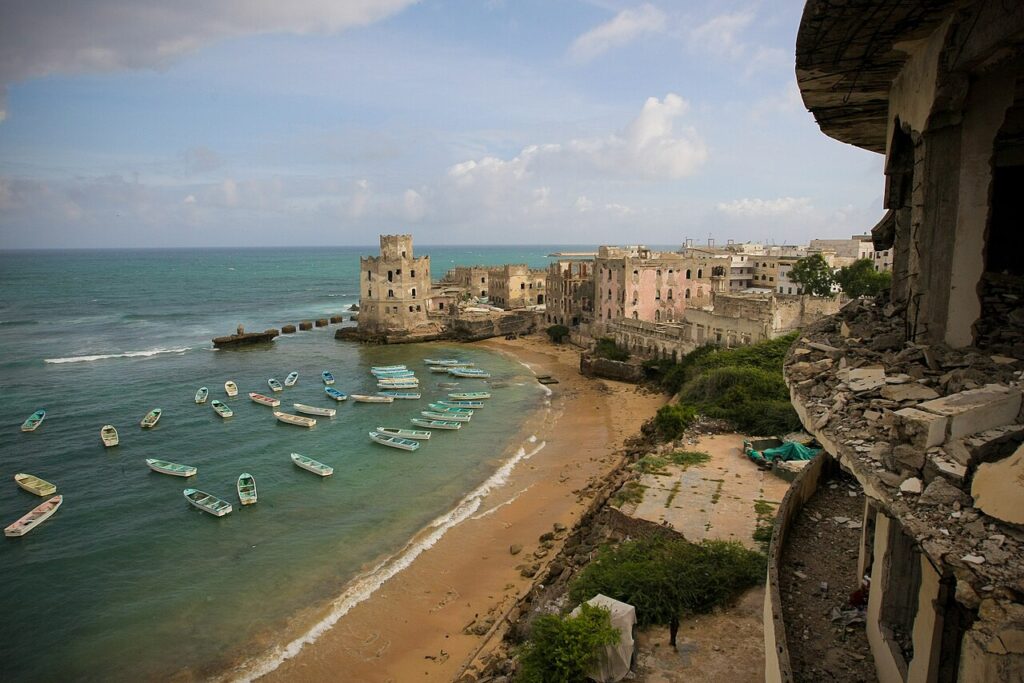
الصورة: ميناء الصيد في مقديشو، 2012 — AMISOM Public Information، ويكيميديا كومنز (CC0) — صفحة الصورة
نُشرت هذه المقالة أولًا في «شبكة الشاهد الإخبارية» (arabic.alshahid.net) بتاريخ 17 سبتمبر 2012. الموقع متوقف الآن، وهذه نسخته المحفوظة في أرشيف الإنترنت.
إن ما حدث في الصومال منذ العاشر من سبتمبر ، بدءا من فوز شخص غير الحاكم بانتخابات الرئاسة، ثم قبول المغلوب بالنتيجة وتسليمه بالهزيمة، ثم حفل تسليم المهام بين الرئيسين السابق واللاحق يوم أمس 16 سبتمبر، كلها تشبه لدى الصوماليين الحلم الذي قد يصعب تصديقه، أو كما يقول الإنجليز “too good to be true” فبقاء كل مؤسسات الدولة كما هي من الجيش والوزارات متماسكة ويحدث الانتقال بين حاكم مهزوم بالانتخاب وآخر فائز بالانتخاب، رغم الرغبة الشديدة للسابق في البقاء رئيسا لا يحدث في دول العالم الثالث المستقرة منها إلا وتعتبر معجزة. وأن يحدث ذلك في بلد غير مستقر بل غرق في مستنقع حروب داعس والغبراء فوق العشرين عاما فإنه فوق المعجزة!
منذ الاستقلال حدث هذا الأمر مرة واحدة فقط وهذه المرة الثانية، الأولى عندما فاز عبدالرشيد شارماركي غي الانتخابات على أول رئيس للصومال آدم عبدالله عثمان 1967م وسلم الرئيس بالهزيمة وتنازل عن الحكم كأول تجربة لتداول الحكم سلميا في أفريقيا ما بعد الاستقلال، وهذه الثانية، والفرق بين المرتين شاسع جدا!! ففي المرة الأولى كانت الدولة مستقرة ولم تحدث هناك حرب أهلية وكنا قريبي عهد بالاستقلال حيث مشاعر الوطنية ما زالت طرية ودماء أبطال التحرير ما فتئت ندية. واليوم يحدث هذا بعد أن ذقنا من الدكتاتورية أنكاها، ومن التعصب القبلي أشنعه، وسال دم القبيلة بيننا بدل دم التحرير ورأينا في امراء الحرب أبطالا وطنيين بل مجاهدين.
هل نحن في حلم أم في علم؟ هل يصدق أن يحدث هذا في الصومال، البلد الذي صار عنوانا للفشل والإرهاب والقرصنة؟ البلد الذي هجره أهله وأصبح بعضهم يتأفف من الانتماء إليه؟ إذا كان هذا حقيقة، فإننا يجب أن نصدق أننا دخلنا في عهد جديد! وإذا كنا قد دخلنا هذا العهد الجديد حقا فإنه يستلزم لكي نصدق أن ما يجري حقيقي وليس حلما أن نرى استحقاقات مثل هذا العهد ولوازمه من إعلاء مفهوم المواطنة على مفهوم القبيلة ومفهوم الانتماء للوطن على الانتماء للقبيلة، ومفهوم “ماذا تعرف؟” بدلا من مفهوم “من تعرف؟” فهل سيحقق لنا الرئيس المنتخب ذلك؟ غدا ستجيبنا عنه أفعاله قبل أقواله. وإن غدا لناظره قريب!
Are We Dreaming, or Is This Real?1
Image: Mogadishu fishing harbour, 2012 — AMISOM Public Information, Wikimedia Commons (CC0).
This article was first published on Al-Shahid News Network (arabic.alshahid.net) on 17 September 2012. The site is no longer active; this is the copy preserved in the Internet Archive.
What has happened in Somalia since 10 September seems to Somalis like a dream that is hard to believe, or, as the English say, “too good to be true.” First, someone other than the man in power won the presidential election2. Then the loser accepted the result and conceded defeat. Then, yesterday, 16 September, came the ceremony at which the outgoing president handed over his duties to his successor. For every institution of the state, from the army to the ministries, to remain intact and cohesive while power passes from a ruler defeated at the ballot box to one who won there, despite the outgoing president's intense desire to stay on, is something that happens in Third World countries, even the stable ones, only to be hailed as a miracle. For it to happen in a country that is not stable at all, one that has been sunk for more than twenty years in a quagmire of Dāḥis-and-Ghabrāʾ wars3, is more than a miracle!
Since independence this has happened only once before; this is the second time. The first was in 1967, when Abdirashid Ali Sharmarke won the election against Somalia's first president, Aden Abdullah Osman, and the president accepted defeat and gave up power, in the first peaceful transfer of power in post-independence Africa4. Now comes the second, and the difference between the two could hardly be greater!! The first time, the state was stable and there had been no civil war. Independence was still recent, patriotic feeling was still tender, and the blood of the heroes of liberation was not yet dry. Today it happens after we have tasted dictatorship at its most brutal and clan bigotry at its ugliest, after clan blood, instead of the blood of liberation, has flowed between us5, and after we have come to see warlords as national heroes, even as mujahideen6.
Are we dreaming, or is this real?1 Can it be true that this is happening in Somalia, a country that has become a byword for failure, terrorism and piracy? A country its own people have abandoned, some of whom now cringe at being counted as belonging to it? If this is real, then we must believe that we have entered a new era! And if we truly have entered it, then, for us to believe that what is happening is real and not a dream, we must see what such an era demands and entails: the idea of citizenship raised above the idea of the clan, belonging to the nation raised above belonging to the clan, and “What do you know?” in place of “Whom do you know?”7 Will the newly elected president deliver this for us? Tomorrow his deeds will answer us before his words do. And tomorrow is near for the one who watches for it!8
Notes
- The Arabic question a-fī ḥulm am fī ʿilm? (literally 'in a dream or in knowledge?') sets ḥulm, a dream, against ʿilm, knowledge in the sense of waking certainty. The two words differ by a single letter and rhyme, which makes the phrase a ready Arabic way of asking 'Is this a dream or reality?'. English has no pair that matches both sound and sense, so the jingle is lost and the contrast is kept. ↩
- The author names neither man. The election of 10 September 2012, held by the new Federal Parliament, was won by Hassan Sheikh Mohamud against the incumbent, Sharif Sheikh Ahmed, who conceded and handed over power on 16 September. ↩
- Dāḥis and al-Ghabrāʾ were two horses whose race, and a dispute over its fairness, set off a pre-Islamic war between the Arab tribes of ʿAbs and Dhubyān that is said to have lasted some forty years. In Arabic the names became a byword for ruinous, senseless tribal feuding that feeds on itself. The author applies them to the clan wars that have torn Somalia since 1991. ↩
- Abdirashid Ali Sharmarke was elected president by the National Assembly in June 1967, defeating the sitting president, Aden Abdullah Osman ('Aden Adde'), who accepted the result and stepped down peacefully. It is widely cited as the first time in post-independence Africa that a head of state lost an election and handed over power. ↩
- The author's qabīla (literally 'tribe') is rendered 'clan', the standard English term for Somali lineage groups. The sentence sets two kinds of bloodshed against each other: the blood of liberation, shed for the nation against the coloniser, and 'the blood of the clan', shed by Somalis against one another. ↩
- Mujāhidīn: those who wage jihad. During the civil war some warlords and armed factions were celebrated not only as national heroes but as fighters in a holy cause. The word is kept rather than translated as 'holy warriors', because it is the term used in Somali discourse and in English reporting alike. The author's 'even' (bal) marks the climax of his bitterness: men who shed their countrymen's blood were given religious glory. ↩
- Muwāṭana, citizenship, means equal membership of the nation, with the same rights and duties whatever one's lineage. The author sets it against the clan system, under which a person's standing depends on descent. His two questions, 'What do you know?' and 'Whom do you know?', set merit against connections and reverse the English saying 'It's not what you know, it's who you know'. ↩
- Wa-inna ghadan li-nāẓirihi qarīb, 'tomorrow is near to the one who watches for it', is an ancient Arabic proverb going back to pre-Islamic poetry. It means that the outcome will soon be seen: wait a little and the truth will show. Coming right after 'Tomorrow his deeds will answer us', it picks up the word 'tomorrow' and carries both hope and warning: the new president will soon be judged. ↩
English translation prepared by artificial intelligence and reviewed against the Arabic for accuracy of meaning and rhetoric.