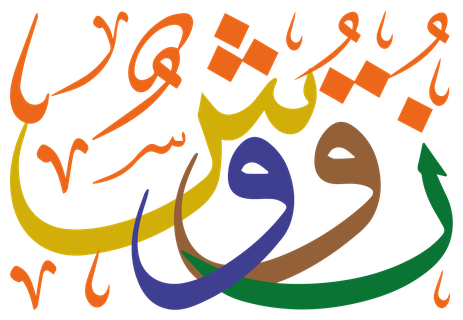
كَانَتِ الْعِزَّةُ تَشْكُو..
بِأَنَّهَا …
مُهْمَلَةٌ فِي عَيْنِهَا
مَكْسُورَةٌ فِي شَكْلِهَا
بِذُلِّهَا .. مَمْهُورَةْ
لَكِنَّ فِتْيَةً أَتَوْا
وَامْتَشَقُوا سِلَاحَهُمْ
وَأَعْلَنُوا:
مَا هَذِهِ بِعِزَّةٍ
فَهَكَذَا لَا يَنْبَغِي
أَنْ تُصْبِحَ الصُّورَةْ
فَرَكَّزُوا فِي عَيْنِهَا .. «النُّقْطَةَ» لِانْطِلَاقِهِمْ
وَغَيَّرُوا كَسْرَتَهَا بِفَتْحَةٍ
لِيَفْتَحُوا بِهَا الْمَدَى
أُفْقَ انْتِصَارٍ .. قَادِمٍ
فَصَارَتْ بَعْدُ «غَزَّةَ»
وَهْيَ بِهَذَا أَصْبَحَتْ بَعْدَئِذٍ مَشْهُورَةْ.
فَغَيِّرُوا يَا قَوْمِي الْمَعَاجِمْ
وَصَحِّحُوا الْغَلْطَةَ فِي فُصْحَاكُمُ
لِتَلْحَقُوا بِرَكْبِ هَذَا الْعَالَمْ
30 ديسمبر 2008م
Gaza: The New Name for Glory1
- Glory used to complain…
- that she was…
- neglected in her ʿayn, her eye2,
- broken in her form3,
- stamped… with her own shame4.
- But a band of young men came
- and drew their weapons
- and declared:
- This is no glory at all,
- and this is not the way
- the picture should be made.
- So in her ʿayn they planted… the “dot”, their point of departure5,
- and changed her kasra, her breaking, into a fatḥa, an opening6,
- to open with it the far expanse,
- a horizon of victory… to come.
- And so, from then on, she was “Gaza”,
- and by this, thereafter, she won her fame.
- So change the dictionaries, my people,
- and correct the error in your classical tongue7,
- so that you may catch up with the caravan of this world.
30 December 20088
Notes
- The whole poem rests on the spelling of two Arabic words. ʿIzza (عِزّة), ‘glory, might, proud honour’, and Ghazza (غَزّة), Gaza, are written almost identically. Ghazza differs only by a dot placed over the first letter, which turns ʿayn (ع) into ghayn (غ), and by its first vowel: a (fatḥa) instead of i (kasra). The poem tells how the fighters of Gaza made these two changes, and so turned ‘glory’ into ‘Gaza’. English cannot reproduce the play, so the notes that follow explain each step. ↩
- ʿAyn is both the eye and the name of the letter ع, the first letter of ʿizza. Muhmal, ‘neglected’, is also the technical term for a letter written without dots, as ʿayn is. So Glory complains at once that she is disregarded, unseen in people’s eyes, and that her first letter bears no dot. ↩
- Maksūra means both ‘broken’ and ‘bearing a kasra’, the vowel i written below a letter; shakl means both ‘form, appearance’ and the vowel marks of Arabic script. Glory’s first letter carries a kasra (ʿizza), and she herself is broken in bearing: a glory that is glory in name only. ↩
- Mamhūra can mean ‘sealed, stamped’, from mahr, a seal, or ‘given in marriage for a bride-price’, from mahr, a dowry. Either way the image is bitter: Glory is branded with her own abasement (dhull), or abasement is the price for which she was handed over. ʿIzza and dhull, glory and abasement, are a classic pair of opposites. ↩
- Nuqṭa is both a dot of script and a point; nuqṭat al-inṭilāq, ‘point of departure’, is the everyday phrase for a launching point. The young men place a dot on the ʿayn, turning it into ghayn, and in doing so make Gaza their launching point. ↩
- The kasra (i) takes its name from kasr, breaking; the fatḥa (a) from fatḥ, opening, which also means conquest and victory. Replacing Glory’s kasra with a fatḥa changes ʿizza towards Ghazza and, at the same time, turns brokenness into an opening towards victory; hence the next line’s ‘open with it the far expanse’. ↩
- Fuṣḥā is classical, standard Arabic. The closing lines are ironic: since Gaza has now become the true name of glory, the Arabs are told to amend their dictionaries and ‘correct’ the old spelling, so as to catch up with a world that has already learned the new meaning. The implied reproach falls on those who still speak of glory without earning it. ↩
- The poem is dated three days after Israel began its military offensive on the Gaza Strip on 27 December 2008 (Operation Cast Lead), which lasted until January 2009. ↩
English translation prepared by artificial intelligence and reviewed against the Arabic for accuracy of meaning and rhetoric.