
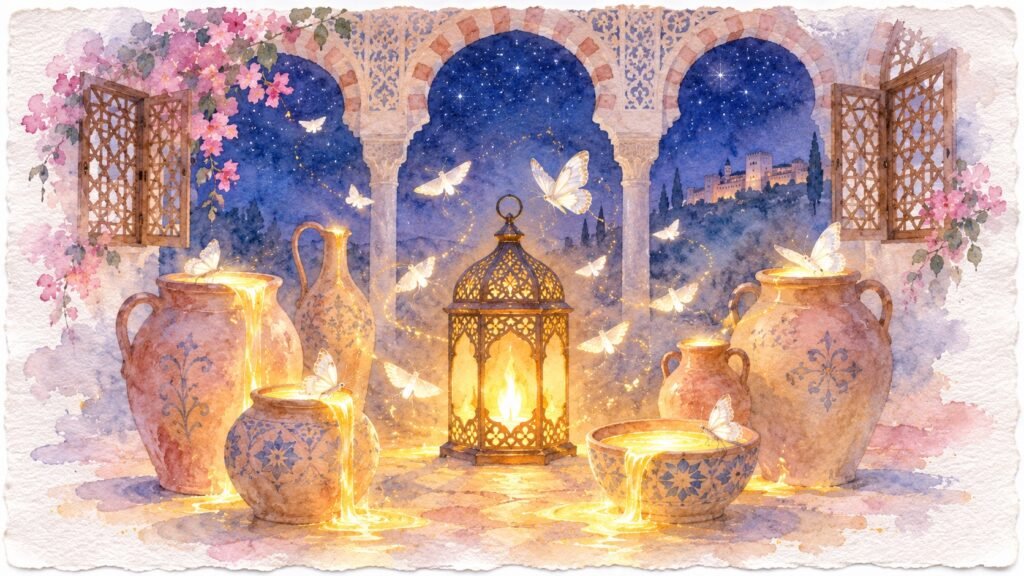
تَهَادَى فِي الدُّجَى لَحْنُ الحَيَارَىبِدَنْدَنَةِ الصَّعَالِيكِ السُّكَارَى
وَأَهْلُ اللّٰهِ غَصُّوا مِنْ حَنِينٍفَسَالَتْ مِنْهُمُ الرُّوحُ انْكِسَارَا
وَأَهْلُ اللَّيْلِ فِي كَنَفِ الخَوَابِيأَدَارُوا كَأْسَهُمْ فَغَدَتْ نَهَارَا
فَتَحْتُ نَوَافِذِي لِأَرَى قُلُوبًاتَخُوضُ إِلَى مَحَجَّتِهَا البِحَارَا
يُؤَلِّفُ بَيْنَهَا وَجَعٌ قَدِيمٌوَتَصْلَى فِي هَوَى العُشَّاقِ نَارَا
شَرَابٌ وَاحِدٌ وَالدَّنُّ شَتَّىوَلَكِنَّ العُيُونَ تَرَى الجِرَارَا
فَذَا يُسْقَاهُ فِي الكَأْسِ احْمِرَارًاوَذَا يُسْقَاهُ فِي الدَّمْعِ انْهِمَارَا
وَمَا فِي الكَأْسِ إِلَّا وَمْضُ وَجْهٍإِذَا مَا لَاحَ لَمْ يُبْقِ اخْتِيَارَا
فَيَا مَنْ لَامَ كُنْ حَدِبًا عَلَيْهِمْفَمَا ذَنْبُ الغَرِيقِ إِذَا اسْتَجَارَا
وَرُبَّ مُعَرْبِدٍ فِي الحَانِ أَدْنَىمِنَ المُخْتَالِ صَلَّى ثُمَّ مَارَى
وَمَنْ يَرْمِ القُلُوبَ بِسُوءِ ظَنٍّيَجِدْ فِي صَفْوِ مِرْآةٍ غُبَارَا
تَرَاهُمْ فِي الأَزِقَّةِ تَزْدَرِيهِمْوَفِي الأَسْمَالِ سُلْطَانٌ تَوَارَى
وَلَوْ أَصْغَيْتَ لَيْلًا مِثْلَ سَمْعِيلَشَفَّ لَكَ الدُّجَى وَهَوَى سِتَارَا
أَفَاضُوا كَالحَجِيجِ بِنُورِ حُبٍّوَمَا حَسَبُوا الطَّرِيقَ وَلَا العِثَارَا
وَكُلُّ فَرَاشَةٍ طَافَتْ بِشَمْعٍسَتَلْقَى فِي تَلَظِّيهِ القَرَارَا
فَأَلْقَى كُلُّ ذِي سَفَرٍ عَصَاهُبِقَلْبِي، وَالنَّوَافِذُ صِرْنَ دَارَا
One Wine, Though the Casks Are Many1
- Through the dark there drifted the strain the lost and wandering sing,
hummed by the drunken vagabonds2 in their low murmuring, - and the people of God3 were choked with longing, till from them the soul
flowed out as brokenness, and could no longer hold it whole, - and the people of the night4, beneath the shelter of the jars,
passed round their cup, till it became the day and drowned the stars. - I threw my windows open wide, that I might see
hearts wading through the seas towards their highroad5 to be free. - An ancient ache has bound them, heart to heart, in one desire,
and in the passion lovers know they are cast into the fire. - The wine is one, the casks6 are many; but the eyes
see only jars, and miss the wine that in them lies. - To one it is given in the cup, a crimson flow;
to one it is given in the tears that overflow. - There is nothing in the cup but the flashing of a Face7:
when once it gleams, it leaves no choice, and choosing has no place. - So you who blame them, be gentle and kind to them, I pray:
what fault is it of a drowning man to cry for help that way? - Many a brawling drunkard in the tavern8 stands more near
than the vain man who prays, and then disputes with doubt and sneer. - Whoever casts at hearts the stone of an ill-thought surmise
will find dust on a mirror's purest face before his eyes9. - You see them in the alleyways, and look on them with scorn,
yet in the rags a sultan hides10, unseen and travel-worn. - Had you but listened to the night the way I lend my ear,
the dark would turn transparent, and its curtain disappear. - Like pilgrims11 they surged onward in the light of love's desire,
and never reckoned up the road, nor stumbling in the mire. - For every moth12 that circles round a candle's flame shall find
its resting-place within the blaze, and leave the rest behind. - So every traveller laid down his staff13 within my heart,
and all my windows grew into a home, no more apart.
Notes
- The title is the first half of verse 6. A dann is a large earthenware wine jar or cask. The verse states the poem's central idea, familiar from Sufi poetry: the wine, divine love, is one, though the vessels that carry it (paths, temperaments, outward forms of devotion) differ, and only the eye that stops at the vessel sees difference. ↩
- The ṣaʿālīk (singular ṣuʿlūk) were the outcast vagabond poets of pre-Islamic Arabia, who lived outside the protection of any tribe. Here they are the drunken wanderers of the tavern, whose idle humming (dandana) the poem refuses to despise. ↩
- Ahl Allāh, 'the people of God', is a Sufi name for the saints and gnostics. ↩
- Ahl al-layl, 'the people of the night', is deliberately double: it names those who keep the night vigil in prayer, and also the night's revellers gathered around the khawābī, the great wine jars. The cup that 'became the day' is the light of the vigil as much as the glow of wine. ↩
- Maḥajja is the clear, well-trodden highroad, and, from the same root as ḥajj, the road the pilgrim takes towards his goal. ↩
- Dann (cask) and jirār (jars): see note 1. ↩
- The Face is the Beloved's. In Sufi poetry the wine in the cup is the reflection of the divine Face, glimpsed for a flash (wamḍ) like lightning; this glimpse is what the Sufis call tajallī, God's self-disclosure to the heart. When it shines, it overwhelms the will: the one who receives it has no choice left. ↩
- Ḥān is the tavern, in Sufi poetry also the gathering-place of the seekers. Mārā is to dispute and wrangle in doubt. The verse recalls the saying of Ibn ʿAṭāʾ Allāh al-Iskandarī in his Ḥikam: 'A sin that leaves behind humility and need is better than an act of obedience that leaves behind pride and arrogance.' ↩
- The dust is not on the mirror but in the eye of the one who looks: whoever judges hearts with suspicion sees his own stain in them. ↩
- The verse recalls the hadith of the Prophet (PBUH) in Ṣaḥīḥ Muslim: 'Many a dishevelled one, turned away from doors, were he to swear by God, God would fulfil his oath.' ↩
- Afāḍū, 'they surged onward', is the word for the pilgrims' great outpouring from ʿArafāt during the Hajj (Qur'an 2:198–199). ↩
- The moth that circles the candle and is consumed in its flame is one of the oldest images of Sufi literature for the lover's annihilation in the Beloved, from al-Ḥallāj's Kitāb al-Ṭawāsīn to ʿAṭṭār and Rūmī. ↩
- Alqā ʿaṣāhu, 'he cast down his staff', is an Arabic idiom for a traveller who has reached his journey's end and settled. ↩
English translation prepared by artificial intelligence and reviewed against the Arabic for accuracy of meaning and rhetoric.