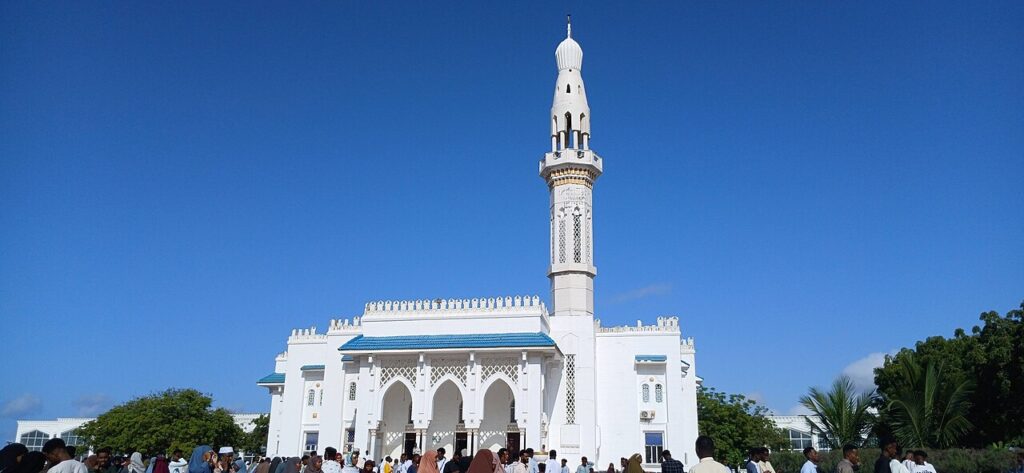
الصورة: مسجد التضامن الإسلامي في مقديشو — Omar Gadood، ويكيميديا كومنز (CC BY-SA 4.0) — صفحة الصورة
نُشرت هذه المقالة أولًا في موقع «نقوش» القديم (nuqush.com) بتاريخ 22 يونيو 2006. الموقع متوقف الآن، وهذه نسخته المحفوظة في أرشيف الإنترنت.
تتابع الأحداث في الصومال مؤخرا يجعل من الصعب معرفة المسارات التي ستأخذها في المستقبل، فتصريحات أطراف النزاع تحمل في طياتها تناقضات وتطرأ عليها تغيرات لا تكاد تثبت في موقف محدد، بل إن معظم التصريحات والقرارات تبدو تكتيكية أكثر منها مواقف إستراتيجية.
هذا المقال محاولة -قدر الإمكان- لقراءة ما يجري ورصد نقاط الضعف والقوة لدى الطرفين الرئيسيين في الصراع الصومالي حاليا. ثم ينظر في العوامل الخارجية ومسارات تحركها لرصد السيناريوهات المحتملة
التطورات الأخيرة إما تقود الصومال إلى سلام شامل وحكم مستقر يرضى به الشعب، أو إلى صراع من نوع جديد بين توجه يكتسب شرعيته من الشعب، وتوجه يستند إلى معطيات الحرب الأهلية ومفرزاتها
تغير موازين القوى
طرأ تغير كبير على موازين القوة في الصومال لم يكن موجودا خلال الفترة الماضية، فرغم وجود القوى الإسلامية على الساحة الصومالية منذ زمن وازدياد نشاطها منذ التسعينات بالتحديد، فإنها كانت تنشط في مجالات الدعوة والتعليم وتقديم الخدمات وحفظ الأمن إلى حد معين. ولكنها الآن برزت كقوة عسكرية وسياسية بقيادة «المجلس الأعلى لاتحاد المحاكم الإسلامية» وصارت يحسب لها ألف حساب.
كان الصراع بين أجنحة الحكومة امتدادا لصراعات مكوناتها قبل إنشائها، وغالبا ما تتحكم في توجهاتها المصالح الشخصية وليس المصالح العليا للبلد.
وينظر إلى هذا الصراع على أنه صراع قبائل على النفوذ والأرض والموارد، ويمثلها أمراء الحرب في مؤتمرات السلام. كان الشعب حينها غائبا عن الفعل السياسي ولم تكن لديه قيادة تحدوه إلى حلمه في تحقيق إرادته المستقلة بعيدا عن مصالح أمراء الحرب التي كانت لا تتحقق في نظرهم إلا بالارتباط بقوة خارجية. ولهذا كان همّ الشعب استقرار الأمور ومجيء أية حكومة تجنبه الويلات التي ذاقها خلال فترة الحرب الأهلية.
أما الآن فقد أصبحت المعادلة تختلف اختلافا جذريا ومن الواضح للعيان أن الصومال على مفترق طرق. والتطورات الأخيرة إما أن تقوده إلى سلام شامل وحكم مستقر يرضى به الشعب، أو إلى صراع من نوع جديد بين توجهين مختلفين: توجه يكتسب شرعيته من الشعب، ويستند إليه ويستمد قوته من إرادته لحياة كريمة غير مقطوعة عن جذوره وهويته الثقافية والحضارية. وتوجه يستند إلى معطيات الحرب الأهلية ومفرزاتها وما اكتسبه خلالها في مؤتمرات المصالحة والتسويات التي يبدو أن التطورات قد تجاوزتها الآن.
وممثلا الاتجاهين واضحان على الساحة السياسية الصومالية، وهما اتحاد المحاكم الإسلامية والحكومة الاتحادية. وكلٌ من المشروعين يسعى لإثبات وجوده في البلاد سياسيا وعسكريا، ولكليهما نقاط قوة يستند إليها ونقاط ضعف يحاول أن لا يؤتى من قبلها. فما هي نقاط القوة والضعف لدى الجانبين؟
الحكومة الصومالية ليست منتخبة من الشعب بل مشكلة على ضوء توازنات قبلية مع استبعاد لجهات معينة من المجتمع المدني -منها الإسلاميون- بسبب سيطرة إثيوبيا المعروفة على مؤتمر السلام الذي انبثقت منه هذه الحكومة
الحكومة الاتحادية
الحكومة الصومالية التي شكلت من أمراء الحرب والموالين لهم أو الذين جاؤوا وفقا لموازين القوى والتجاذبات التي كانت سائدة قبل عامين، تعتمد قوتها في كونها الجهة الرسمية المعترف بها دوليا، كونها نتيجة مؤتمر مصالحة رعته أطراف إقليمية ودولية. ثم إن أعضاءها يمثلون جميع القبائل الصومالية التي تتصارع على السلطة.
ولكن الكثير من المراقبين الصوماليين يرون أن الحكومة الاتحادية المشكلة في نيروبي عام 2004 تحمل في داخلها الكثير من عوامل الفشل أكثر من عوامل النجاح، وتتعزز هذه العوامل مع تطورات الأحداث الأخيرة.
ومن بين هذه العوامل أن الحكومة تشكلت من زعماء حرب لا يبحثون عن مصالح الشعب بقدر ما يبحثون عن مصالحهم الذاتية. وهم في سبيل ذلك مستعدون لأن يرتهنوا البلاد ويرهنوا أنفسهم لجهات خارجية وينفذوا أجنداتها. وواضح أن أجندة هؤلاء الذين يشكلون نواة الحكومة الأساسية تتقاطع مع أجندة اتحاد المحاكم الإسلامية.
ومن بينها أيضا أنها ليست منتخبة من الشعب بل مشكلة على ضوء توازنات قبلية مع استبعاد لجهات معينة من المجتمع المدني الصومالي -ومن بينها الإسلاميون- بسبب سيطرة إثيوبيا المعروفة على مؤتمر السلام الذي انبثقت منه هذه الحكومة.
وهي بهذا تفتقد إلى التكنوقراطيين وأصحاب الفكر السياسي أو المثقفين بشكل عام، وعليه فليس بإمكانها التخطيط لمستقبل الصومال وكيفية إخراجه من وضعه الحالي المتأزم. ويبدو ذلك واضحا من شللها حتى الآن وعدم قدرتها على الخروج بأي مشروع لإنقاذ الصومال رغم أنه قارب العامين.
ومن العوامل أيضا تقوقع الحكومة في مدينة بيدوه وعدم سيطرتها على معظم البلاد، فهي ضيفة على القبائل المحلية وأمراء الحرب فيها، وما إن تتغير المصالح وتتقاطع حتى تضطر إلى مغادرتها أو تنشب معارك بينها وبين القبائل المضيفة لها.
وليس مستبعدا انفراط عقد الحكومة في أول مواجهة تحدث بينها وبين اتحاد المحاكم. وهذا واضح من عدم رضا عدد من أعضاء البرلمان الصومالي الذين يجتمعون بشكل مكثف خلال هذه الأيام لإعادة النظر حول قرار الحكومة استقدام قوات أجنبية إلى البلاد. ويبدي هؤلاء تخوفا من هذه الخطوة ويمارسون ضغطا على الحكومة للحوار مع اتحاد المحاكم.
استطاع الاتحاد خلال فترة قصيرة أن يكسب احترام المجتمع الدولي برسائله السياسية التي بعث بها إلى العالم وإبعاد تهمة الإرهاب عنه إلى حد ما، لكن ضعفه يكمن في أن شعار الإسلام غير مرحب به دوليا وإقليميا
اتحاد المحاكم الإسلامية
أما اتحاد المحاكم الإسلامية فيحسب له التفاف الشعب حوله وسيطرته على الكثير من محافظات الجنوب وقدرته على إحلال الأمن والنظام إلى قدر معين في المناطق التي سيطر عليها. ومن بين نقاط القوة لديه ما اكتسبه من الاعتراف به كطرف فاعل في شأن المستقبل الصومالي من القوى الدولية ومن بينها أميركا.
فقد استطاع الاتحاد خلال الفترة القصيرة أن يكسب احترام المجتمع الدولي برسائله السياسية التي بعث بها إلى القوى الفاعلة في العالم وإبعاد تهمة الإرهاب عنه إلى حد ما.
أما نقاط الضعف فمنها أن شعار الإسلام غير مرحب به كفاعل سياسي في الوقت الحالي على المستوى الدولي والإقليمي، وأن دعوى دعم الإرهاب يمكن أن تلصق أو ترفع عنه حسب مصالح الجهات الخارجية والداخلية.
ومنها أيضا أن الاتحاد بحسب تكوينه وبنيته الأساسية مكون من عشائر قبيلة «هوية» التي ينتمي إليها أمراء الحرب المهزومون أيضا. فقبائل مناطق النهرين «جوبا وشبيلي» ولا سيما «دغل وميريفلي» التي تستضيف الحكومة في بيدوه حاليا، وكذلك الأقليات في الجنوب ليست ممثلةً فيه حتى الآن، دعك من قبائل «دارود» التي تتركز في شمال شرق الصومال وجنوبه و«دِرْ» في شمالها.
وهذا قد يظهره -أو هو كذلك فعلا- ممثلا جديدا لمصالح قبيلة «هوية» ولكن بوجهها الإسلامي لا القبلي. وسيجد صعوبة في استيعاب الأقليات وقبائل «دغل وميريفلي» لاختزان ذاكرتها المظالم التي تعرضت لها على يد «هوية» خلال الحرب الأهلية، واستمرار استيلاء بعض عشائرها على الكثير من المناطق التي ليست لها في الجنوب. ورغم أن اتحاد المحاكم كجهاز لا يتحمل هذه المسؤولية، فإنه سيصعب عليه -أو سيتطلب وقتا طويلا- إقناع الآخرين من غير قبيلة «هوية» بأنه ليس وجها جديدا لعملة قديمة.
وإذا أراد الاتحاد إقناعهم فإنه قد يتطلب منه اتخاذ إجراءات ضد بعض الذين استغلوا ظروف الحرب الأهلية للاستيلاء على أراضي الغير وممتلكاتهم وأكثرهم من القبائل التي تساند الاتحاد حاليا. وإن كان مثل هذا الإجراء سيظهر للصوماليين مدى جدية الاتحاد في تحمل أعباء الشعار الذي يرفعه، فإنه أيضا سيكلفه الكثير وقد يؤدي إلى التناحر بين قبائل «هوية» نفسها.
وما لم يتخذ الاتحاد هذه الخطوة فسيصعب إقناع الأقليات المغتصبة أراضيها وممتلكاتها وقبائل «دغل وميريفلي» لتنضوي وتحارب تحت لوائه. ومن الصعب في الصومال تجريد الذات عن الموضوع في المسألة القبلية التي تدخل في كل صغيرة وكبيرة.
ويعتمد توجه الصراع أو التصالح بين اللاعبين الأساسيين الآن على مدى نجاح القوى الخارجية في الضغط عليهما للجلوس إلى مائدة التفاوض وتقديم التنازلات حتى يتم إنقاذ الصومال من حرب إذا استعرت ستعيد معاناة الشعب من جديد.
ويبدو أن هناك محاور بدأت تتشكل على المستوى الإقليمي والدولي تسعى إلى فعل شيء، ومن بينها ما لا يزال في طور التريث والترقب ولم يتجاوز إلى منطقة الفعل لعدم وضوح الرؤية لديه، كما أن من بينها أطرافا تريد الاستفادة من الوقت وتكاد تسرع في ضرب الحديد قبل بروده.
يبدو أن أميركا أيقنت أن سياستها في محاربة الإرهاب في الصومال كانت خاسرة وعقيمة، فبدأت تعيد ترتيب الأوراق ولكنها هذه المرة نأت عن غطرستها بإعلانها إنشاء مجموعة اتصال دولية حول الصومال
سيناريوهات محتملة
زاد الاهتمام الدولي بالصومال بعد انتصار اتحاد المحاكم وهزيمة التحالف، كما اختلفت أدوار بعض القوى ولا سيما الغربية والأميركية. فالولايات المتحدة يبدو أنها أيقنت أن سياستها في محاربة الإرهاب في الصومال كانت خاسرة وعقيمة، فبدأت تعيد ترتيب الأوراق ولكنها هذه المرة نأت عن غطرستها والتصرف بشكل منفرد، وكان إعلان إنشاء مجموعة اتصال دولية حول الصومال أولى خطواتها.
وضمت المجموعة المستعمرين القدامى من «أوروبا العجوز» إضافة إلى النرويج والسويد ودولة شرق أفريقية «تنزانيا». واستبعدت إثيوبيا الحليف الإستراتيجي للولايات المتحدة في المنطقة، كما لم تحظ الجامعة العربية حتى بدور المراقب الذي حظيت به الأمم المتحدة والاتحاد الأفريقي.
أما الاتحاد الأفريقي والهيئة الحكومية للتنمية (إيغاد) فيبدو أن إثيوبيا هي التي تسيطر على توجهاتهما بشكل عام، رغم وجود بعض التباينات بين دولها حول السياسة اللازم اتباعها حاليا.
وفي الاجتماع الأخير الذي عقد في أديس أبابا تقرر إرسال فريق إلى الصومال في أقرب وقت لتقييم الوضع والتمهيد لإرسال قوات حفظ السلام التي طلبتها الحكومة الصومالية.
ويبدو أن إثيوبيا تدفع الاتحاد الأفريقي والإيغاد إلى دعم الحكومة الاتحادية والتدخل العسكري السريع للحد من المد الإسلامي والتنسيق بشكل جيد مع الدور الغربي.
وقد تنجح في إقناع مجموعة الاتصال التي شكلتها أميركا باتخاذ نفس المسار، رغم تحفظ الكثير من الدول الغربية في الوقت الحالي من ممارسة الضغط العسكري الذي قد يؤزم الأمور. فقد علمت أميركا أن محاربة الإرهاب في الصومال لن تتحقق «بالفوضى الخلاقة» لأن ذلك قد يجعلها أكثر أمانا للإرهابيين، لهذا ستسعى إلى جعل الصومال مستقرا سياسيا ولو ببعض التنازلات لاتحاد المحاكم.
ولإثيوبيا دور خاص وغير خاف وتحاول استخدام وتوظيف الجهود الدولية لخدمتها، وهي تسعى أكثر إلى التصعيد ودق إسفين بين المحاكم الإسلامية والحكومة الاتحادية لأنها ترى أن المحاكم إن استثمرت نصرها الآن لجر الحكومة إلى تقديم تنازلات من موقع القوة الذي تتمتع به حاليا فستصبح قوة سياسية يستند إليها الإسلاميون في المستقبل لحكم البلاد.
لهذا فقد بدأت في حشد القوات على الحدود وقامت في بعض المناطق بالتوغل في أراضي الصومال منتهكة سيادته. والحكومة الاتحادية تثق في إثيوبيا وتعتمد عليها بسبب رئيس الجمهورية ورئيس الوزراء اللذين يعتبران من أشد الموالين لها على المستوى الصومالي وقد وصلا إلى موقعيهما بفضل دعمها لهما في مؤتمر المصالحة الأخير. وهناك أنباء تشير إلى وجود مستشارين سياسيين وعسكريين إثيوبيين يعملون مع الحكومة في بيدوه.
إذا استطاعت الجامعة إنجاح المبادرة اليمنية قبل تدخل القوات الأجنبية فإن الأمور ستسير إلى السلام والتفاهم، وإذا نجح المسعى الإثيوبي فسيدخل الصومال في متاهة جديدة لا يعلم مداها إلا الله
ويبدو الدور العربي -كما كان دائما- باهتا لا شكل له ويعمل على استحياء، وتعمل دوله على انفراد وبدون تنسيق بينها مع الأطراف الأخرى. واقتصر هذا الدور في البداية على اليمن الذي يظهر أن الجامعة العربية ائتمنته على ملف الصومال نظرا لقربه الجغرافي منه، كما بدأت تدخل على الخط قطر وبعض دول الخليج بينما تغيبت الدول ذات التأثير في الجامعة مثل مصر وسوريا.
وواضح من لغة الخطاب الإعلامي الذي يتبادله الاتحاد مع الحكومة في الأيام الأخيرة أن إثيوبيا في طريقها إلى النجاح في مسعاها لتوتير العلاقة وتطويرها إلى حرب بين الحكومة والاتحاد.
لذا يبدو أن بوادر الصراع بفعل الضغط الإثيوبي أكثر من فرص الاتفاق بينهما. ولكن يبقى أنه لا يزال هناك متسع من الوقت للضغط على إثيوبيا والحكومة الاتحادية لوقف توتير الأوضاع.
ولكن هذا مرهون بمدى نجاح المحاور الأخرى في توجيه الأمور إلى الاتجاه الآخر. وإذا استطاعت الجامعة العربية -وهذا بعيد- إنجاح المبادرة اليمنية قبل تدخل القوات الأجنبية، فإن الأمور ستسير إلى السلام والتفاهم وسينعم الشعب بالاستقرار. أما إذا نجح المسعى الإثيوبي -وهو المرجح- فسيدخل الصومال في متاهة جديدة لا يعلم مداها إلا الله، وستأكل الأخضر واليابس في الصومال، إن كان لا يزال فيه شيء أخضر.
Somalia: Towards a New Conflict or an Assured Peace?1
Image: The Islamic Solidarity Mosque in Mogadishu. Omar Gadood, Wikimedia Commons (CC BY-SA 4.0). Image page
This article was first published on the old Nuqush website (nuqush.com) on 22 June 2006. The site is no longer active; this is the copy preserved in the Internet Archive.
Events in Somalia have followed one another so fast of late that it is hard to know which paths they will take in future. The statements of the parties to the conflict are riddled with contradictions and shift so often that they hardly settle on any fixed position; indeed, most statements and decisions look more like tactics than strategic positions.
This article is an attempt, as far as possible, to read what is happening and to identify the strengths and weaknesses of the two main parties to the Somali conflict today. It then looks at the external factors and the directions in which they are moving, in order to identify the likely scenarios.
The latest developments will lead Somalia either to a comprehensive peace and a stable government that the people accept, or to a new kind of conflict between a current that draws its legitimacy from the people and a current that rests on the realities and by-products of the civil war.
The Shifting Balance of Power
A great change has come over the balance of power in Somalia, one not seen in the period before. Islamic forces have been present on the Somali scene for a long time, and their activity has grown since the 1990s in particular, but they used to work in preaching, education and the provision of services, and in keeping order up to a point. Now, however, they have emerged as a military and political force, led by the Supreme Council of the Islamic Courts Union2, and have become a force to be reckoned with a thousand times over.
The conflict between the government's factions was an extension of the conflicts among its components before it was formed, and its course was mostly driven by personal interests rather than the higher interests of the country.
This conflict is seen as a struggle among clans for influence, land and resources, with the warlords representing them at the peace conferences3. The people were then absent from political action. They had no leadership to drive them on towards their dream of realising an independent will, free of the interests of the warlords, who saw no way of securing those interests except by attaching themselves to an outside power. That is why the people's only concern was for things to settle down and for any government at all to come and spare them the calamities they had suffered during the civil war.
Now, however, the equation has changed radically, and it is plain for all to see that Somalia stands at a crossroads. The latest developments will lead it either to a comprehensive peace and a stable government that the people accept, or to a new kind of conflict between two different currents. One current draws its legitimacy from the people, rests on them and takes its strength from their will to a life of dignity, a life not cut off from their roots or from their cultural and civilisational identity. The other rests on the realities and by-products of the civil war, and on what it gained during that war at the reconciliation conferences and settlements, which events now seem to have overtaken.
The representatives of the two currents are plain to see on the Somali political scene: the Islamic Courts Union and the Federal Government4. Each of the two projects seeks to establish its presence in the country, politically and militarily, and each has strengths on which it relies and weak points through which it strives not to be breached. So what are the strengths and weaknesses of the two sides?
The Somali government was not elected by the people; it was formed on the basis of clan balances5, with certain parts of civil society, among them the Islamists, excluded because of Ethiopia's well-known control over the peace conference from which this government emerged.
The Federal Government
The Somali government, formed from warlords and their loyalists, or from those who came in according to the balance of power and the rivalries that prevailed two years ago, draws its strength from being the official, internationally recognised authority, the product of a reconciliation conference sponsored by regional and international parties. Its members, moreover, represent all the Somali clans that are struggling for power.
Yet many Somali observers believe that the Federal Government formed in Nairobi in 2004 carries within it far more seeds of failure than of success, and that recent developments are reinforcing them.
One of these factors is that the government was formed from warlords who seek their own interests rather than the people's. To that end they are ready to mortgage the country, pawn themselves to outside parties and carry out their agendas. And it is clear that the agenda of those who form the government's core clashes with the agenda of the Islamic Courts Union.
Another is that it was not elected by the people but formed on the basis of clan balances5, with certain parts of Somali civil society, among them the Islamists, excluded because of Ethiopia's well-known control over the peace conference from which this government emerged.
It therefore lacks technocrats, people of political vision and intellectuals in general, and so it cannot plan Somalia's future or find a way to bring the country out of its present crisis. This is plain from its paralysis so far and its failure to produce any plan to save Somalia, although it is now nearly two years old.
Another factor is that the government has withdrawn into its shell in the town of Baidoa6 and does not control most of the country. It is a guest of the local clans and the warlords there, and as soon as interests shift and clash, it is either forced to leave or fighting breaks out between it and its host clans.
Nor can it be ruled out that the government will come apart, like a snapped string of beads, at its first confrontation with the Courts Union. This is clear from the discontent of a number of members of the Somali parliament, who are meeting intensively these days to reconsider the government's decision to bring foreign troops into the country7. They are wary of this step and are pressing the government to talk to the Courts Union.
In a short time the Union has managed to win the respect of the international community through the political messages it has sent to the world, and to deflect the charge of terrorism to some extent. Its weakness, however, lies in the fact that the banner of Islam is not welcome internationally or regionally.
The Islamic Courts Union
The Islamic Courts Union, for its part, can count to its credit the people rallying around it, its control of many of the southern regions, and its ability to restore security and order to a degree in the areas it has taken. Among its strengths, too, is the recognition it has won from international powers, America among them, as an active party in deciding Somalia's future.
In this short time the Union has managed to win the respect of the international community through the political messages it has sent to the world's leading powers, and to deflect the charge of terrorism to some extent.
As for its weaknesses, one is that the banner of Islam is not welcome as a political actor at present, either internationally or regionally, and that the charge of supporting terrorism can be pinned on it or lifted from it according to the interests of outside and domestic parties.
Another is that, by its make-up and basic structure, the Union is composed of sub-clans of the Hawiye clan, to which the defeated warlords also belong8. The clans of the land between the two rivers, the Juba and the Shabelle, especially the Digil and Mirifle, who are now hosting the government in Baidoa, as well as the minorities in the south, are not yet represented in it, let alone the Darod clans, concentrated in the north-east and south of Somalia, and the Dir in the north.
This may make it look like, or indeed it may actually be, a new representative of Hawiye interests, only with an Islamic rather than a clan face. It will find it hard to win over the minorities and the Digil and Mirifle, whose memory holds the wrongs they suffered at Hawiye hands during the civil war, and the continuing seizure by some Hawiye sub-clans of many areas in the south that are not theirs. Although the Courts Union as a body does not bear this responsibility, it will find it hard, or it will take a long time, to convince others outside the Hawiye that it is not simply a new face on an old coin.
If the Union wants to convince them, it may have to take action against some of those who exploited the civil war to seize other people's land and property, most of them from the clans that now support the Union. Such action would show Somalis how seriously the Union takes the burdens of the banner it raises, but it would also cost it dearly and might set the Hawiye clans against one another.
Unless the Union takes this step, it will be hard to persuade the minorities whose land and property were seized, and the Digil and Mirifle clans, to join it and fight under its banner. In Somalia it is hard for anyone to set self aside and be objective on the clan question, which enters into every matter, great or small.
Whether the main players now head for conflict or for reconciliation depends on how far outside powers succeed in pressing them to sit at the negotiating table and make concessions, so that Somalia may be saved from a war which, if it flares up, will bring back the people's suffering all over again.
It seems that axes are beginning to form at regional and international level that seek to do something. Some of them are still waiting and watching and have not yet moved into action, because they cannot see the way clearly; others want to make use of the time and are almost rushing to strike while the iron is hot.
America seems to have realised that its policy of fighting terrorism in Somalia was a losing and barren one, so it has begun to reshuffle its cards; but this time it has stepped back from its arrogance by announcing the creation of an International Contact Group on Somalia.
Possible Scenarios
International interest in Somalia has grown since the victory of the Courts Union and the defeat of the Alliance9, and the roles of some powers, especially the Western and American ones, have changed. The United States seems to have realised that its policy of fighting terrorism in Somalia was a losing and barren one, so it has begun to reshuffle its cards; but this time it has stepped back from its arrogance and from acting alone, and its first step was to announce the creation of an International Contact Group on Somalia.
The group brought together the old colonisers of “Old Europe”10, along with Norway, Sweden and one East African state, Tanzania. It left out Ethiopia, America's strategic ally in the region, and the Arab League was not granted even the observer role given to the United Nations and the African Union.
As for the African Union and the Intergovernmental Authority on Development (IGAD)11, it seems that Ethiopia largely steers their direction, although there are some differences among their member states over the policy to be followed now.
At the latest meeting, held in Addis Ababa, it was decided to send a team to Somalia as soon as possible to assess the situation and prepare the way for sending the peacekeeping force that the Somali government has requested.
Ethiopia seems to be pushing the African Union and IGAD to back the Federal Government and to intervene militarily, and quickly, to stem the Islamic tide, in close coordination with the Western role.
It may succeed in persuading the Contact Group formed by America to take the same course, although many Western countries are for now reluctant to apply military pressure that could make matters worse. America has learned that terrorism in Somalia will not be defeated through “creative chaos”12, since that might make the country safer for terrorists. It will therefore seek to make Somalia politically stable, even at the price of some concessions to the Courts Union.
Ethiopia has a special role, and no hidden one, and is trying to use and harness international efforts to serve its own ends. It is pushing above all for escalation and for driving a wedge between the Islamic Courts and the Federal Government, because it believes that if the Courts use their present victory to draw the government into concessions, from the position of strength they now enjoy, they will become a political force on which the Islamists can rely to rule the country in future.
That is why it has begun to mass troops on the border, and in some areas has pushed into Somali territory in violation of the country's sovereignty. The Federal Government trusts Ethiopia and depends on it because of the President and the Prime Minister13, who are counted among its most loyal allies in Somalia and who reached their posts thanks to its backing at the last reconciliation conference. There are reports that Ethiopian political and military advisers are working with the government in Baidoa.
If the Arab League can make the Yemeni initiative14 succeed before foreign troops intervene, matters will move towards peace and understanding; if the Ethiopian effort succeeds, Somalia will enter a new maze whose extent only God knows.
The Arab role, as always, looks pale and shapeless and acts timidly. The Arab states act separately, without coordinating among themselves or with the other parties. At first this role was confined to Yemen, which the Arab League seems to have entrusted with the Somali file because of its geographical proximity; Qatar and some Gulf states have also begun to step in, while the League's influential states, such as Egypt and Syria, are absent.
It is clear from the tone of the media exchanges between the Union and the government in recent days that Ethiopia is on its way to succeeding in its effort to raise tensions between the government and the Union and to turn them into war.
The signs of conflict, driven by Ethiopian pressure, therefore seem to outweigh the chances of agreement between them. Yet there is still time to press Ethiopia and the Federal Government to stop inflaming the situation.
But this depends on how far the other axes succeed in steering matters the other way. If the Arab League can, which is unlikely, make the Yemeni initiative14 succeed before foreign troops intervene, matters will move towards peace and understanding, and the people will enjoy stability. But if the Ethiopian effort succeeds, as is more likely, Somalia will enter a new maze whose extent only God knows, one that will devour the green and the dry in Somalia alike, if anything green is still left there15.
Notes
- The Arabic title rhymes: ṣirāʿ jadīd, 'a new conflict', against salām akīd, 'an assured peace'. The chime sets the two outcomes side by side as the only choices; the English keeps the contrast but loses the rhyme. ↩
- The Islamic Courts were sharia courts set up from the mid-1990s by Mogadishu clans and businessmen to provide a measure of law and order in the absence of a state. Joined in a union, they defeated the US-backed warlord coalition in Mogadishu in early June 2006, a fortnight before this article, and went on to take much of southern Somalia. Sharif Sheikh Ahmed and Hassan Dahir Aweys were their leading figures. ↩
- Since 1991 more than a dozen internationally sponsored Somali peace conferences had been held, from Addis Ababa in 1993 to Arta in Djibouti (2000) and Mbagathi in Kenya (2002–04). Seats at most of them went to faction leaders who claimed to speak for their clans. ↩
- The Transitional Federal Government (TFG) was the product of the Somali National Reconciliation Conference held in Kenya from 2002 to 2004 under the sponsorship of IGAD, the regional body. Its parliament elected Abdullahi Yusuf Ahmed president in Nairobi in October 2004, and he appointed Ali Mohamed Gedi prime minister. Unable to settle in Mogadishu, the government worked first from Jowhar and then from Baidoa. ↩
- Seats in the transitional parliament were shared out under the so-called '4.5 formula': equal shares for the four major clan families (Darod, Hawiye, Dir and Digil-Mirifle) and a half share for the minority groups together. Ethiopia, Kenya and Djibouti, IGAD's 'frontline states', oversaw the conference, and Ethiopia was widely seen as its decisive influence. ↩
- Baidoa, some 250 kilometres north-west of Mogadishu, is the main town of the Bay region and the heartland of the Digil and Mirifle (Rahanweyn) clans. The transitional parliament first convened there in February 2006. ↩
- From its inauguration in October 2004 the TFG had asked for an African peacekeeping force, and IGAD and the African Union drew up plans for an IGAD mission (IGASOM). The Courts and much of the public rejected any foreign force, above all one that included Ethiopian troops. ↩
- Somali society is organised into large clan families, divided into clans and sub-clans. The Hawiye dominate Mogadishu and much of central and southern Somalia; the Digil and Mirifle, also called the Rahanweyn, are the farming and herding clans of the fertile land between the Juba and Shabelle rivers; the Darod and the Dir are the other major clan families. The southern minorities include the Bantu farming communities and the old coastal townspeople of Mogadishu, Merca and Barawa. The Mogadishu warlords whom the Courts defeated, such as Mohamed Qanyare Afrah and Muse Sudi Yalahow, were themselves Hawiye. ↩
- The Alliance for the Restoration of Peace and Counter-Terrorism, a coalition of Mogadishu warlords formed in February 2006 with covert American backing to hunt down suspected al-Qaeda members. Its defeat by the Courts' militias in Mogadishu between February and early June 2006 ended warlord rule in the capital. ↩
- The International Contact Group on Somalia was launched at American initiative and first met in New York on 15 June 2006, bringing together the United States, Britain, Italy, Norway, Sweden, Tanzania and the European Union. 'Old Europe' was the US Defence Secretary Donald Rumsfeld's dismissive term in 2003 for France, Germany and the other European states that opposed the invasion of Iraq; the author turns it on Britain and Italy, the former colonial powers in Somalia. ↩
- IGAD, the Intergovernmental Authority on Development, is the regional body of the Horn of Africa and East Africa; its members at the time were Ethiopia, Eritrea, Djibouti, Kenya, Somalia, Sudan and Uganda. Eritrea, at odds with Ethiopia, opposed the line taken on Somalia. ↩
- Al-fawḍā al-khallāqa, 'creative chaos', is a phrase associated with the US Secretary of State Condoleezza Rice, who suggested in 2005 that upheaval in the Middle East could give birth to a new, democratic order. In Arab commentary the phrase became shorthand for American policies that sow disorder in the region. ↩
- President Abdullahi Yusuf Ahmed, a former leader of Puntland long allied with Ethiopia, and Prime Minister Ali Mohamed Gedi. ↩
- Yemen, under President Ali Abdullah Saleh, was the Arab state most active on Somalia; in January 2006 it brokered the Aden Declaration between the TFG president and the speaker of parliament. On 22 June 2006, the day this article appeared, the first talks between the TFG and the Islamic Courts opened in Khartoum under Arab League auspices. ↩
- Yaʾkul al-akhḍar wa-l-yābis, 'to devour the green and the dry', is an Arabic idiom for total destruction, from a fire that consumes fresh and dry wood alike. The author's afterthought, 'if anything green is still left', turns the idiom bitterly: years of war have left little alive to burn. ↩
English translation prepared by artificial intelligence and reviewed against the Arabic for accuracy of meaning and rhetoric.