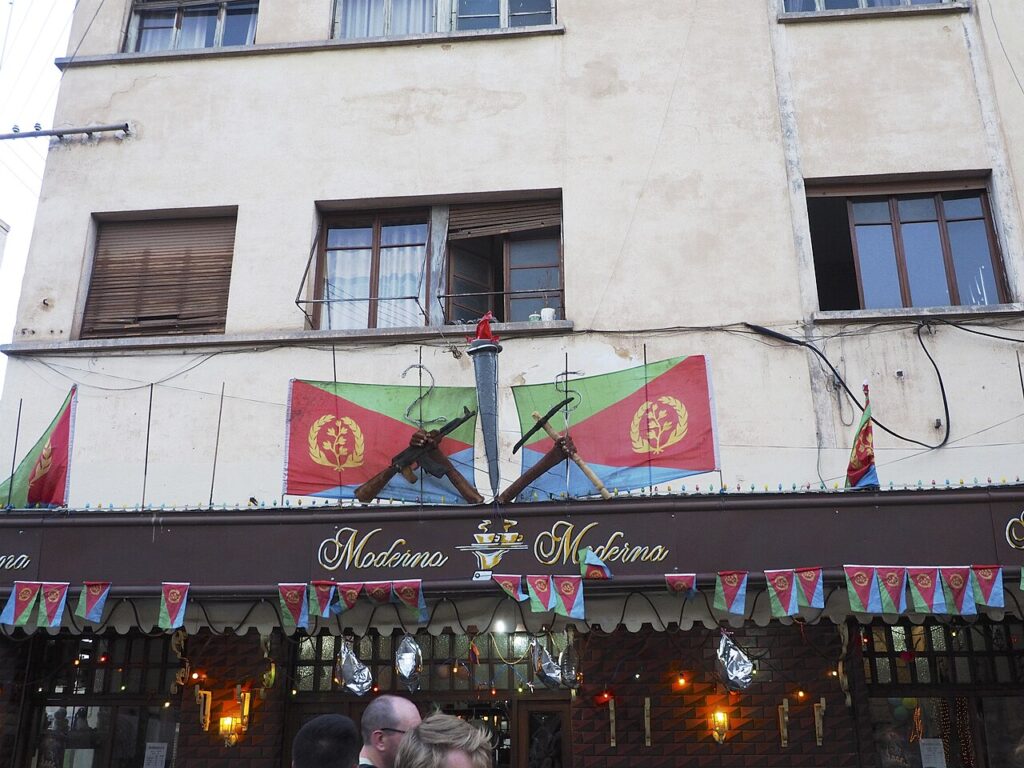
الصورة: شارع في أسمرة عاصمة إريتريا — Clay Gilliland from Chandler, U.S.A.، ويكيميديا كومنز (CC BY-SA 2.0) — صفحة الصورة
عدم التعامل الدولي معه سيعزز العناصر المتطرفة
نُشرت هذه المقالة أولًا في صحيفة «القدس العربي» بتاريخ 24 أكتوبر 2007. رابط النص الأصلي
منذ جثم الاحتلال الإثيوبي على الصومال وطرد المحاكم الإسلامية، لم تتوقف المؤتمرات التشاورية في كثير من المغتربات حيث كان يتم تداول الأفكار وطرح التصورات وكان الرأي السائد ضرورة إنشاء كيان سياسي يجمع القوى المناهضة للاحتلال لقيادة العمل السياسي والعسكري ضده. وربما كان كاتب هذه السطور أول من كتب وعرض تلك الفكرة في مقاله «المحاكم الإسلامية: أسباب السقوط ومقومات النهوض» المنشور على موقع الجزيرة نت بعد شهر من دخول القوات الإثيوبية العاصمة الصومالية. وقد أنضج الفكرة فيما بعد في عدد من الأوراق التي قدمها في المؤتمرات التي شارك فيها في عواصم أوروبية وعربية خلال هذا العام. وبمرور الوقت وبعد مناقشتها من قبل الكثيرين ازدادت نضجا ووضوحا وقبولا. وتخللت المؤتمرات الجامعة اجتماعات خاصة للمكونات الأربعة كل على حدة، تؤطر فيها اتجاهاتها وخياراتها، من بينها اجتماع عقدته المحاكم في أوائل حزيران (يونيو) لتقييم تجربتها ووضع مشروعها المستقبلي. تلاه مؤتمر الدوحة في 6 ـ 8/ حزيران (يونيو) 2007م الذي شاركت فيه قيادات من المحاكم والبرلمان إلى جانب المغتربين والمجتمع المدني. وقدمنا فيه ورقة مفصلة حول الفكرة بعنوان «الطريق لإنقاذ الصومال» وقد نوقش المشروع واتفق على تشكيل لجنة تحضيرية لمؤتمر يتم فيه تشكيل هذا التحالف والإعلان عنه في أقرب فرصة. وتم تشكيل لجنة من المكونات الأربعة عكفت شهرين لصياغة البرنامج السياسي وميثاق التحالف. وعلى إثره عقد في أسمرة مؤتمر تحرير وإعادة تكوين الصومال الذي حظيت جلساته بتغطية إعلامية جيدة ولا سيما من القناة الصومالية العالمية يونيفرسال التي تبث من لندن وتابع نقاشاته ومداخلاته الصوماليون في الداخل والخارج، والمواقع الصومالية. واستمر المؤتمر تسعة أيام متوالية خاضت فيه الأطراف المجتمعة نقاشا جادا، بل وحادا في بعض الأحيان، أثمر اتفاقا على برنامج سياسي وميثاق وطني. وفي الرابع عشر من أيلول (سبتمبر) 2007 اختتم المؤتمر وأعلن عن إنشاء تحالف تحرير الصومال من الاحتلال الإثيوبي يضم جميع القوى المناهضة للاحتلال وعلى رأسها اتحاد المحاكم الإسلامية والبرلمان الحر والمغتربون الصوماليون والمجتمع المدني وبعض الشخصيات المرموقة. ولم يأت هذا التطور طفرة بل ضمن سياق تطور طبيعي للجهود المبذولة من القوى المناهضة للاحتلال، حمل دلالات معينة في السياق التاريخي والراهن للأزمة الصومالية، مما جعل مواقف الأطراف المحلية والإقليمية والدولية واضحة منذ اليوم الأول للمؤتمر، وخلق فرصا وتحديات أمام التحالف الجديد.
دلالات إنشاء هذا التحالف وآثاره
ينظر الكثير من الصوماليين إلى هذا التحالف كتطور في الفكر السياسي الصومالي سيؤثر على الرؤية والطريقة التي سيعالج بها الصوماليون مشاكلهم في المستقبل القريب والبعيد. وسيكون نقطة ارتكاز للحلول القادمة للأزمة الصومالية. ومن أهم دلالاته:
- أنه الأول من نوعه سياسيا منذ الحرب الأهلية بين قوى وطنية وإسلامية على مبدأ غير قبلي متجاوزا مبدأ تقاسم السلطة على أساس قبلي وهمي تكرس في جميع مؤتمرات السلام الصومالية. وهو أول تجمع سياسي يوحد جميع شرائح المجتمع الصومالي على مبدأ الاستقلال من الوجود الإثيوبي على غرار حزب وحدة الشباب الصومالي الذي أنشئ في 1943م لمواجهة الاستعمار الأوروبي وقاد إلى الاستقلال منه 1960م. وبالتالي فإن التحالف أعطى دفعة من الأمل للشعب الصومالي بأن بالإمكان توحد القوى المناهضة للاحتلال ولو على قدر مبدئي من التوافق.
- توحد التيارات الإسلامية المتعددة التي تحمل الفكر السلفي المتشدد منه والوسطي، والإخواني والتبليغي وغيرها في إطار وطني موحد، ثم دخولهم في نقاش أيديولوجي مع تيارات فكرية وتوجهات سياسية أيديولوجية مختلفة وذوّبوا خلافاتهم في مواجهة الاحتلال. مما يشكل تطورا نوعيا ـ حتى على المستوى العربي ـ يمكن البناء عليه ليفرز فيما بعد تعايشا وقبولا سياسيا يفضي إلى التعددية السياسية والتداول على السلطة دون تكفير أو إقصاء.
- تحمل المشاركين لتكاليف سفرهم وبعضا من تكاليف إقامتهم خلال المؤتمر جعل قراراتهم ومواقفهم السياسية مستقلة ونابعة من إحساسهم بمسؤولياتهم تجاه وطنهم دون إملاء من أحد، بعكس المؤتمرات السياسية التصالحية السابقة حيث كانت الغنائم تقسم لخدمة استراتيجيات جهات معينة، ويجري فيها شراء الذمم علنا.
- تقوية وتعزيز دور عناصر مهمة في تشكيل الرؤية السياسية المستقبلية للصومال كان يتم تهميشها أو إقصاؤها في المؤتمرات السابقة التي كان يسيطر عليها أمراء الحرب، ولا سيما التيار الإسلامي.
- بروز دور المغتربين الصوماليين في القرار السياسي الصومالي مستقبلا حيث كانت مشاركتهم في المؤتمر مكثفة كما وكيفا وبكيانهم المستقل عن الكيانات الأخرى، بعكس المؤتمرات السابقة التي كان المغتربون يشاركون فيها كشخصيات تابعة لأمراء الحرب أو ممثلة لقبائلها. بينما شارك في هذا المؤتمر ودخل في التحالف مثقفون يحملون همّ وطنهم ويريدون أن يساهموا في صياغة سياسته المستقبلية على أسس جديدة مستفادة من خبراتهم التي اكتسبوها من العيش في ديار الغرب.
- يتجلى لنا ما يمكن أن يضيف إليه التحالف الجديد في المشهد السياسي الصومالي حاضرا ومستقبلا بالنظر إلى مجموع ما تمثله القوى الأربع المتحالفة من تواجد عسكري على الأرض وقبول شعبي للمحاكم الإسلامية، والشرعية السياسية التي يمثلها البرلمانيون الأحرار، والقوة المالية والخبراتية والكفاءة الإدارية والسياسية التي يحملها المغتربون وقدرتهم على التأثير في الدول التي يتواجدون فيها، والتفاعل اليومي مع المجتمع الذي تمثله قوى المجتمع المدني عبر الخدمات التي يقومون بها وارتباطهم بالجمعيات والتنظيمات الدولية، إضافة إلى الثقل السياسي الذي تشكله الشخصيات السياسية المشهورة والمشهود لها بالوطنية.
وظهرت آثار التحالف على الوضع الصومالي بشكل سريع حتى قبل أن يتحرك أعضاؤه من أسمرة. فعسكريا اشتدت ضربات المقاومة لقوات الاحتلال وعملائها كما وصلت إلى مقر الحكومة الرسمي في بيدوة بعد أن أقضت مضجعها في مقديشو، كما تداعى هيكل ما يسمى بالحكومة الفيدرالية الانتقالية التي جاءت على ظهر الدبابات الإثيوبية والصواريخ الأمريكية، وأسقط في يد داعميها في واشنطن وأديس أبابا. فقد دب خلاف كبير بين قطبي هذه الحكومة العميلة واشتد التنابز والتباعد بينهما ولم تستطع حتى الآن محاولة ترميم خلافهما وتأخرت جلسات البرلمان، واصطف الوزراء ونواب البرلمان بين الرجلين على أساس قبلي ومصلحي لم يحدث منذ دخول الاحتلال للصومال. مما أجبر إثيوبيا على استدعائهما إلى أديس أبابا للنظر في رتق الفتق الذي اتسع على الراقع. وعلى إثر ذلك تغير الخطاب العربي والغربي عن المقاومة الصومالية بدل اتهامه بالإرهاب حيث بدأت بوادر تفهم القوى المناهضة للاحتلال وإن على استحياء، مما يؤشر على الدور الذي يمكن أن يلعبه هذا التحالف في مستقبل الصومال السياسي. ومما أشار إلى ذلك جولة المشاورات السنوية الأخيرة بين مصر وإيطاليا التي عقدت مؤخرا في روما حيث تناولت الأوضاع في الصومال، خاصة التطورات الأخيرة وما عكسه اجتماع أسمرة من اتجاهات معتدلة وشدد الجانبان على ضرورة التنسيق مع كافة الأطراف الصومالية المعنية.
المواقف المعلنة من التحالف
وعيا بالدلالات التي سبق سردها وعلما بالدور الذي يمكن أن يلعبه التحالف الجديد تشكلت المواقف المحلية والإقليمية والدولية من التحالف حتى قبل الإعلان عنه. فمحليا كانت متابعة الصوماليين للمؤتمر ملفتة عبر المواقع الصومالية الإلكترونية، ويشهد على ذلك كمّ المقالات التحليلية التي كتبت عنه والنقاش السياسي الذي دار حوله خلال فترة انعقاد المؤتمر وكان معظمه إيجابيا. وازدادت ضربات المقاومة الصومالية على القوات الإثيوبية خلالها نظرا لارتفاع معنوياتها. وعموما كان استقبال الشعب الصومالي في الداخل والخارج إيجابيا إلى درجة كبيرة.
أما الحكومة الفيدرالية ومن ورائها الحكومة الإثيوبية فقد استبقتا الأحداث ونددتا بإريتريا وبالمؤتمر واصفتين إياه بالإرهابي، ولم يبد موقف الولايات المتحدة الأمريكية مختلفا إذ وجهت جينداي فريزر مساعدة وزيرة الخارجية للشؤون الأفريقية، انتقادات شديدة اللهجة للمؤتمرين في أسمرة ووصفتهم بالإرهابيين، وأثناء مشاركتها في اجتماع مجموعة الاتصال الدولية حول الصومال في روما في العاشر من أيلول (سبتمبر) اتهمت الحكومة الإريترية بكونها سببا لتفاقم العنف في الصومال عبر دعمها للمتمردين، ودعت المجتمع الدولي إلى قطع الدعم المالي لإريتريا حتى توقف دعمها لهم.
أما الدول الأوروبية فيبدو أن الموقف الأمريكي مؤثر عليها، فهي رغم تبرمها مما يحدث في الصومال إلا أنها ما زالت تعلن دعمها للحكومة الشرعية رغم تسليمها بعدم قدرتها على فعل شيء، وللخروج من الحرج يتم التركيز على استبدال القوات الإثيوبية بأخرى دولية تأتي تحت مظلة الأمم المتحدة، كما برز في اللقاء الأخير بروما، ولكن يبقى ذلك حتى الآن كلاما فقط. وبقيت الدول العربية صامتة متفرجة، ما عدا المحاولة السعودية التي جاءت لتتوج المؤتمر الذي عقد في مقديشو وتصوره على أنه مؤتمر مصالحة وطني رغم استبعاده العنصر الأهم في الصراع. ورأى الكثير من الصوماليين أن الخطوة السعودية جاءت بإيحاء من أمريكا لإضفاء شرعية ما وزخم على المؤتمر الذي أعلن العديد من المراقبين الدوليين فشله في مقديشو. ولكن إيجابية المؤتمر تكمن في دعوة أطراف الحكومة الفيدرالية لأول مرة باستبدال القوات الإثيوبية بأخرى عربية وإسلامية، ربما لسحب البساط من حجة المتحالفين بأسمرة أو هو يعكس الصراع بين أجنحة ورؤوس الحكومة الفيدرالية فيما بينها، الذي برز جليا فور عودتهم من السعودية.
ولكن تدهور الأوضاع في الصومال وانشقاق قطبي الحكومة الانتقالية إضافة إلى عدم تمكن القوات الإثيوبية من حسم الأمور سيجعل الكثير من الدول ينظر إلى الأمور بمنظار آخر وسيتغير الموقف قريبا من التحالف كما شاهدنا في الموقف المصري والإيطالي الذي أشرنا إليه آنفا.
الفرص والتحديات
إشارة إلى الإمكانيات التي ذكرنا بعضها آنفا للقوى المشكلة للتحالف الجديد يمكن رؤية الفرص التي يمتلكها، ويعتمد نجاحه مستقبلا على كيفية توظيفه الجيد لها. وأهمّ هذه الفرص:
- قدرة المغتربين في التأثير السياسي على الدول التي يقيمون فيها عبر الوسائل القانونية للضغط على صناع القرار.
- قدرة النخبة المثقفة فيه في التأثير على مراكز الدراسات الغربية التي تغذي صناع القرار، وذلك عبر المشاركة الفعالة في اللقاءات والندوات وتقديم الدراسات الجادة بشرح القضية الصومالية بشكل أعمق يساعد على فهمها لمواجهة التفسير النمطي المروج من إثيوبيا على أنها صراع بين قبائل بدوية ورعوية.
- قدرتهم على استخدام الدعم الشعبي وإبرازه بشكل جيد وإظهار حقيقة أن التحالف الجديد ليس المحاكم الإسلامية التي كان الغرب يخشى من توجهها الإسلامي المتشدد.
- توفر التحالف على كفاءات إعلامية وسياسية ودبلوماسية وإدارية يعطيها قدرة على ملء الكثير من الفراغات التي كانت ملحوظة من قبل على المحاكم الإسلامية.
- خاصية التوازن بين العسكري والدبلوماسي بدل التركيز أو الاعتماد الكلي على الجانب العسكري فقط.
- وعي الشعب الصومالي أكثر ـ وإن لم يكن بالقدر المطلوب ـ وفهمه لألاعيب الاحتلال الإثيوبي يجعل من السهل على التحالف أن يجد محضنا شعبيا في كثير من المناطق الصومالية.
- فرصة دعم الإعلام الصومالي يمكن استخدامها لتعبئة الشعب وتحريضه ضد الوجود الإثيوبي والمتعاملين معه. أما التحديات فيمكن تقسيمها باعتبار مصدرها إلى ذاتية وموضوعية، وباعتبار نوعها إلى اجتماعية واقتصادية وسياسية، وباعتبار بيئة تفاعلها إلى صومالية وأجنبية.
ولكن لعدم سماح الحيز المسموح به هنا بالتقسيم والتصنيف نوجز فيما يلي أبرز التحديات:
- مرض القبلية الذي أصاب الشعب الصومالي وجعله يرصد كل تحرك عبر العدسة القبلية.
- عدم تمتع الشخصية الصومالية ـ بغض النظر عن موقعها قائدا أو مقودا ـ إلا من رحم ربك، بالقدر المطلوب من الحس الوطني والنضج السياسي والنزاهة والقدرة على استيعاب المتغيرات، وسيحتاج هذا لجهد كبير من التحالف لرفع مستوى ذلك، ليس فقط في داخل الشعب بل أيضا في داخل أفراده وإن كان المظنون بأغلبهم الإخلاص للقضية.
- يبدو أن كيفية التوازن والتوفيق بين الخطابين المتشدد والدبلوماسي والاعتماد على العسكرة والسياسة سيشهدان شدا وجذبا في كل حين بين أطراف التحالف.
- حفظ التحالف مما يمكن أن يؤدي إلى التباين القوي الذي سيهدد استمرار التحالف ويفضي إلى الطلاق البائن بين أطرافه. والعمل في اتجاه السعي المستمر إلى التوافق والتفاهم أملا في الدمج الكامل للقوى والانتقال من طور التحالف إلى التنظيم الموحد. هذا بالتأكيد سيحتاج إلى تقديم التنازلات من كل الأطراف.
- يتمثل التحدي الخارجي الأكبر في كيفية إقناع المجتمع الدولي بأن التحالف بعيد عن تهمة الإرهاب التي وصم بها من قبل الولايات المتحدة الداعمة لإثيوبيا. بل وإقناعه بأنه البديل الشرعي للحكومة الفيدرالية، والممثل لمصالح الشعب الصومالي.
- التخطيط للخروج من عنق الزجاجة المتمثل في تمركز التحالف في إريتريا، والسعي إلى الانفتاح على العالم والتواصل المستمر معه، فإريتريا رغم موقفها الداعم واللامحدود تبقى محدودة القدرات ومعزولة عن العالم بسبب مشاكلها مع الغرب، ولا يمكن التواصل مع العالم الخارجي من خلالها.
- كيفية إقناع الدول العربية والإسلامية ولا سيما ذات الوزن الإقليمي بتبني رؤية التحالف وفتح مكاتب له فيها لفتح آفاق العالم أمامه.
- قد يكون إقناع العالم بإمكانية إمساك العصا من الوسط والاعتماد على المقاومة العسكرية والسياسية صعبا في نظام عالمي يصر على تصنيف المقاومات العسكرية تحت بند الإرهاب.
ومهما يكن من أمر فإن مستقبل الصومال سيشهد مع بروز هذا التحالف الجديد تطورا كبيرا، وإن مواقف الدول من فتح آفاق التعاون أو قفل الأبواب دونه ستلعب دورا كبيرا في حل أو تأزيم الوضع الصومالي المعقد. لأن عدم التعامل معه ـ من وجهة نظرنا ـ سيعزز القوى المتشددة والمتطرفة في الصومال والقرن الأفريقي بوجه عام مما سيؤدي إلى تفاقم مشاكله، بينما التعامل معه وفتح نافذة الأمل أمامه سيلين من المواقف المتصلبة ويبرز دور المعتدلين الذين سيكونون هم قادة العمل السياسي القادم. وعلى المجتمع الدولي أن يختار.
A Reading of the Prospects for the Alliance for the Liberation of Somalia1
Image: A street in Asmara, capital of Eritrea — Clay Gilliland from Chandler, U.S.A., Wikimedia Commons (CC BY-SA 2.0) — Image page
International refusal to deal with it will strengthen the extremist elements
This article was first published in the newspaper Al-Quds Al-Arabi on 24 October 2007. Link to the original text
Ever since the Ethiopian occupation came to lie heavy on Somalia and drove out the Islamic Courts2, consultative conferences have been held without pause in many places of the diaspora, where ideas were exchanged and proposals put forward. The prevailing view was that a political body was needed to unite the forces opposed to the occupation and to lead the political and military struggle against it. The writer of these lines was perhaps the first to set out that idea in writing, in his article “The Islamic Courts: The Causes of the Fall and the Foundations of a Revival”, published on Al Jazeera Net a month after Ethiopian forces entered the Somali capital. He later developed it in a number of papers presented at conferences he attended in European and Arab capitals during this year. Over time, as many people discussed it, the idea grew more mature, clearer and more widely accepted. In between the general conferences, each of the four components3 held meetings of its own to set out its direction and its options. Among them was a meeting held by the Courts in early June to assess their experience and lay down their plan for the future. It was followed by the Doha conference of 6–8 June 2007, attended by leaders of the Courts and of the parliament alongside members of the diaspora and civil society. There we presented a detailed paper on the idea, entitled “The Road to Saving Somalia”. The project was discussed, and it was agreed to form a preparatory committee for a conference at which this alliance would be formed and announced at the earliest opportunity. A committee drawn from the four components was set up and spent two months drafting the alliance's political programme and charter. After that came the Conference for the Liberation and Reconstitution of Somalia in Asmara4. Its sessions received good media coverage, especially from the Somali channel Universal TV, which broadcasts from London, and its debates and contributions were followed by Somalis at home and abroad and by Somali websites. The conference ran for nine consecutive days, in which the parties held serious, at times even heated, debate that bore fruit in agreement on a political programme and a national charter. On 14 September 2007 the conference closed with the announcement of the Alliance for the Liberation of Somalia from the Ethiopian Occupation, which brings together all the forces opposed to the occupation, chief among them the Islamic Courts Union, the free parliament, the Somali diaspora, civil society and a number of eminent figures. This development did not come out of nowhere. It came as part of the natural evolution of the efforts made by the forces opposed to the occupation, and it carried particular meanings within the historical and present context of the Somali crisis. That is why the positions of local, regional and international parties were clear from the first day of the conference, and why it created opportunities and challenges for the new alliance.
What the Formation of This Alliance Signifies, and Its Effects
Many Somalis see this alliance as a development in Somali political thought that will shape the vision and the method with which Somalis address their problems in the near and distant future. It will be a pivot for future solutions to the Somali crisis. Among the most important things it signifies:
- It is the first political grouping of its kind since the civil war to bring national and Islamic forces together on a non-clan basis, moving beyond the principle, entrenched at every Somali peace conference, of sharing power on an illusory clan basis5. It is also the first political body to unite every section of Somali society on the principle of independence from the Ethiopian presence, on the model of the Somali Youth League, founded in 1943 to confront European colonialism, which led the country to independence from it in 19606. The alliance has thus given the Somali people a surge of hope that the forces opposed to the occupation can unite, even on a basic measure of consensus.
- The many Islamic currents, Salafism in both its hardline and its moderate forms, the Muslim Brotherhood school, the Tablighi movement and others7, have united within a single national framework. They then entered into ideological debate with intellectual currents and political tendencies different from their own, and dissolved their differences in the face of the occupation. This marks a qualitative advance, even by Arab standards, on which it is possible to build, so that it may later produce political coexistence and mutual acceptance, leading to political pluralism and the peaceful rotation of power, with no one branded an unbeliever and no one shut out.
- Because the participants paid their own travel costs and part of their accommodation during the conference, their decisions and political positions were independent, springing from their sense of responsibility towards their country and dictated by no one. This was unlike the earlier political reconciliation conferences, where the spoils were divided to serve the strategies of particular parties and consciences were bought openly.
- It strengthens and enhances the role, in shaping Somalia's future political vision, of important elements that were marginalised or excluded at earlier conferences dominated by the warlords, above all the Islamic current.
- It brings to the fore the role of the Somali diaspora in Somalia's political decisions in the future. The diaspora's participation in the conference was intensive in both numbers and quality, and it took part as a body independent of the others, unlike previous conferences, where members of the diaspora took part as followers of warlords or as representatives of their clans. At this conference, by contrast, those who took part and joined the alliance were intellectuals who carry their country's cares and want to help shape its future policy on new foundations drawn from the experience they have gained living in the lands of the West.
- What the new alliance can add to the Somali political scene, now and in the future, becomes clear when we consider the sum of what the four allied forces represent: the military presence on the ground and the popular acceptance of the Islamic Courts; the political legitimacy represented by the free parliamentarians; the financial strength, expertise and administrative and political competence that the diaspora brings, together with its ability to influence the countries where it lives; the daily engagement with society that the forces of civil society embody through the services they provide and their links with international associations and organisations; and, in addition, the political weight carried by well-known political figures of acknowledged patriotism.
The alliance's effects on the Somali situation appeared quickly, even before its members had left Asmara. Militarily, the resistance's blows against the occupation forces and their collaborators grew fiercer, reaching the government's official seat in Baidoa after robbing it of sleep in Mogadishu. The structure of the so-called Transitional Federal Government, which arrived on the back of Ethiopian tanks and American missiles, began to crumble, and its backers in Washington and Addis Ababa were left confounded. A deep rift opened between the two poles of this client government8; the name-calling and estrangement between them grew sharper, and attempts to patch up their quarrel have so far failed. Sessions of parliament were delayed, and ministers and members of parliament lined up behind the two men along lines of clan and self-interest, something that had not happened since the occupation entered Somalia. This forced Ethiopia to summon both men to Addis Ababa to see about mending a tear that had grown too wide for the one patching it9. Following this, Arab and Western discourse about the Somali resistance changed: instead of accusing it of terrorism, it began to show signs of understanding for the forces opposed to the occupation, however timidly. This points to the role the alliance may play in Somalia's political future. One sign of it was the latest round of annual consultations between Egypt and Italy, held recently in Rome, which dealt with the situation in Somalia, in particular the latest developments and the moderate tendencies reflected at the Asmara meeting; the two sides stressed the need to coordinate with all the Somali parties concerned.
Declared Positions on the Alliance
Aware of the meanings set out above, and knowing the role the new alliance could play, local, regional and international parties formed their positions on it even before it was announced. Locally, Somalis followed the conference with striking attention on Somali websites, as the number of analytical articles written about it, and the political debate around it while the conference was in session, bear witness; most of it was positive. The Somali resistance's blows against the Ethiopian forces also grew fiercer during that period, as its morale rose. On the whole, the Somali people at home and abroad received it very positively.
The Federal Government, and behind it the Ethiopian government, pre-empted events by denouncing Eritrea and the conference, describing it as terrorist. The position of the United States seemed no different. Jendayi Frazer, the Assistant Secretary of State for African Affairs, harshly criticised the participants in Asmara and called them terrorists. While attending the meeting of the International Contact Group on Somalia in Rome on 10 September, she accused the Eritrean government of aggravating the violence in Somalia through its support for the insurgents, and called on the international community to cut off financial support to Eritrea until it stopped supporting them.
As for the European states, they seem to be swayed by the American position. Though unhappy with what is happening in Somalia, they still declare their support for the legitimate government, even while conceding that it can do nothing. To escape the embarrassment, they concentrate on replacing the Ethiopian forces with international ones under the umbrella of the United Nations, as emerged at the latest meeting in Rome; but so far this remains mere talk. The Arab states remained silent onlookers, except for the Saudi initiative, which came to crown the conference held in Mogadishu and to present it as a national reconciliation conference, even though it had excluded the most important element in the conflict10. Many Somalis saw the Saudi step as prompted by America, to lend some legitimacy and momentum to the Mogadishu conference, which many international observers had declared a failure. The positive side of the conference, however, lies in the fact that factions of the Federal Government called for the first time for the Ethiopian forces to be replaced with Arab and Islamic ones, perhaps to pull the rug from under the argument of the allies in Asmara, or perhaps as a reflection of the struggle among the wings and heads of the Federal Government, which came into the open as soon as they returned from Saudi Arabia.
But the deteriorating situation in Somalia, the split between the two poles of the transitional government and the inability of the Ethiopian forces to settle matters will lead many states to see things through a different lens, and their position on the alliance will soon change, as we have seen in the Egyptian and Italian position mentioned above.
Opportunities and Challenges
In the light of the capabilities of the forces that make up the new alliance, some of which we have mentioned above, one can see the opportunities it holds, and its future success depends on how well it puts them to use. The most important of these opportunities are:
- The ability of the diaspora to exert political influence on the countries where they live, using lawful means to press decision-makers.
- The ability of its educated elite to influence the Western think tanks that feed decision-makers, by taking an active part in meetings and seminars and presenting serious studies that explain the Somali question in greater depth and help it to be understood, countering the stereotyped interpretation promoted by Ethiopia, which presents it as a conflict among nomadic, pastoral clans.
- The ability of its members to make use of popular support, to present it well, and to show that the new alliance is not the Islamic Courts, whose hardline Islamist orientation the West feared.
- The alliance has media, political, diplomatic and administrative talent that enables it to fill many of the gaps that were noticeable earlier in the Islamic Courts.
- Its balance between the military and the diplomatic, rather than a focus on, or total reliance on, the military side alone.
- The Somali people are more aware, though not yet as aware as they need to be, and better understand the games of the Ethiopian occupation, which makes it easy for the alliance to find a popular base in many Somali regions.
- The support of the Somali media, an opportunity that can be used to mobilise the people and rouse them against the Ethiopian presence and those who deal with it. As for the challenges, they can be divided by source into those arising from within the alliance and those arising from circumstances outside it, by type into social, economic and political, and by the environment in which they operate into Somali and foreign.
But since the space allowed here does not permit such division and classification, we summarise the most prominent challenges below:
- The disease of clannism, which has afflicted the Somali people and made them watch every move through a clan lens.
- The Somali character, whatever its position, leader or led, save those on whom your Lord has mercy11, lacks the necessary measure of patriotic feeling, political maturity, integrity and capacity to absorb change. Raising that level will demand great effort from the alliance, not only among the people but also among its own members, even though most of them are presumed to be sincere in their devotion to the cause.
- How to balance and reconcile the hardline and the diplomatic discourses, and the reliance on armed action and on politics, seems bound to be the subject of a constant tug-of-war among the alliance's parties.
- Protecting the alliance from whatever might lead to a sharp divergence that would threaten its survival and end in an irrevocable divorce between its parties12, and working towards a constant search for consensus and understanding, in the hope of fully merging its forces and moving from the stage of an alliance to that of a unified organisation. This will certainly require concessions from all sides.
- The greatest external challenge lies in persuading the international community that the alliance is far removed from the charge of terrorism with which it has been branded by the United States, Ethiopia's backer; and, beyond that, persuading it that the alliance is the legitimate alternative to the Federal Government and the representative of the interests of the Somali people.
- Planning a way out of the bottleneck of the alliance's being based in Eritrea, and seeking to open up to the world and keep in constant contact with it. Eritrea, for all its unlimited support, remains limited in its means and isolated from the world because of its problems with the West, and it is impossible to reach the outside world through it.
- How to persuade Arab and Islamic states, especially those with regional weight, to adopt the alliance's vision and let it open offices on their soil, so as to open the world's horizons to it.
- Persuading the world that it is possible to hold the stick by the middle13, relying on both military and political resistance, may be difficult in a world order that insists on classifying armed resistance movements as terrorism.
Be that as it may, the emergence of this new alliance will bring a major development in Somalia's future, and whether states open the way to cooperation with it or shut their doors to it will play a large part in resolving or aggravating the complex Somali situation. For, in our view, refusing to deal with it will strengthen the hardline and extremist forces in Somalia and in the Horn of Africa generally, and so make its problems worse, while dealing with it and opening a window of hope before it will soften entrenched positions and bring forward the moderates, who will be the leaders of the political action to come. The international community must choose.
Notes
- The alliance founded in Asmara in September 2007 is generally known in English as the Alliance for the Re-liberation of Somalia (ARS), the “re-” marking a second liberation after independence from colonial rule in 1960. The author, writing a month after its founding, uses the shorter Arabic name, the Alliance for the Liberation of Somalia, in full the Alliance for the Liberation of Somalia from the Ethiopian Occupation. ↩
- Ethiopian troops, backing Somalia's Transitional Federal Government with American support, entered the country in force in December 2006 and took Mogadishu on 28 December, ending some six months in which the Islamic Courts Union had controlled the capital and much of southern Somalia. ↩
- The four components were the Islamic Courts Union; the so-called free parliament, members of the Transitional Federal Parliament who had broken with the government, led by its former speaker Sharif Hassan Sheikh Aden; the Somali diaspora; and civil society. ↩
- Asmara is the capital of Eritrea, which fought a border war with Ethiopia in 1998–2000 and has remained its bitter rival. The conference met there from 6 to 14 September 2007. ↩
- Since the Arta conference of 2000, Somali peace conferences, including the talks in Kenya (2002–04) that produced the Transitional Federal Government, have shared out seats by the so-called 4.5 formula: equal shares for the four major clan families and a half share for the smaller clans together. ↩
- The Somali Youth League began in Mogadishu in 1943 as the Somali Youth Club and took its later name in 1947. Recruiting across clan lines, it led the campaign for independence and became the governing party when the former British and Italian territories won independence and united in 1960. ↩
- These are the main strands of Islamic activism in Somalia: Salafism, which the author divides into hardline and moderate wings; the Muslim Brotherhood school, represented chiefly by the Islah movement; and the Tablighi Jamaat, a quietist missionary movement. ↩
- The two poles were President Abdullahi Yusuf Ahmed and Prime Minister Ali Mohamed Gedi, whose feud paralysed the Transitional Federal Government in the autumn of 2007. Gedi resigned on 29 October 2007, five days after this article appeared. ↩
- The author adapts the Arabic proverb ittasaʿa al-kharqu ʿalā al-rāqiʿ, “the tear has grown too wide for the one patching it”, said of damage past repair. ↩
- The National Reconciliation Congress, organised by the Transitional Federal Government, met in Mogadishu from July to August 2007 without the Islamic Courts and the armed opposition. Saudi Arabia afterwards received the government's leaders in the kingdom to endorse its outcome. ↩
- Illā man raḥima rabbuk, “save those on whom your Lord has mercy”, echoes the Qur'an (Hud 11:119) and is a common Arabic formula for exempting the few from a general judgement. ↩
- Al-ṭalāq al-bāʾin, in Islamic law, is a final divorce after which husband and wife cannot simply resume their marriage, as they can after a revocable one. The image is of a split beyond repair. ↩
- To “hold the stick by the middle” (imsāk al-ʿaṣā min al-wasaṭ) is an Arabic idiom for steering a middle course between opposing positions: here, between armed struggle and diplomacy. ↩
English translation prepared by artificial intelligence and reviewed against the Arabic for accuracy of meaning and rhetoric.