
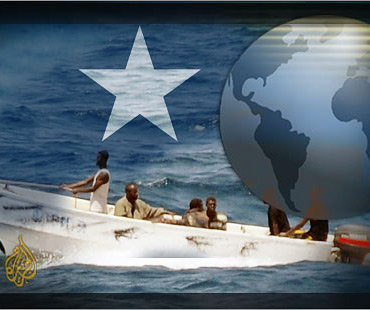
هذا النص هو الجزء الأول («القرصنة.. رؤية من الداخل») من ورقة «القرصنة الصومالية» التحليلية المشتركة مع محمد شريف محمود وسمير العبدلي، ونُشرت أولًا في موقع مركز الجزيرة للدراسات (الجزيرة نت) بتاريخ 29 ديسمبر 2008. رابط النص الأصلي
أصبحت القرصنة على الشواطئ الصومالية وخليج عدن قضية دولية مؤرقة وأخذت أبعادا بعيدة تهدد أمن الدول وتجارتها. فما يمر أسبوع إلا وتسمع في وكالات الأنباء ووسائل الإعلام أن سفينة كبيرة ومهمة قد استولى عليها القراصنة الصوماليون، مما حدا بالأمم المتحدة وحلف الناتو والدول الكبرى إلى التدخل في القضية، وكأننا أمام أزمة قد تفجر حربا عالمية ثالثة. فما هي القصة ومن هم هؤلاء القراصنة؟ وما الذي دفعهم إلى القرصنة؟ وماذا يريدون وما هي أهدافهم؟ ومن يقف خلفهم – إن كان هناك من أحد أو جهة- وكيف يقومون بعملياتهم البحرية؟
بداية الظاهرة في الصومال
بدأت ظاهرة القرصنة منذ انهيار الدولة الصومالية عام ١٩٩١م وسيطرة عصابات أمراء الحرب ومليشياتهم القبلية على أجزاء الصومال المختلفة. ولم يتمكن هؤلاء من ملء الفراغ الذي تركه انهيار الدولة، بل بدأت حرب أهلية مدمرة وفرت فرصة لسفن الصيد الأجنبية لغزو شواطئ الصومال في وقت مبكر لنهب الخيرات الوفيرة في البحر. فساحل الصومال يعد الأطول أفريقيا حيث يقدر بـ ٣٣٠٠ كم، ويتوفر على ثروة بحرية وفيرة ومتنوعة بما فيها طيور البحر والحيتان وأسماك القرش والعديد من أنواع السلاحف والدلافين.. إلخ(1)، وقد أصبح مرتعا لكل من هب ودب في ظل غياب سلطة الدولة.
كان الصيادون المحليون يشكون من أن شباكهم الصغيرة وغيرها من معدات صيد الأسماك تتعرض للتدمير من قبل السفن الأجنبية العملاقة مرارا وتكرارا مما أثار المواجهة المباشرة بين السفن الأجنبية والصيادين في المناطق القريبة من الشاطئ الصومالي. وقد بح صوت سكان السواحل الصومالية في طلب مساعدتهم على وضع حد لممارسات سفن الصيد الأجنبية التي لا قبل لهم بها، ولكن شيئا من ذلك لم يحدث.
ونشأت لدى بعض الشباب رغبة للانتقام فحاولوا مطاردة هذه السفن باستخدام زوارق سريعة وبنادق مما يدافعون بها عن أنفسهم في فوضى الحرب الأهلية. وهنا لجأت الشركات المتسللة إلى تغيير أساليبها في مواجهة هذا التحدي فسعت إلى استصدار تراخيص تمنحهم حق صيد الأسماك على طول الساحل من أمراء الحرب الذين سهلوا المهمة في مقابل ملايين الدولارات التي تمنح لهم من طرف هذه الشركات. فقد كانت كل منطقة تخضع لأمير حرب ومليشياته القبلية، وكانت كل مجموعة تجوب المنطقة التي تخضع لها مدعية أنها تقوم بدور خفر السواحل. وهكذا تمكنت هذه السفن من ممارسة عملها دون خوف من الشباب المحليين. وكانت تمخر البحر تحت حماية مليشيات تابعة لأمراء الحرب المنتفعين وتمنع الشباب المحليين من التعرض لها(2). وإذا حدث أن اقتربت السفن الكبيرة جدا إلى الشواطئ بحيث تحرم قوارب الصيادين المحليين من رزقهم اليومي فإنهم يضطرون عندئذ لمقاومتها، في مقابل ذلك كانت السفن الكبيرة تواجههم بعنف مبالغ فيه بالأسلحة النارية الثقيلة وبخراطيم ضغط المياه لقلب قواربهم الصغيرة.
وعلى هذا الأساس أصبحت المياه الصومالية محط سفن الصيد الكبيرة التي تمارس الصيد باستخدام معدات الصيد المحظورة عالميا، بما فيها الشبكات ذات الفتحات الصغيرة جدا والنظم المتطورة للإضاءة تحت الماء لجذب الأسماك إلى الفخاخ والتجريف المحرم دوليا والشباك الخيشومية التي تقضي على مصائد الأسماك الشاطئية مما يعرض الموارد البيولوجية لخطر انهيار يؤثر على المدى الطويل على الرفاه الاجتماعي والاقتصادي للمجتمعات الساحلية. فقد جرى نهب جواد البحر وسمك القرش والموارد الأخرى. ويقدر ما جرفته هذه السفن من الشواطئ الصومالية ٢٥٠٠٠ طن سنويا(3). وكانت الاستفادة متبادلة بين الأساطيل الأجنبية والمليشيات وأمراء الحرب الذين يستصدرون لهم الرخص ولذلك كان الجميع يعمل على عدم عودة الاستقرار للصومال. وشملت شركات الدول المستفيدة فرنسا وإسبانيا والهندوراس واليابان وكينيا وسريلانكا وكوريا وباكستان وتايوان وغيرهم. وكانت السفن تحمل أعلاما لدول غير مشهورة حتى تتجنب أنظمة دولها(4).
وبعد أن أصيب الشباب بالإحباط بعدما تولت مليشيات أمراء الحرب حماية سفن الصيد، تحولوا إلى السفن التجارية بدل سفن الصيد، وأصبح الهدف بعد ذلك سهلا باستخدام زوارق سريعة مسلحة بمجموعة من الأسلحة. فبعد الاستيلاء على السفينة التجارية وطاقمها يطلبون الفدية مقابل إطلاق سراحهم، وقد انضمت إليهم لاحقا مليشيات أمراء الحرب بعد أن رأى رجالها أن هذه الطريقة أسرع في الكسب من العمل لدى أمراء الحرب، وهنا بدأت القرصنة تنحرف عن مسارها لتتعرض للسفن التي تقوم بإيصال المساعدات الغذائية من برنامج الأغذية العالمي للصوماليين أنفسهم الذين تتعرض حياتهم للتهديد جراء الكوارث الطبيعية والحروب الأهلية. وهناك تقارير تفيد بأن الخلافات داخل المجموعات أحيانا تؤدي إلى أن تصفي مجموعة واحدة الأخرى(5).
كما كانت المليشيات التي تدعي أنها تقوم بدور خفر السواحل تطوعيا تستولي على بعض السفن التي لا تدفع لهم مقابلا ليتم دفع الفدية لإطلاقها. وبدأ ذلك في السنين الأولى من الحرب الأهلية، وربما تكون أول محاولة قرصنة قد تمت في آذار / مارس ١٩٩٥ حيث أطلقت المليشيات قذائف هاون على يخت بريطاني اسمه (لونجو باردا) في خليج عدن وحاولوا الصعود على اليخت لولا اقتراب البحرية الكندية (فريدريكتون) التي كانت تمر بالمكان(6).
وفي كانون الثاني/يناير ١٩٩٨م استولت مليشيات في شمال شرقي الصومال على سفينة بلغارية مربوطة بأخرى سورية وساعد في التفاوض شيوخ عشائر ورجال أعمال في بوصاصو، شمال شرقي الصومال، وتم الإفراج عن الطاقم والسفينة في فبراير مقابل ١١٠٠٠٠ دولار(7). ومنذ ذلك الحين عرضت إدارة بونت لاند في شمال شرقي الصومال استصدار رخص لسفن الصيد بشرط التزامها بممارسة ما أسمته “عمليات صيد سليمة”(8).
وكانت المواجهات بين سفن الصيد والقراصنة متواصلة في صمت دون أن تثير أحدا حتى بلغت سفن الصيد في عام ٢٠٠٥م حسبما تشير بعض الدراسات إلى نحو ٧٠٠ سفينة صيد أجنبية تقوم بالصيد غير المشروع في المياه الصومالية(9). ويقدر مسؤول في الأمم المتحدة أن عمليات الصيد غير المشروع في المياه الصومالية تدر ما يربو على ٣٠٠ مليون دولار سنويا(10). وحسب المكتب البحري الدولي فإن عمليات القرصنة المنفذة أو تلك التي تمت محاولتها والمبلغ عنها في مياه أفريقيا الشرقية ومنذ عام ٢٠٠٠ وحتى عام ٢٠٠٤ على التوالي تبلغ ٢٨، ٢٢، ١٩، ١٨، ١٣(11)، وهذا يشير إلى أن معدل القرصنة كان في تراجع ملحوظ. ولكن بدأ في الارتفاع بعد ذلك منذ ٢٠٠٥م حتى الآن فيما عدا فترة المحاكم الإسلامية وهي النصف الأخير من عام ٢٠٠٦.
إلقاء النفايات السامة والنووية على سواحل الصومال
ولم تكتف الشركات الغربية باستغلال الوضع بممارسة الصيد المحرم دوليا بل قامت بإلقاء النفايات الخطرة في الصومال خلال الحرب الأهلية الصومالية. وتشير التقارير إلى أن هذا العمل بدأ قبل عامين من انهيار الحكومة المركزية أي في عام ١٩٨٩، ولكن بدأت تظهر في وسائل الإعلام في خريف ١٩٩٢ حيث أشارت التقارير في وسائل الإعلام الدولية إلى وجود شركات أوروبية – دون ذكر أسماء – تقوم بإلقاء النفايات الخطرة والسامة بصورة غير شرعية في الصومال(12).
وما أثار الجدل حينها في ١٩٩٢ كان ورود أنباء عن إبرام شركات أوروبية عقودا مع أمراء الحرب الصوماليين ورجال الأعمال لإلقاء النفايات في البلاد. وكانت الشركات المتهمة حينها شركات إيطالية وسويسرية. وفي بيان صحفي من جانب المدير التنفيذي لبرنامج الأمم المتحدة للبيئة (UNEP) في حينه الدكتور مصطفى كمال طلبة(13)، الذي كان حينها مقيما في نيروبي أشار إلى أنه أصبح من الواضح أن الشركات الأوروبية تتخلص من نفاياتها الخطرة في الصومال. ولكن برنامج الأمم المتحدة لم يبدأ في التحقيق في القضية إلا بعد خمس سنوات أي في عام ١٩٩٧م حيث انتدب لمهمة القيام بالتحقيق الميداني فريق يترأسه صومالي لتنفيذ تحقيق ميداني في كثير من المناطق في الصومال وخاصة في المناطق الساحلية. ولكن المثير في الأمر أن نتائج التحقيق الذي كتبه الفريق في تقريره لم تنشر أصلا. ولكن مجلة “الأسرة المسيحية” الإيطالية (Famiglia Cristiana) نجحت في العثور على نسخة منه في عام ١٩٩٨. وقامت المجلة بتحقيقات خاصة بها أيضا ثم تولت نشر عدة مقالات حول هذا الموضوع(14).
وفي ضوء هذه التقارير وما أثارته من ضجة حينها باتهام شركات إيطالية وسويسرية بالضلوع في الموضوع، طالب البرلمان الإيطالي بدراسة المسألة وأنشئت لجنة لتقصي الحقائق، وقد خلص التقرير النهائي الذي نشر في عام ٢٠٠٠ إلى أن ما يسمى بـ “المافيا البيئية” تدير شركات تتعامل مع ٣٥ مليون طن من النفايات سنويا(15).
ووجدت الشركات الأوروبية أنه يمكنها في ظل الفوضى الصومالية التخلص من النفايات الخطرة بتكلفة أقل من ٢.٥ دولار بينما يكلفهم الأمر ٢٥٠ دولارا في أوروبا. وتلقى في الصومال مختلف أنواع النفايات ومنها نفايات اليورانيوم المشع وهناك نفايات المعادن الثقيلة مثل الزئبق والكاديوم والنفايات الصناعية والكيميائية ونفايات المستشفيات إلخ(16). ولا يزال إلقاء النفايات والصيد المحرم مستمرا حتى اللحظة، وجاء تأكيد ذلك على لسان مفوض الأمين العام للأمم المتحدة في الصومال السيد أحمدو ولد عبد الله في أكثر من مناسبة(17).
ومما يغضب الصوماليين بصفة عامة أن الدول والمنظمات لم تحرك ساكنا بل التزمت الصمت عندما كانت السفن الأجنبية تقوم باستغلال الموارد السمكية بصورة غير قانونية وبإلقاء النفايات السامة والنووية في البلد، بينما تقيم الدنيا ولا تقعدها عندما تتعرض سفنهم للقرصنة، ويعدون ذلك من قبيل الكيل بمكيالين والنفاق السياسي. ويقول الأكاديمي الصومالي المعروف البروفيسور عبدي إسماعيل سمتر، من قسم الجغرافيا والدراسات الدولية في جامعة منيسوتا بالولايات المتحدة تعليقا على قرار الأمم المتحدة رقم ١٨٣٨ الذي يعطي الحق للدول المتعرضة للقرصنة الدفاع عن نفسها: “إن على الأمم المتحدة أن تنظر إلى قضية إلقاء النفايات السامة، وهذا ما لم يتم التعرض له في القرار ١٨٣٨”(18). وما يثير الاستغراب والقلق، الإثارة الدولية التي صاحبت عمليات القرصنة البحرية الأخيرة دون أن تجلب القرصنة السياسية التي كان يمارسها أمراء الحرب بدعم إقليمي ودولي وراح ضحيتها ملايين الصوماليين(19).
من هم هؤلاء القراصنة؟ بعد التعاون الذي تم بين الشباب في المناطق الساحلية شمال شرقي الصومال وبقايا المليشيات الذين استقلوا عن أمراء الحرب برزت مجموعات قوية تتشكل من ثلاثة عناصر أساسية(20).
- المليشيات التي كانت تعمل لدى أمراء الحرب وهم يشكلون القوة العسكرية.
- الصيادون المحليون وهم يشكلون الخبرة اللازمة بالبحر.
- مجموعة من التقنيين الذين يجيدون التعامل مع الأجهزة المتطورة التي يستخدمها هؤلاء.
وهذه المجموعة الأخيرة هي التي تقوم بالتواصل مع العالم الخارجي والتحدث إلى الطاقم كونها تجيد اللغات الأجنبية.. إلخ. وهناك مصادر تشير إلى أن عددا من قوات الشرطة في بونت لاند وعددا من المدرسين والمحامين تركوا عملهم والتحقوا بالقراصنة. بل إن مجموعات كبيرة من الشبان باتوا يأتون من مختلف أنحاء الصومال بما فيها العاصمة مقديشو ليجدوا لهم موضع قدم في سوق القرصنة المربح(21). وهناك تقارير إخبارية تشير إلى انضمام بعض الصيادين اليمنيين إلى القراصنة الصوماليين، ولكن الصورة لم تتضح بما يكفي في هذا الجانب بعد(22).
كيف تتم العملية؟ يتم احتجاز كل السفن المختطفة في مناطق مثل “أيل” و”غرعدي” في “بونت لاند” أو منطقتي “حرطيري” و”هبيو” الخاضعتين لقبيلة الهوية. ويملك القراصنة عددا من “السفن الأم” حيث يخزنون الأسلحة والوقود والإمدادات الأخرى على متنها. وعندما يجدون صيدهم الثمين من السفن الكبيرة فإنهم ينطلقون إليها بقوارب سريعة مجهزة بأسلحة ورجال يحملون بنادق AK47 ويتسلقون على متنها مستخدمين سلالم حبالية مفتولة حيث يصعدون بها إلى متن السفن الكبيرة. وتقول مصادر استخباراتية إن هناك ثلاث سفن صيد في خليج عدن يعتقد أنها تابعة للقراصنة.
ويمكن استخدام ثلاثة زوارق سريعة في الهجوم الواحد، يحمل كل واحد منها ما بين ستة إلى عشرة رجال مسلحين ببنادق AK47 الهجومية وأحيانا قذائف صاروخية. أما الأسلحة فهم لا يستخدمون أسلحة غير متوفرة في الصومال بل كل البنادق والقذائف الصاروخية التي بحوزتهم فهي مما يتوفر في الصومال وربما يتم تهريب بعضها من اليمن.
حياة القراصنة
يعيش القراصنة حياة تشبه حياة الملوك يسيل لها لعاب الكثير، وهي ناتجة عن مبالغ الفدية التي تدفع لهم فتنعكس على حياتهم ترفا وأبهة. فهم يسكنون الأحياء الراقية في مدينتي “جروي” و”غالكعيو” بولاية “بونت لاند”، و”حرطيري” و”أيل” وأصبحت حياتهم مثار إعجاب الفتيات مما جعل كل فتاة تحلم أن يطير بها قرصان ليتزوجها. فيلات مريحة وسيارات دفع رباعي ويمتلكون أغلى الجوالات وهواتف تعمل بواسطة القمر الصناعي وحواسيب محمولة. ويتزوجون أكثر من زوجة ويقيمون حفلات زواج فاخرة بشكل مذهل. فأموال الفديات تبلغ الملايين من الدولارات(23).
وبرغم الأموال الكثيرة التي يجنيها القراصنة فإن إنفاقهم غالبا لا يتجاوز شراء المنازل والسيارات الفاخرة وتعاطي نبتة القات المخدرة(24). كما أنهم وجدوا الطريقة التي يمكن من خلالها تبييض أموال نشاطاتهم تلك من دون أن يتركوا أثرا، كما هو الحال في بعض حالات غسيل الأموال، وهي ببساطة إبقاؤها داخل بلادهم(25). ويترك بعضهم عمل القرصنة ليطهر أمواله بالانخراط في العمل التجاري المحض كأن ينشئوا فنادق في بعض المدن في بونت لاند أو يقوموا باستيراد البضائع. وفي بعض الأحيان تغري هذه العملية بعض الفقراء ليمتهنوا القرصنة مدة حتى يثروا ثم يتحولون إلى تجارة أخرى(26).
ويشكل الهدف المشترك أهم علاقة بين القراصنة رغم انتماءاتهم القبلية المختلفة، فأكثرهم ينتمي إلى قبيلة المجرتين الغالبة على شمال شرقي الصومال وبعضهم إلى قبيلة الهوية في وسط وجنوب الصومال. ولديهم ما يمكن تسميته “قواعد أخلاقية” في التعامل، ومنها ألا تشاع الفوضى برا، وأن لا يعتدى على أية رهينة، ولا يستولى على ممتلكاته، وفي حال خالف أحدهم ذلك يدفع غرامة كبيرة من نصيبه في الفدية(27).
ولا ينظر القراصنة إلى عملهم كجريمة ولا يحزهم وخز ضمير حين يروون قصصهم بل يؤكد أحدهم “أنها مجرد عمل بالنسبة لنا. فنحن ننظر إليها كما ينظر أي امرئ إلى مهنته.” فهم يجوبون المحيط لمطاردة السفن والاستيلاء عليها ويقولون “إننا ندافع عن مياهنا من الأجانب الذين يرمون النفايات فيها.”
كيف يراهم الناس؟ يختلط شعور سكان القرى الساحلية في الشمال الشرقي للصومال حيث ينطلق منها القراصنة حيث تجد بعضهم يكنون لهم احتراما كبيرا، ويعتبرونهم حقا كخفر سواحل متطوعين وحريصين على المنفعة العامة، بينما يراهم آخرون على أنهم يشوهون صورة الصوماليين ويجرون الويل لهذه السواحل.
ولا شك أن التجار الذين تزدهر تجارتهم بسبب ما لدى القراصنة من قدرة شرائية لا يملكها الناس العاديون ولا يفكرون في سعر السلعة هم من بين المستفيدين من ظاهرة القرصنة. وكثير من الناس ينظرون إلى القراصنة من زاوية المصلحة التي يجلبونها، لذا يتجه النظر إلى جيوبهم وما يدفعونه أكثر من أي شيء آخر. ولا يبخل القراصنة ببعض ما لديهم “فيوزعونه على أصدقائهم وأقاربهم – والقرابة في الصومال تمتد لتشمل القبيلة كلها – وينتقل المال بين أيد عديدة ما يوفر لهم في المقابل دعما داخل المجتمع”، وفي بعض مناطق بونت لاند ينتشر بسرعة خبر عودة القراصنة إلى اليابسة محملين بأكياس من الأوراق النقدية. وغالبا ما يتوجه القراصنة مباشرة إلى مطعم أو فندق باهظ الثمن ويحتفلون بعودتهم بمضغ القات.
ويأتي كثير من الناس لرؤيتهم في الفندق حيث يمضي القراصنة يومهم وهم يوزعون المال على زوارهم ويتحدثون عن حواسيبهم آخر صرعة كما لو أنهم من كبار رجال الأعمال. وهذا الاستعراض للثروات يثير الكثير من الرغبات غير المتوقعة أحيانا لدى بعض الناس، ومثال ذلك أن مدرسين في بوصاصو تركوا قاعات الدراسة ليعملوا مترجمين لدى القراصنة ومن ثم يكسبون في بضعة أيام ما يوازي راتبهم الشهري(28).
الأهداف
لم يعلن ولو لمرة واحدة عن هدف سياسي للخاطفين ما عدا الفدية التي يعلنونها والمساومة عليها. وبعضهم يحاول تبرير فعلهم بكونهم يقومون بدور خفر السواحل تطوعا لحماية مياه الصومال من الصيد المحرم ورمي النفايات وأن الفديات التي يطلبونها تعتبر غرامة على من ينتهك هذه المياه، وتصبح بالتالي عائدا حلالا لهم. ولكن بالنظر إلى السفن المستهدفة في الآونة الأخيرة يبدو واضحا أن مثل هذا القول هو طريق لإيجاد تبرير ما حتى لا ينظر إليهم كمجرمين. هذا على الأقل هو الظاهر ممن يقومون بالعملية ولكن قد تكون هناك أهداف سياسية لمن يدفعونهم أو يسهلون لهم العمليات – إذا كان هناك من يقوم بذلك – وهذا ما لم يتضح بعد رغم وجود شكوك كبيرة.
هناك محاولات لربط القرصنة وجماعات القرصنة بالمقاومة الشرسة للاحتلال الإثيوبي والحكومة الانتقالية التي جاءت بها. وتشير الكثير من الكتابات الصحفية الغربية إلى ربط موضوع القرصنة بالمقاومة والإشارة إلى أن القراصنة يدفعون أموالهم إلى المقاومة أو أنهم مرتبطون عضويا بهم. ولكن هذا لا يثبت إذا أخضعنا الادعاء إلى التفسير المنطقي للأشياء بسبب:
- أن القرصنة حسبما رأينا لها تاريخ طويل أما المقاومة فقد بدأت فقط بعد احتلال القوات الإثيوبية للبلاد في بداية عام ٢٠٠٧م
- أن الخلفية التي جاءت منها القرصنة حسبما أوضحناه سابقا والمتفق عليها لدى معظم الدارسين لموضوع القرصنة في الصومال، لا تتفق مع روح المقاومة الإسلامية وخلفياتها. بل يمكن اعتبارهما يقفان على طرفي نقيض.
- أن القراصنة يعلنون مرارا أنه لا صلة لهم بأي طرف سياسي داخل الصومال. وليس معنى ذلك أن بعض الأطراف السياسية لا تستفيد من وجود القرصنة ولو بطريق غير مباشر.
- إن المقاومة بكل أطيافها أعلنت شن حرب على القرصنة مرارا، وآخرها الأنباء الأخيرة التي أشارت إلى أن حركة الشباب المجاهدين سيقومون بهجوم على القراصنة لإجبارهم على تحرير السفن والرهائن.
- لو كان للقراصنة صلة بالمقاومة لكان المستفيد الأول منها الشعب الصومالي ولأنزلوا الأسلحة التي يستولون عليها وسلموها للمقاومة لكي تحارب بها الاحتلال الإثيوبي، وهي أسلحة تكفي ليس فقط لدحر الاحتلال بل لتحرير بقية أجزاء الصومال.
- معظم السفن التي يسيطر عليها القراصنة تحمل بضائع كثيرة وسلعا ومواد غذائية ولو كان لهم صلة بالمقاومة التي تعمل على تحرير الشعب الذي يتضور جوعا لقامت بإنزال الشحنات وتوزيعها على الفقراء في كل مكان.
ولكن البحث عن صلة بين المقاومة والقرصنة يهدف إلى تشويه صورة المقاومة أولا، ثم تحميلها مسؤولية الإضرار بالأمن في ممرات البحر الأحمر والمحيط الهندي حتى يسهل تبرير توجيه الضربات إليها دون أن تحرج أحدا.
ويشير أحد المفاوضين مع القراصنة – وهو يتعامل معهم منذ سنين من مقره في ممباسا بكينيا- إلى أن عصابات تتعاون مع أمراء الإجرام في دبي ونيروبي تقوم برصد طرق الملاحة لأهداف الربح ثم تمرر المعلومات حول اتجاهات السفن إلى ما يصل إلى خمسة من عصابات القراصنة الذين يدفعون “رسوم الترخيص” لأمراء الحرب أو شيوخ العشائر(29).
ولكن بالمقابل هناك إشارات من عدد من الباحثين العرب والخبراء الأمنيين إلى وجود صلة ما لإسرائيل أو لدوائر غربية بالقراصنة لم تثبت حتى الآن بالرغم من أنها قد تكون المستفيد الأول منها. فقد اتهم صلاح الدين نبوي، الخبير الأمني المصري والمتخصص في شؤون الملاحة البحرية الولايات المتحدة و”إسرائيل” بالوقوف وراء عمليات القرصنة في البحر الأحمر(30). كما يشير بعضهم إلى وجود دعم استخباراتي وتكنولوجي من قبل إسرائيل وبعض الأطراف الأخرى. ولكن كل هذا لم يثبت بأدلة قاطعة إلى حد الآن.
ولكن هذا لا يمنع من وجود نوع من “غض الطرف” عن الموضوع من طرف قوى دولية وإقليمية كثيرة ودفعه بطرق أخرى حتى يتفاقم، للاستفادة منه واستغلاله بالسعي إلى تضخيمه بطريقة مبالغ فيها بحيث تصور على أنها “أم الدواهي” ثم يتم من خلال ذلك تمرير مشاريع إقليمية ودولية كمشروع تدويل أمن البحر الأحمر.
وأول خيط خارجي قد يفتح أسرارا أخرى مجهولة حتى اللحظة هو ما حدث مؤخرا من كتابة القراصنة لاسم امرأة يقال إنها على صلة بعمليات عسكرية نفذتها القوات الأميركية في الصومال عام ٢٠٠٦م على السفينة السعودية والأوكرانية باسم تدليلها “أميرة”. وقالت في حديث مع موقع عسكري أمريكي إنها على اتصال منتظم مع القراصنة عبر هاتف يعمل بالأقمار الصناعية(31). وقد يؤدي خيط هذه المرأة إلى فتح ملفات وأسرار أخرى قد يجري طمسها.
الهوامش
- Scott Coffen-Smout, “Pirates, Warlords and Rogue Fishing Vessels in Somalia’s Unruly Seas,” http://www.chebucto.ns.ca/~ar120/somalia.html. ↩
- انظر: Abdulkadir Khalif, “How Illegal Fishing Feeds Somali Piracy,” The East African, November 15, 2005, http://www.somalilandtimes.net/200/08.shtml; انظر أيضا: مهدي حاشي, “شبكة الصومال اليوم للإعلام – قراصنة الصومال…رؤية مختلفة,” الصومال اليوم, http://somaliatodaynet.com/news/index.php?option=com_content&task=view&id=1788&Itemid=29. ↩
- المصدر السابق. ↩
- المصدر السابق. ↩
- Khalif, “How Illegal Fishing Feeds Somali Piracy.” ↩
- المصدر السابق. ↩
- Coffen-Smout, “Pirates, Warlords and Rogue Fishing Vessels in Somalia’s Unruly Seas.” ↩
- المصدر السابق. ↩
- Mary Ann Palma, “ANALYSIS OF THE ADEQUACY OF THE PHILIPPINE LEGAL, POLICY, AND INSTITUTIONAL FRAMEWORK TO COMBAT ILLEGAL, UNREPORTED, AND UNREGULATED FISHING ” (PhD Thesis, UNIVERSITY OF WOLLONGONG, 2006), 6, http://www.library.uow.edu.au/adt-NWU/uploads/approved/adt-NWU20070320.121526/public/02Whole.pdf. ↩
- “Illegal fishing off Somalia nets $300m a year ,” Mail & Guardian, September 1, 2005, http://www.mg.co.za/article/2005-09-01-illegal-fishing-off-somalia-nets-300m-a-year. ↩
- Wayne K. Talley and Ethan M. Rule, “PIRACY IN SHIPPING” (Maritime Institute, Old Dominion University, September 21, 2005), Google Scholar, http://bpa.odu.edu/port/research/talley.piracy.doc. ↩
- انظر: The Guardian (September 11, 1992); European Information Service (September 12 and October 6, 1992); BBC Somalia Branch (September and October 1992); Agence France Presse AFP (September 14, 1992); Inter Press Service (September 10, 11, 24, and 30, 1992); Saudi Gazette (September 13, 1992); Chicago Tribune (September 11, 1992); Reuters Limited (September 11, 1992); Somali Local Newspapers in Mogadishu. According to the local people, the waste was seen being dumped off the Somali coast into the Indian Ocean. ↩
- Tolba, Mustafa. Kamal, 1992. “Disposal of Hazardous Wastes in Somalia”. United Nations Environment Programme (UNEP) News Release, Statement by UNEP executive director, 9 September 1992. ↩
- انظر: Famiglia Cristiana, 1998a. Somalia: UNA PARTITA TRUCCATA. N8 published on 4th March, 1998. See http://www.stpauls.it/fc98/0898fc/0898fc18.htm, Familgia Cristiana, 1998b. Somalia: Commercia di armi, stive pienne di rifiuti tossici, traffici vecchi e nuovi: E LA NAVE VA.. N13 published on 8th April, 1998. See http://www.stpauls.it/fc98/0898fc/0898fc18.htm, Familgia Cristiana, 1998c. Somalia: IL TRAFFICO CHE UCCIDE. N47 published on 29th Nov., 1998. See http://www.stpauls.it/fc98/4798fc/4798fc84.htm. Familgia Cristiana, 1998d. Somalia:QUEI TRAFFICI DI ARMI E SCORIE, La testimonianza di Franco Oliva, collaboratore della Farnesina. See http://www.stpauls.it/fc98/0898fc/0898fc22.htm ↩
- والغريب أن التقرير يشير إلى أن من الممكن أن يكون الجنود الإيطاليون الذين كانوا متمركزين في الصومال كقوة تابعة للأمم المتحدة في العملية الفاشلة أوائل التسعينات قد تعرضوا لإشعاعات نووية، دون أن يشير إلى الصوماليين الذين قد تعرضوا لذلك فعلا. ↩
- Ryu Alisha, “Waste Dumping off Somali Coast May Have Links to Mafia, Somali Warlords,” Voice of America, March 15, 2005, http://www.voanews.com/english/archive/2005-03/2005-03-15-voa34.cfm. ↩
- انظر: Ahmedou Ould-Abdallah and David Stephen, “The Crisis in Somalia” (Chatham House, June 19, 2008), www.chathamhouse.org.uk/events/download/-/id/852/doc/transcript/; Najad Abdullahi, “’Toxic waste’ behind Somali piracy,” Al Jazeera English, October 11, 2008, http://english.aljazeera.net/news/africa/2008/10/2008109174223218644.html ↩
- Saeed Shabazz, “Somali Piracy Connected to Toxic Dumping, Illegal Fishing,” New America Media, November 23, 2008, http://news.newamericamedia.org/news/view_article.html?article_id=84b309cb375a71013072e8158b583353&from=rss. ↩
- حسين عبده آدم, “ الصومال بين القرصنة البحرية والقرصنة السياسية ,” الصومال اليوم, http://somaliatodaynet.com/news/index.php?option=com_content&task=view&id=2389&Itemid=29. ↩
- Chris Boutet, “Today in Piracy: Who are the pirates off Somalia’s coast?,” National Post, November 19, 2008, http://network.nationalpost.com/np/blogs/posted/archive/2008/11/19/today-in-piracy-who-are-the-pirates-off-somalia-s-coast.aspx. ↩
- المصدر السابق. ↩
- “بوابة اليمن : صيادو اليمن.. ضحايا أم شركاء القراصنة؟,” http://www.ye26.net/home/news372.htm. ↩
- “ازدهار القرصنة في الصومال الغارقة في الفقر واليأس,” http://www.alquds.com/node/109213. ↩
- عبد الرحمن يوسف, “القراصنة الجدد.. حلم فتيات صوماليات,” إسلام أون لاين, October 21, 2008, http://www.islamonline.net/servlet/Satellite?c=ArticleA_C&cid=1224583815515&pagename=Zone-Arabic-News/NWALayout. ↩
- حيدر البطاط, “الصومال: دولة فاشلة وقرصنة مزدهرة,” BBC, November 21, 2008, sec. أخبار العالم, http://news.bbc.co.uk/hi/arabic/world_news/newsid_7742000/7742000.stm. ↩
- المصدر السابق. ↩
- المصدر السابق. ↩
- “القرصنة فى الصومال.. متعة الحياة بأموال الفديات!,” October 15, 2008, http://somaliatodaynet.com/news/index.php?option=com_content&task=view&id=2018&Itemid=26 ↩
- Rob Crilly, “Pirates stolen your supertanker off Africa? Here’s the man to speak to – The Scotsman,” The Scotsman, March 15, 2008, http://thescotsman.scotsman.com/latestnews/Pirates-stolen–your-supertanker.3881777.jp. ↩
- “خبير أمني: أمريكا و”إسرائيل” وراء القرصنة الصومالية لضرب اقتصاد مصر,” مفكرة الإسلام, http://www.islammemo.cc/akhbar/Africa-we-Europe/2008/11/22/72764.html ↩
- Clark, Colin. “Somali Pirates Call on American Benefactor.” Military.com, November 25, 2008. http://www.military.com/news/article/somali-pirates-call-on-american-benefactor.html?col=1186032311124 ↩
Somali Piracy: A View from Within
This text is the first part (“Piracy: A View from Within”) of “Somali Piracy”, an analytical paper written jointly with Mohamed Sharif Mahmoud and Samir al-Abdali and first published on the website of the Al Jazeera Centre for Studies (Al Jazeera Net) on 29 December 2008. Link to the original text
Piracy off the Somali coast and in the Gulf of Aden has become a troubling international issue, and it has taken on far-reaching dimensions that threaten the security and trade of states. Hardly a week passes without news agencies and the media reporting that some large and important ship has been seized by Somali pirates. This has driven the United Nations, NATO and the major powers to intervene, as though we were facing a crisis that might set off a third world war. So what is the story, and who are these pirates? What drove them to piracy? What do they want, and what are their aims? Who stands behind them, if indeed any person or organisation does? And how do they carry out their operations at sea?
The Beginnings of the Phenomenon in Somalia
The phenomenon of piracy dates from the collapse of the Somali state in 19911 and the seizure of Somalia's various regions by gangs of warlords and their clan militias. These men were unable to fill the vacuum left by the state's collapse. Instead, a ruinous civil war broke out, and it gave foreign fishing vessels an early opportunity to invade Somalia's shores and plunder the sea's abundant riches. Somalia's coastline, estimated at 3,300 km, is regarded as the longest in Africa, and it holds rich and varied marine wealth, including seabirds, whales, sharks, many species of turtle, dolphins and so on.(1) With no state authority to guard it, it became an open pasture for all comers.
Local fishermen complained that their small nets and other fishing gear were being destroyed by the giant foreign vessels again and again, and this led to direct confrontations between the foreign ships and the fishermen in waters close to the Somali shore. The people of the Somali coast cried themselves hoarse asking for help to put an end to the practices of foreign fishing fleets they were powerless to resist, but nothing of the kind happened.
Some of the young men grew eager for revenge and tried to chase these vessels in speedboats, armed with the rifles they used to defend themselves amid the chaos of the civil war. At this point the intruding companies changed their methods to meet the challenge. They sought licences granting them the right to fish along the coast from the warlords, who smoothed the way in return for millions of dollars paid to them by these companies. Each area was under a warlord and his clan militia, and each group patrolled the area under its control, claiming to be acting as a coastguard. In this way the vessels were able to go about their business without fear of the local young men. They ploughed the sea under the protection of militias belonging to the profiteering warlords, which kept the local youths from interfering with them.(2) If the very large vessels came so close to shore that they robbed the local fishermen's boats of their daily livelihood, the fishermen were forced to resist them; in response, the large vessels met them with excessive violence, using heavy firearms and high-pressure water hoses to capsize their small boats.
In this way Somali waters became the haunt of large fishing vessels using gear banned worldwide, including nets with very small meshes, sophisticated underwater lighting systems to lure fish into traps, internationally prohibited trawling, and gill nets that wipe out inshore fisheries. All this exposes biological resources to the danger of a collapse that would harm the social and economic welfare of coastal communities in the long term. Lobster, sharks and other resources were plundered. The catch these vessels have scooped from Somalia's coast is estimated at 25,000 tonnes a year.(3) The benefit was mutual between the foreign fleets and the militias and warlords who obtained the licences for them, and so all of them worked to keep stability from returning to Somalia. The countries whose companies profited included France, Spain, Honduras, Japan, Kenya, Sri Lanka, Korea, Pakistan, Taiwan and others. The vessels flew the flags of little-known states so as to evade the regulations of their own countries.(4)
Frustrated once the warlords' militias had taken over the protection of the fishing vessels, the young men turned from fishing vessels to merchant ships, which, with speedboats armed with an assortment of weapons, made an easy target. Once they have seized a merchant ship and its crew, they demand a ransom for their release. The warlords' militias later joined them, after their men saw that this was a quicker way to make money than working for the warlords. Here piracy began to stray from its course, attacking ships delivering World Food Programme food aid to the Somalis themselves, whose lives are threatened by natural disasters and civil wars. There are also reports that disputes within the groups sometimes end with one group wiping out another.(5)
The militias claiming to act as volunteer coastguards would also seize ships that did not pay them, so that a ransom would be paid for their release. This began in the early years of the civil war, and the first attempt at piracy may have taken place in March 1995, when militiamen fired mortar rounds at a British yacht named Longobarda in the Gulf of Aden and tried to board her, and would have done so had the Canadian naval vessel Fredericton, which was passing through the area, not drawn near.(6)
In January 1998 militiamen in north-eastern Somalia seized a Bulgarian ship lashed to a Syrian one. Clan elders and businessmen in Bosaso, in north-eastern Somalia, helped with the negotiations, and the crew and ship were released in February in exchange for $110,000.(7) Since then the administration of Puntland2 in north-eastern Somalia has offered to issue licences to fishing vessels on condition that they keep to what it called “sound fishing operations”.(8)
The confrontations between fishing vessels and pirates went on in silence, stirring no one, until by 2005, according to some studies, the number of foreign vessels fishing illegally in Somali waters had reached about 700.(9) A UN official estimates that illegal fishing in Somali waters brings in more than $300 million a year.(10) According to the International Maritime Bureau, the acts of piracy, carried out or attempted, reported in East African waters from 2000 to 2004 numbered 28, 22, 19, 18 and 13 respectively.(11) This indicates that the rate of piracy was in marked decline. But it began to rise from 2005 onwards and has gone on rising to the present day, except during the period of the Islamic Courts,3 that is, the second half of 2006.
The Dumping of Toxic and Nuclear Waste on Somalia's Coast
Western companies were not content with exploiting the situation by fishing in ways banned internationally; they also dumped hazardous waste in Somalia during the Somali civil war. Reports indicate that this began two years before the collapse of the central government, in 1989, but it began to surface in the media in the autumn of 1992, when reports in the international media pointed to European companies, without naming them, illegally dumping hazardous and toxic waste in Somalia.(12)
What stirred controversy at the time, in 1992, were reports that European companies had concluded contracts with Somali warlords and businessmen to dump waste in the country. The companies accused at the time were Italian and Swiss. In a press statement, the then Executive Director of the United Nations Environment Programme (UNEP), Dr Mostafa Kamal Tolba,(13) who was based in Nairobi at the time, said it had become clear that European companies were disposing of their hazardous waste in Somalia. Yet the UN programme did not begin to investigate the matter until five years later, in 1997, when it delegated a team headed by a Somali to carry out a field investigation in many parts of Somalia, especially the coastal areas. The startling thing is that the findings the team set down in its report were never published at all. The Italian magazine Famiglia Cristiana (“Christian Family”), however, succeeded in obtaining a copy in 1998. The magazine also carried out investigations of its own and then published several articles on the subject.(14)
In the light of these reports, and of the uproar they caused at the time by accusing Italian and Swiss companies of involvement, the Italian parliament called for the matter to be examined, and a fact-finding commission was set up. Its final report, published in 2000, concluded that the so-called “environmental mafia”4 runs companies that handle 35 million tonnes of waste a year.(15)
European companies found that, amid the Somali chaos, they could dispose of hazardous waste for less than $2.50, when it cost them $250 in Europe. All kinds of waste are dumped in Somalia, including radioactive uranium waste, heavy-metal waste such as mercury and cadmium, industrial and chemical waste, hospital waste and so on.(16) The dumping of waste and the prohibited fishing continue to this moment, as the UN Secretary-General's Special Representative for Somalia, Mr Ahmedou Ould-Abdallah, has confirmed on more than one occasion.(17)
What angers Somalis in general is that states and organisations did not lift a finger, but kept silent, while foreign ships were illegally exploiting the fish stocks and dumping toxic and nuclear waste in the country; yet they set the whole world in uproar when their own ships fall prey to piracy. Somalis regard this as double standards and political hypocrisy. The well-known Somali academic Professor Abdi Ismail Samatar, of the Department of Geography and International Studies at the University of Minnesota in the United States, commenting on UN Resolution 1838,5 which gives states targeted by piracy the right to defend themselves, says: “The United Nations must look at the issue of toxic waste dumping, and this was not addressed in Resolution 1838.”(18) What is strange and worrying is the international clamour that has accompanied the recent acts of maritime piracy, while no mention is made of the political piracy that the warlords practised with regional and international backing, and that claimed millions of Somali victims.(19)
Who are these pirates? Out of the cooperation between young men in the coastal areas of north-eastern Somalia and remnants of the militias that had broken away from the warlords, powerful groups have emerged, made up of three basic elements:(20)
- The militiamen who used to work for the warlords, who make up the military force.
- The local fishermen, who supply the necessary knowledge of the sea.
- A group of technicians skilled in handling the sophisticated equipment these men use.
It is this last group that communicates with the outside world and speaks to the crews, since its members have a good command of foreign languages, and so on. Some sources indicate that a number of Puntland police officers, as well as a number of teachers and lawyers, have left their jobs to join the pirates. Indeed, large groups of young men are now coming from all over Somalia, including the capital, Mogadishu, to find themselves a foothold in the lucrative piracy market.(21) There are also news reports that some Yemeni fishermen have joined the Somali pirates, but the picture on this point is not yet clear enough.(22)
How is it done? All the hijacked ships are held in places such as Eyl and Garacad in Puntland, or in Harardhere and Hobyo, which are under the control of the Hawiye clan.6 The pirates own a number of “mother ships”, on board which they store weapons, fuel and other supplies. When they spot their precious prey among the large ships, they set off towards it in speedboats equipped with weapons and with men carrying AK-47 rifles, and they climb aboard on twisted rope ladders, which take them up onto the decks of the big ships. Intelligence sources say there are three fishing vessels in the Gulf of Aden believed to belong to the pirates.
Three speedboats may be used in a single attack, each carrying between six and ten men armed with AK-47 assault rifles and sometimes rocket-propelled grenades. As for weapons, they use none that cannot be found in Somalia: all the rifles and rocket-propelled grenades in their possession are of the kind available in Somalia, and some may be smuggled in from Yemen.
The Pirates' Life
The pirates live like kings, a life that makes many mouths water. It is paid for by the ransoms they receive, which show in the luxury and pomp of their lives. They live in the upmarket districts of Garowe and Galkayo7 in Puntland, and in Harardhere and Eyl. Their way of life has won the admiration of girls, so that every girl dreams of a pirate sweeping her off to marry her. They have comfortable villas and four-wheel-drive vehicles, and they own the most expensive mobile phones, satellite phones and laptops. They take more than one wife and hold astonishingly lavish weddings. The ransoms, after all, run into millions of dollars.(23)
Yet for all the money the pirates make, their spending usually goes no further than buying houses and luxury cars and chewing khat, the narcotic plant.(24) They have also found a way to launder the proceeds of these activities without leaving a trace, as happens in some money-laundering cases: quite simply, they keep the money inside their own country.(25) Some leave piracy to make their money clean by going into purely commercial business, such as setting up hotels in towns in Puntland or importing goods. At times this process tempts some of the poor to take up piracy for a while until they grow rich, and then to move on to another trade.(26)
Their common goal is the most important bond among the pirates, despite their different clan affiliations: most of them belong to the Majeerteen clan,8 which predominates in north-eastern Somalia, and some to the Hawiye clan of central and southern Somalia. They have what might be called a “code of ethics” in their dealings, including that no disorder is to be spread on land, that no hostage is to be harmed, and that none of his belongings is to be taken. Anyone who breaks these rules pays a heavy fine from his share of the ransom.(27)
The pirates do not see their work as a crime, and feel no prick of conscience as they tell their stories. On the contrary, one of them insists: “It's just a job for us. We look at it the way anyone looks at his profession.” They roam the ocean to hunt ships down and seize them, and they say: “We are defending our waters from foreigners who dump waste in them.”
How do people see them? Feelings are mixed in the coastal villages of north-eastern Somalia from which the pirates set out. Some of the villagers hold them in high esteem and truly regard them as volunteer coastguards devoted to the public good, while others see them as tarnishing the image of Somalis and bringing woe upon these coasts.
There is no doubt that the traders whose business thrives because the pirates, who never give a thought to the price of goods, have a purchasing power that ordinary people lack are among those who benefit from piracy. Many people look at the pirates in terms of the gain they bring, and so their eyes turn to the pirates' pockets, and to what they pay out, more than to anything else. Nor are the pirates stingy with some of what they have: “they share it out among their friends and relatives – and in Somalia kinship extends to embrace the whole clan – and the money passes through many hands, which in turn earns them support within society.” In some parts of Puntland, word spreads fast when pirates return to land laden with bags of banknotes. The pirates often head straight for an expensive restaurant or hotel and celebrate their return by chewing khat.
Many people come to see them at the hotel, where the pirates spend the day handing out money to their visitors and talking about their laptops, the very latest craze, as if they were leading businessmen. This display of wealth sometimes awakens unexpected appetites in some people. Teachers in Bosaso, for example, have left their classrooms to work as interpreters for the pirates, earning in a few days the equivalent of their monthly salary.(28)
Aims
Not once have the hijackers announced any political aim, beyond the ransom they name and bargain over. Some try to justify their actions by saying that they act as volunteer coastguards protecting Somali waters from illegal fishing and waste dumping, and that the ransoms they demand are a fine on those who violate these waters, and so become lawful earnings for them. But in view of the ships targeted recently, it seems clear that such talk is a way of finding some justification so as not to be seen as criminals. This, at least, is how things appear with those who carry out the operations; but there may be political aims on the part of those who push them or facilitate their operations, if there is anyone doing so. This has not yet become clear, despite strong suspicions.
There have been attempts to link piracy and the pirate groups to the fierce resistance against the Ethiopian occupation and the transitional government it brought in.9 Much Western press writing links the issue of piracy to the resistance, suggesting that the pirates pay their money to the resistance or are organically linked to it. But this claim does not hold up once we subject it to a logical reading of the facts, because:
- Piracy, as we have seen, has a long history, whereas the resistance began only after Ethiopian forces occupied the country at the beginning of 2007.
- The background from which piracy emerged, as explained above and as most students of piracy in Somalia agree, is at odds with the spirit and background of the Islamic resistance. Indeed, the two may be regarded as standing at opposite poles.
- The pirates have repeatedly declared that they have no connection with any political faction inside Somalia. This does not mean that some political factions do not benefit from the existence of piracy, if only indirectly.
- The resistance, in all its shades, has repeatedly declared war on piracy; the latest reports say that Harakat al-Shabaab al-Mujahideen10 is to attack the pirates to force them to free the ships and the hostages.
- If the pirates had any link with the resistance, the Somali people would be the first to benefit from it, and they would have unloaded the weapons they seize and handed them over to the resistance to fight the Ethiopian occupation: weapons enough not only to drive out the occupation but to liberate the remaining parts of Somalia.11
- Most of the ships the pirates seize carry large cargoes of goods, commodities and food. If they had any link with the resistance, which is working to liberate a starving people, the resistance would have unloaded the cargoes and distributed them to the poor everywhere.
But the search for a link between the resistance and piracy aims, first, to tarnish the image of the resistance and, second, to hold it responsible for undermining security in the sea lanes of the Red Sea and the Indian Ocean, so that strikes against it can easily be justified without embarrassing anyone.
One negotiator with the pirates, who has dealt with them for years from his base in Mombasa, Kenya, says that gangs working with crime lords in Dubai and Nairobi scour the shipping routes for lucrative targets and then pass information on ships' movements to as many as five pirate gangs, who pay “licence fees” to warlords or clan elders.(29)
On the other hand, a number of Arab researchers and security experts point to some link between Israel, or Western circles, and the pirates. This has not been proven so far, although they may be the first to benefit from piracy. Salah al-Din Nabawi, an Egyptian security expert specialising in maritime affairs, has accused the United States and “Israel”12 of being behind the acts of piracy in the Red Sea.(30) Others point to intelligence and technological support from Israel and certain other parties. But none of this has so far been proven by conclusive evidence.
Yet this does not rule out a kind of “turning a blind eye” to the matter by many international and regional powers, or their pushing it along by other means until it grows worse, so as to profit from it and exploit it by inflating it out of all proportion, until it is portrayed as “the mother of all calamities”.13 Regional and international schemes, such as the plan to internationalise the security of the Red Sea, can then be passed under its cover.
The first external thread that may unravel other secrets, still unknown, is the recent episode in which the pirates wrote, on the Saudi and Ukrainian ships, the name of a woman said to be linked to military operations carried out by US forces in Somalia in 2006, using her pet name, “Amira”.14 In an interview with an American military website, she said that she was in regular contact with the pirates by satellite phone.(31) This woman's thread may lead to the opening of other files and secrets that may be covered up.
Notes
- Scott Coffen-Smout, “Pirates, Warlords and Rogue Fishing Vessels in Somalia’s Unruly Seas,” http://www.chebucto.ns.ca/~ar120/somalia.html. ↩
- See: Abdulkadir Khalif, “How Illegal Fishing Feeds Somali Piracy,” The East African, November 15, 2005, http://www.somalilandtimes.net/200/08.shtml; see also: Mahdi Hashi, “Shabakat al-Ṣūmāl al-Yawm lil-Iʿlām – Qarāṣinat al-Ṣūmāl… Ruʾya Mukhtalifa” (Somalia Today Media Network – The Pirates of Somalia… A Different View), al-Ṣūmāl al-Yawm (Somalia Today), http://somaliatodaynet.com/news/index.php?option=com_content&task=view&id=1788&Itemid=29. ↩
- Ibid. ↩
- Ibid. ↩
- Khalif, “How Illegal Fishing Feeds Somali Piracy.” ↩
- Ibid. ↩
- Coffen-Smout, “Pirates, Warlords and Rogue Fishing Vessels in Somalia’s Unruly Seas.” ↩
- Ibid. ↩
- Mary Ann Palma, “ANALYSIS OF THE ADEQUACY OF THE PHILIPPINE LEGAL, POLICY, AND INSTITUTIONAL FRAMEWORK TO COMBAT ILLEGAL, UNREPORTED, AND UNREGULATED FISHING ” (PhD Thesis, UNIVERSITY OF WOLLONGONG, 2006), 6, http://www.library.uow.edu.au/adt-NWU/uploads/approved/adt-NWU20070320.121526/public/02Whole.pdf. ↩
- “Illegal fishing off Somalia nets $300m a year ,” Mail & Guardian, September 1, 2005, http://www.mg.co.za/article/2005-09-01-illegal-fishing-off-somalia-nets-300m-a-year. ↩
- Wayne K. Talley and Ethan M. Rule, “PIRACY IN SHIPPING” (Maritime Institute, Old Dominion University, September 21, 2005), Google Scholar, http://bpa.odu.edu/port/research/talley.piracy.doc. ↩
- See: The Guardian (September 11, 1992); European Information Service (September 12 and October 6, 1992); BBC Somalia Branch (September and October 1992); Agence France Presse AFP (September 14, 1992); Inter Press Service (September 10, 11, 24, and 30, 1992); Saudi Gazette (September 13, 1992); Chicago Tribune (September 11, 1992); Reuters Limited (September 11, 1992); Somali Local Newspapers in Mogadishu. According to the local people, the waste was seen being dumped off the Somali coast into the Indian Ocean. ↩
- Tolba, Mustafa. Kamal, 1992. “Disposal of Hazardous Wastes in Somalia”. United Nations Environment Programme (UNEP) News Release, Statement by UNEP executive director, 9 September 1992. ↩
- See: Famiglia Cristiana, 1998a. Somalia: UNA PARTITA TRUCCATA. N8 published on 4th March, 1998. See http://www.stpauls.it/fc98/0898fc/0898fc18.htm, Familgia Cristiana, 1998b. Somalia: Commercia di armi, stive pienne di rifiuti tossici, traffici vecchi e nuovi: E LA NAVE VA.. N13 published on 8th April, 1998. See http://www.stpauls.it/fc98/0898fc/0898fc18.htm, Familgia Cristiana, 1998c. Somalia: IL TRAFFICO CHE UCCIDE. N47 published on 29th Nov., 1998. See http://www.stpauls.it/fc98/4798fc/4798fc84.htm. Familgia Cristiana, 1998d. Somalia:QUEI TRAFFICI DI ARMI E SCORIE, La testimonianza di Franco Oliva, collaboratore della Farnesina. See http://www.stpauls.it/fc98/0898fc/0898fc22.htm ↩
- Strangely, the report indicates that the Italian soldiers stationed in Somalia as part of the UN force in the failed operation of the early 1990s may have been exposed to nuclear radiation, while saying nothing of the Somalis who actually were exposed to it. ↩
- Ryu Alisha, “Waste Dumping off Somali Coast May Have Links to Mafia, Somali Warlords,” Voice of America, March 15, 2005, http://www.voanews.com/english/archive/2005-03/2005-03-15-voa34.cfm. ↩
- See: Ahmedou Ould-Abdallah and David Stephen, “The Crisis in Somalia” (Chatham House, June 19, 2008), www.chathamhouse.org.uk/events/download/-/id/852/doc/transcript/; Najad Abdullahi, “’Toxic waste’ behind Somali piracy,” Al Jazeera English, October 11, 2008, http://english.aljazeera.net/news/africa/2008/10/2008109174223218644.html ↩
- Saeed Shabazz, “Somali Piracy Connected to Toxic Dumping, Illegal Fishing,” New America Media, November 23, 2008, http://news.newamericamedia.org/news/view_article.html?article_id=84b309cb375a71013072e8158b583353&from=rss. ↩
- Hussein Abdo Adam, “al-Ṣūmāl bayna al-Qarṣana al-Baḥriyya wa-l-Qarṣana al-Siyāsiyya” (Somalia between Maritime Piracy and Political Piracy), al-Ṣūmāl al-Yawm, http://somaliatodaynet.com/news/index.php?option=com_content&task=view&id=2389&Itemid=29. ↩
- Chris Boutet, “Today in Piracy: Who are the pirates off Somalia’s coast?,” National Post, November 19, 2008, http://network.nationalpost.com/np/blogs/posted/archive/2008/11/19/today-in-piracy-who-are-the-pirates-off-somalia-s-coast.aspx. ↩
- Ibid. ↩
- “Bawwābat al-Yaman: Ṣayyādū al-Yaman.. Ḍaḥāyā am Shurakāʾ al-Qarāṣina?” (Yemen Gateway: Yemen’s Fishermen: Victims or Partners of the Pirates?), http://www.ye26.net/home/news372.htm. ↩
- “Izdihār al-Qarṣana fī al-Ṣūmāl al-Ghāriqa fī al-Faqr wa-l-Yaʾs” (Piracy Flourishes in Somalia, Sunk in Poverty and Despair), http://www.alquds.com/node/109213. ↩
- Abd al-Rahman Yusuf, “al-Qarāṣina al-Judud.. Ḥulm Fatayāt Ṣūmāliyyāt” (The New Pirates: The Dream of Somali Girls), Islām Online, October 21, 2008, http://www.islamonline.net/servlet/Satellite?c=ArticleA_C&cid=1224583815515&pagename=Zone-Arabic-News/NWALayout. ↩
- Haidar al-Battat, “al-Ṣūmāl: Dawla Fāshila wa-Qarṣana Muzdahira” (Somalia: A Failed State and a Flourishing Piracy), BBC, November 21, 2008, sec. Akhbār al-ʿĀlam (World News), http://news.bbc.co.uk/hi/arabic/world_news/newsid_7742000/7742000.stm. ↩
- Ibid. ↩
- Ibid. ↩
- “al-Qarṣana fī al-Ṣūmāl.. Mutʿat al-Ḥayāt bi-Amwāl al-Fidyāt!” (Piracy in Somalia: The Good Life on Ransom Money!), October 15, 2008, http://somaliatodaynet.com/news/index.php?option=com_content&task=view&id=2018&Itemid=26 ↩
- Rob Crilly, “Pirates stolen your supertanker off Africa? Here’s the man to speak to – The Scotsman,” The Scotsman, March 15, 2008, http://thescotsman.scotsman.com/latestnews/Pirates-stolen–your-supertanker.3881777.jp. ↩
- “Khabīr Amnī: Amrīkā wa-‘Isrāʾīl’ Warāʾ al-Qarṣana al-Ṣūmāliyya li-Ḍarb Iqtiṣād Miṣr” (Security Expert: America and ‘Israel’ Behind Somali Piracy, to Strike at Egypt’s Economy), Mufakkirat al-Islām (Islam Memo), http://www.islammemo.cc/akhbar/Africa-we-Europe/2008/11/22/72764.html ↩
- Clark, Colin. “Somali Pirates Call on American Benefactor.” Military.com, November 25, 2008. http://www.military.com/news/article/somali-pirates-call-on-american-benefactor.html?col=1186032311124 ↩
Notes
- The military regime of Mohamed Siad Barre fell in January 1991. No central government took its place: the country broke up into fiefdoms held by rival clan militias and their leaders, the warlords, and the civil war that followed ran through the 1990s and beyond. ↩
- Puntland is a self-governing region of north-eastern Somalia, set up in 1998, which runs its own affairs without seeking independence from Somalia. Bosaso, on the Gulf of Aden, is its main port. ↩
- The Islamic Courts Union, a coalition of local sharia courts and their militias, drove the warlords out of Mogadishu in June 2006 and went on to control most of southern and central Somalia until the Ethiopian invasion at the end of that year. During its brief rule it declared piracy contrary to Islam and moved against pirate havens on the central coast, and attacks fell sharply. ↩
- In Italy the term is ecomafia, coined for criminal organisations engaged in illegal waste disposal and other environmental crime. ↩
- UN Security Council Resolution 1838 (7 October 2008) called on states whose warships and military aircraft operate off Somalia to take part actively in the fight against piracy there, using the necessary means in conformity with international law. ↩
- Eyl and Garacad lie on Puntland's Indian Ocean coast; Harardhere and Hobyo lie further south, on the central coast in the Mudug region. The Hawiye are one of the major Somali clan families, predominant in central and southern Somalia, including Mogadishu. ↩
- Garowe is the capital of Puntland; Galkayo is a major trading town in the Mudug region, on the line between Puntland and central Somalia. ↩
- The Majeerteen, a branch of the Darod clan family, are the predominant clan in Puntland and along its coast. ↩
- Ethiopian troops entered Somalia in December 2006 in support of the Transitional Federal Government, which had been formed in Kenya in 2004. They drove the Islamic Courts out of Mogadishu and installed the government there. Armed resistance to the Ethiopian presence began early in 2007; Ethiopian forces withdrew in January 2009, a few weeks after this paper appeared. ↩
- Ḥarakat al-Shabāb al-Mujāhidīn, 'the Mujahideen Youth Movement', usually called al-Shabaab, grew out of the militant wing of the Islamic Courts and became one of the main armed groups fighting the Ethiopian forces and the transitional government. ↩
- That is, the Somali-inhabited lands outside the Somali Republic: the Ogaden (the Somali region of Ethiopia), the former Northern Frontier District of Kenya, and Djibouti. Uniting them with Somalia was a goal of Somali nationalism from independence onwards, symbolised by the five-pointed star on the national flag. ↩
- Putting the name Israel in quotation marks is a common convention in Arabic political writing, signalling non-recognition of the state. The marks are kept as in the original. ↩
- Umm al-dawāhī, literally 'the mother of calamities', is an Arabic idiom for the greatest of disasters, the one from which all others seem to spring. ↩
- The author does not name her. She is generally identified as Michele Ballarin, an American businesswoman reported in late 2008 to have close ties with Somali clan leaders and to have offered to mediate in hijackings; Amīra is Arabic for 'princess'. The Saudi and Ukrainian ships are presumably the Saudi supertanker Sirius Star and the Ukrainian-operated freighter Faina, carrying tanks and other heavy weapons, both seized by pirates in the autumn of 2008. ↩
English translation prepared by artificial intelligence and reviewed against the Arabic for accuracy of meaning and rhetoric.