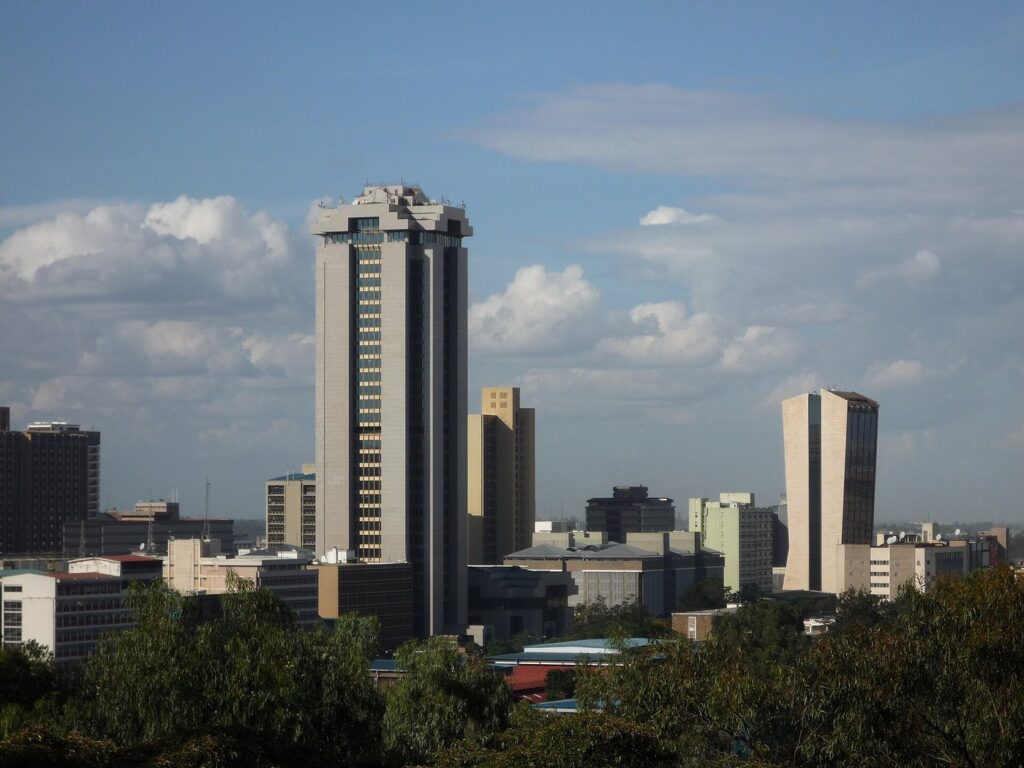
الصورة: أفق مدينة نيروبي، عاصمة كينيا — Lmwangi، ويكيميديا كومنز (CC BY-SA 3.0) — صفحة الصورة
كُتبت هذه المقالة في أوائل يناير 2008، ونُشرت في موقع «نقوش» القديم (nuqush.com).
استبشر الناس بالانتخابات الكينية وظن معظم المراقبين أنها ستكون نموذجا لانتخابات نزيهة نادرة الحدوث في أفريقيا ولكنها أسفرت عن تزوير مخل في اللحظات الأخيرة لتثبت أنها أفريقية وعالمثالثية في الصميم. وفور إعلان الفوز المفاجئ للرئيس السابق كيباكي والذي جاء عكس التوقعات التي بشرت بها النتائج الأولية في الدوائر الانتخابية، أعلنت المعارضة أن هناك تزويرا كبيرا وأنها لن تقبل بالنتيجة وستقوم بمظاهرات مليونية ضد هذه النتيجة. ووقفت الحكومة ضد هذه المظاهرات لتندلع أعمال عنف ما زالت مستمرة حصدت حتى الآن أكثر من 600 قتيل واتخذت منحى قبليا وأعطت مؤشرات لبداية حرب أهلية في كينيا كانت بمنأى عنها طوال هذه العقود منذ استقلالها 1963م رغم وقوع جارات لها في هذا المحظور، أولها أوغندا التي خرجت منها وبشكل ما إثيوبيا والسودان ثم الصومال التي لا تزال والغة فيها. فهل ستؤدي هذه الأحداث في كينيا إلى حرب أهلية وما هي خلفيات هذه الحرب وهل كينيا مؤهلة لذلك، وما هي سيناريوهات الحل؟
بالرغم من أن صندوق الاقتراع لم يكن غريبا على المواطن الكيني حتى في فترة الحزب الواحد، إذ عرفه عبر اختياره لممثليه في البرلمان من بين المنتسبين إلى الحزب الواحد. إلا أن الرؤساء الثلاثة الذين تناوبوا حكم كينيا منذ استقلاله 1963م حتى الآن، لم يأت سوى الأخير مواي كيباكي عبر صناديق الاقتراع. فالرئيس الأول جومو كينياتا جاء بشرعية نضاله ضد الاستعمار على غرار أكثر الرؤساء في العالم الثالث، والرئيس الثاني آراب موي جاء دستوريا بعد وفاة الرئيس الأول لكونه نائب الرئيس وفي أواخر عهده حدثت انشقاقات وتحالفات سياسية كان من رموزها الرئيس الحالي كيباكي وزعيم المعارضة الحالي رايلا أودينغا، وكلاهما ينتميان إلى القبائل الكبيرة، وخاضت نضالا سياسيا لإقرار التعددية الحزبية في كينيا، وتمكنت المعارضة من خوض معركة انتخابية فازت فيها، وكان المتفق عليه بين كيباكي وأودينغا اللذين خاضا المعركة مع بعض أن يسند إلى الأخير رئاسة الوزراء، وذلك ما لم يفِ به الرئيس كيباكي ما أدى إلى انشقاق معارضة جديدة تحت زعامة رايلا أودينغا باسم «الحركة الديمقراطية البرتقالية» التي خاضت المعركة الحالية وكادت تفوز لولا مفاجآت اللحظة الأخيرة التي لم تكن في الحسبان.
الجدير بالذكر هنا أن الجميع من رؤساء الحكومات وزعماء المعارضة كانوا في الأصل من الحزب الحاكم وهو حزب «كانو» الذي ناضل من أجل الاستقلال، إلا أن الانشقاقات التي بدأت في عهد آراب موي أدت إلى بروز أحزاب جديدة تحالفت ضد الرئيس موي.
القبيلة والسياسة
لم تكن المنافسة السياسية بعيدة عن الاستقطاب القبلي كما كان واضحا لكل من تابع الحملات الانتخابية الكينية، فالتنافس كان بين قبيلتي الرئيس وزعيم المعارضة ومحاولة كل منهما استقطاب القبائل الأخرى إلى جانبها.
فكينيا بلد فسيفسائي تسكنه 42 قبيلة أفريقية متعددة ذات أعراق متباينة، من بينها قبيلة الكيكويو ذات الثروة والسلطة والتي ينتمي إليها جومو كينياتا وكيباكي وتشكل 23% من عدد السكان البالغ عددهم حوالي 32 مليون نسمة، وقبيلة لويو وتشكل 11% من عدد السكان وينتمي إليها زعيم المعارضة الحالي رايلا أودينغا، وهناك قبائل أفريقية أخرى تقل نسبتها عن هاتين القبيلتين الكبريين ما عدا قبيلة لوهيا التي تتوسطهما 12%. إلى جانب ذلك هناك القبائل الصومالية في الشمال الشرقي، والسواحيلية في الشريط الساحلي وهي قبائل مسلمة وبعضها ذات أصول عربية، وجاليات آسيوية وأوروبية.
وحتى الخلافات السياسية التي حدثت في عهد موي كان أساسها قبليا إذ كانت قبيلة الكيكويو تسيطر على الاقتصاد والسلطة في البلاد منذ الاستقلال حتى الآن، ويليها في ذلك قبيلة اللويو. وقد حاول الرئيس دانيال آراب موي الذي ينتمي إلى قبيلة كيلينجيني التي تعتبر من القبائل الأقل عددا من القبائل الثلاث الكبرى «الكيكويو واللوهيا واللويو» والتي تتنافس على السيطرة السياسية، حاول العمل على تقوية القبائل الصغيرة أمام هيمنة القبائل الكبرى ما أغضب عليه الأخيرة وأثار نقمة زعمائها السياسيين ليخوضوا نضالا سياسيا ضده داخل الحزب الذي ينتمي إليه «كانو» ما أدى إلى انشقاقات كبيرة في الحزب.
الدين والسياسة
وإضافة إلى القبيلة التي كان لها حضور قوي في الانتخابات، كان اللافت في هذه الانتخابات الأخيرة التنافس على الصوت الإسلامي من قبل الجانبين. ويشكل المسلمون ما يزيد على 35 % تقريبا من سكان البلاد من شتى القبائل والبقية من الديانات الأخرى المسيحية والملل والنحل الوثنية الأفريقية، إلا أن المناطق ذات الكثافة الإسلامية هي الإقليم الشمالي الشرقي ومقاطعة الساحل. وكانت الزيارات المتكررة التي قام بها المرشحان للإقليم الذي يقطنه الصوماليون وعاصمة الساحل ممباسا والوعود الكثيرة التي قدمها كل منهما للمسلمين لكسب أصواتهم ظاهرة حظيت بتغطية إعلامية وعقدت حولها الندوات.
وانقسم المسلمون في دعمهم لمرشحي الرئاسة إلا أن المراقبين لاحظوا أن غالبية المسلمين أيدوا مرشح المعارضة رايلا أودينغا بسبب أنهم رأوا عدم وفاء من كيباكي بوعوده للمسلمين في الانتخابات التي فاز بها قبل خمس سنوات، إضافة إلى غضبهم من تسليم مسلمين كينيين إلى إثيوبيا بعد إلقاء القبض عليهم بتهمة خوضهم المعارك في صفوف المحاكم الإسلامية في الصومال ضد إثيوبيا في المعارك التي دارت بين الجانبين أواخر عام 2006م . كما أن «رايلا أودينغا» رفض مع كتلته التصويت لصالح قانون الإرهاب في البرلمان مما أدى إلى سقوط مشروع القانون.
ديمقراطية بين الفساد والفقر
حافظت كينيا منذ الاستقلال على استقرار ملحوظ على الرغم من التغييرات في نظامها السياسي والأزمات التي عصفت بالدول المجاورة. وقد تمتع الكينيون بدرجة من الحرية وأصبح ذلك ملحوظا أكثر منذ ظهور نظام ديمقراطي متعدد الأحزاب، ولا سيّما بعد المبادرة البرلمانية للإصلاح في خريف عام 1997 بتنقيح بعض القوانين القمعية الموروثة من الحقبة الاستعمارية التي كانت تستخدم للحد من حرية الكلام والتجمع. وساهم هذا التحسن في الحريات العامة في إضفاء المصداقية على انتخابات كانون الأول / ديسمبر 1997.
وقاد ذلك إلى انتخابات كانون الأول / ديسمبر 2002 حيث شهدت كينيا انتخابات ديمقراطية وصفت بالنزاهة من قبل المراقبين المحليين والدوليين وأفرزت مواي كيباكي كأول رئيس منتخب لكينيا. وكانت نقطة تحول هامة في تطور الديمقراطية في كينيا. وقد حقق الرئيس كيباكي إصلاحات في مجالي الاقتصاد والتعليم، اللذين وعد بهما ولكنه فشل في مجالين آخرين وعد بهما وهما تنفيذ الدستور الجديد ومحاربة الفساد المستشري.
إذ سار الإصلاح الدستوري بوتيرة أبطأ مما كان متوقعا بعد خلافات بين الشركاء في الائتلاف الحكومي، مما أدى إلى مشاجرات داخل الائتلاف وبالتالي أثرت سلبا على مجالات حيوية أخرى للحكم، لا سيّما خطط الخصخصة على نطاق واسع من المؤسسات المملوكة للحكومة.
وفي عهد كيباكي حدثت فضائح فساد أزكمت الأنوف. ففي أوائل عام 2006، كشفت تقارير التحقيق اثنتين من كبريات فضائح الفساد ذات الصلة بالحكومة، والتي هزت كينيا وأدت إلى استقالات، من بينها استقالة ثلاثة وزراء. أولاها عرفت باسم «Anglo-Leasing» والتي فشلت الحكومة في إجراء تحقيق نزيه فيها، وعلى إثره استقال جون جيثونجو رئيس مكافحة الفساد احتجاجا على عرقلة الحكومة للتحقيق وغادر البلاد ليعيش في المنفى، وكشف الكثير من الأدلة عن استشراء الفساد، وظهرت للوجود أشرطة سجلت لمحادثات لشخصيات فاسدة داخل مجلس الوزراء. ووجهت الدول المانحة، وخاصة بريطانيا انتقادات علنية لعدم إحراز تقدم في التحقيق.
وثانيها فضيحة كبيرة تنطوي على غسل الأموال والتهرب من دفع الضرائب في النظام المصرفي الكيني. ثم كانت غارة مجموعة الملثمين من الشرطة الكينية في مارس 2006 على مجموعة «ستندارد» الإعلامية، وقد قوبلت بإدانة دولية وبالغضب من جانب وسائل الإعلام الكينية والمجتمع المدني. ولم تقدم الحكومة أي تفسير كاف بل لم يتم محاسبة أحد على ذلك.
والفساد في كينيا متأصل منذ الاستقلال، وتعايشت معه الدول الغربية إذ لم تكن لديها الرغبة في الدخول في مواجهة مع النظام الحاكم، ما دامت تخدم مصالحها- كعادتها مع جميع الأنظمة الفاسدة في العالم الثالث – بل يؤمن الناس بأنها تعتقد أن أفضل من يخدم مصالحها هو بارونات الفساد.
فالمساعدات التي قدمت لكينيا منذ الاستقلال حتى الآن بلغت 16 مليار دولار، ولم يسأل أحد حول الكيفية التي استخدمت فيها هذه المساعدات التي لم تؤثر كثيرا على حياة الشعب الكيني الذي يعيش نصفه تحت خط الفقر و 85% منهم على إنفاق يقل عن دولارين في اليوم. والعاصمة نيروبي التي يقال عنها إنها «لندن أفريقيا» أو «نصف لندن» تضم إحدى أكبر مدن الصفيح في أفريقيا.
الحرب الأهلية وإمكانيتها
إذا كانت أسباب الحروب الأهلية هي التباينات القبلية والطائفية والعرقية وتداخل كل ذلك بالسياسة، إضافة إلى الفقر والتباين الطبقي وفساد أهل الحكم، فكينيا كما رأينا تتمتع بكل مقوماتها كسائر البلدان الأفريقية، ولكن هذه المقومات ليست كفيلة وحدها ما لم يكن هناك تحريض وإثارة لها واستخدامها لإشعال الحروب، وغالبا من قبل قوى خارجية ترغب في قلب الأوضاع لتتحكم في صياغتها فيما بعد. وهذا الأخير هو ما ليس متوفرا حتى الآن في كينيا.
فكينيا تعتبر صناعة استعمارية، أي أنه لم يكن هناك بلد اسمه كينيا قبل الاستعمار الغربي لهذه المنطقة، فهي عبارة عن أجزاء مقتطعة من البلاد المجاورة. [1. حتى اسم البلد مشتق من اسم استعماري لجبل في وسط البلاد، ففي 1849م شرع المبشر الألماني يوهان لودفيغ كرابف سعيه من مستوطنات الإرساليات التبشيرية في كيتوي للعثور على جبال، وكان يرافقه دليل وحمالون من قبيلة كامبا. وكما ذكر في يومياته اقتادتهم الرحلة إلى الأراضي التي تقطنها قبيلة أيمبو ودهش المبشر الألماني حينما رأى جبلا ، وصاح الحمال الكامبي مشيرا إلى الجبل قائلا: «kiima kii-nya» ومعناه في لغته (ذاك جبل)، ولكن المبشر لم يفهم ذلك بل ظن أنه يقصد بذلك أنه يشير إلى جبل يسمى كينيا، فسجل اسم الجبل بما نطق به الكامبي ومنه سمي الجبل في المراجع كلها باسم «جبل كينيا». أما الاسم المحلي للجبل فكان kirinyaga ، ولكن تم تجاهله واعتمد اسم المبشر الألماني وصار هو فيما بعد اسم البلد الجديد المصطنع] فنصفه الشمالي الشرقي مقتطع من الصومال، ونصفه الجنوبي مقتطع من تنجانيقا، وجزؤه الغربي من أوغندا، أما الشريط الساحلي فقد كان ضمن الإمبراطورية العمانية في شرق أفريقيا ثم أصبحت محمية ألمانية باتفاق مع السلطان العماني في زنجبار ثم انتقلت إلى بريطانيا في اتفاقية تبادل للمناطق الساحلية بين المستعمرين الألماني والبريطاني، وبقيت محمية بريطانية ألحقت بكينيا بعد الاستقلال.
ويرى الكثير من المراقبين أنها استطاعت الحفاظ على استقرارها منذ الاستقلال إلى هذا الوقت بسبب كونها تحت رعاية وعناية مستعمريها القدامى بسبب وجود مصالح كثيرة لهم في بقائها مستقرة. فأمريكا وأوروبا تعتبران كينيا حليفا استراتيجيا منذ أيام الحرب الباردة وبعدها في الحرب ضد الإرهاب، في منطقة طوقت بالشيوعية من قبل، وبترعرع خلايا إرهابية نشطة بعد ذلك قامت بهجمات ناجحة ضد المصالح الأمريكية في المنطقة.
واستقلت كينيا وفيها الكثير من الاستثمارات البريطانية، ثم سنت القوانين لتعزيز هذه الاستثمارات وانضم الأمريكان والألمان إلى جانب بريطانيا، وسياحيا تمتعت بسمعة ممتازة لدى الغربيين فصارت الوجهة الآمنة لمليون سائح أجنبي يقدمون سنوياً من أوروبا وأميركا الشمالية وآسيا.
وتعتبر من البلدان التي تستهوي المستثمرين الأجانب حيث يضخ المستثمرون الأجانب مبالغ ضخمة في مجالات متعددة تشمل قطاع المال والزراعة والسياحة والإعلام والتكنولوجيا إلخ .. أي أنها تشمل أكبر مصادر الدخل الوطني الكيني.
إضافة إلى ذلك تعتبر كينيا مقراً للكثير من المؤسسات والوكالات والمنظمات الدولية التابعة للأمم المتحدة وغيرها العاملة في المجالات التنموية المتعددة ولاسيما تلك التي تعمل في الصومال، وتمثل قاعدة لعمليات الإغاثة والمعونة إلى الصومال والسودان وشرق الكونغو. ومن بين هذه المؤسسات مؤسسات استخباراتية غربية، حتى إن بعض الناس يعتقدون أن كينيا تحكم من قبل الاستخبارات الغربية من وراء الكواليس.
لذا فمن الصعب ترك كينيا تغرق في حرب أهلية مثل البلدان الأفريقية الأخرى. وهذا ما يفسر التحرك الدولي السريع لاحتواء الأزمة، إذ تحرك الاتحاد الأفريقي والاتحاد الأوروبي وأمريكا بكل ثقلها لتدارك كرة الثلج التي بدأت تتدحرج. بل آثر القادة الأفارقة عدم التعليق على نتائج الانتخابات الكينية سعيا إلى عدم صب الزيت على النار، كما صرح الرئيس الجنوب أفريقي ثابو مبيكي. ودعا الاتحاد الأفريقي والاتحاد الأوروبي إلى «ضبط النفس» وإلى الحوار بين ممثلي الفريقين.
وفي هذا الإطار بدأت جولات مكوكية بين المعسكرين يقوم بها قادة أفارقة وأوروبيون ومسئولون رفيعو المستوى إلى كينيا في محاولة مستميتة لوضع حد للعنف وللوصول إلى حل يرضي جميع الأطراف. من بينهم أكبر دبلوماسي لواشنطن في أفريقيا جنداي فريزر وكبير الأساقفة ديزموند توتو الحائز على جائزة نوبل للسلام من جنوب أفريقيا، والرئيس الغاني جون كوفور رئيس الاتحاد الإفريقي الحالي. إضافة إلى عدد كبير أجرى اتصالات هاتفية مع الطرفين من بينهم الأمين العام للأمم المتحدة والقائد الليبي معمر القذافي.
ويرى المراقبون أن كل هذه الجهود وإرسال الولايات المتحدة مبعوثة خاصة إلى كينيا يعبر عن إرادة واشنطن عدم التخلي عن شريك استراتيجي يساهم في مكافحة الإرهاب وفي استقرار القرن الإفريقي. خصوصاً وأن أمريكا الآن تقوم ببناء قاعدة عسكرية كبيرة شرقي كينيا ولا تريد أي تهديدات أو عدم استقرار أو تغيير في عجلة القيادة في هذه المرحلة التاريخية في كينيا، ولذلك ارتكبت خطأ تهنئة الرئيس كيباكي لإقرار الأمر الواقع، قبل أن تضطر إلى سحبها بسبب نزول المعارضة إلى الشارع. وكانت حركة المد الشعبي أكبر حتى من «أودينغا» الذي ما كان يريد أن يدخل في مواجهة مع أمريكا.
إضافة إلى كل ما تقدم، فإن الحرب الأهلية في كينيا إذا بدأت لن تكتفي بكينيا بل ستؤثر في دول الجوار بدءا من جنوب السودان وشرق الكونغو ورواندا وبوروندي ومناطق من تنزانيا أيضا. كما ستمتد تأثيرات ذلك على دول كثيرة بالمنطقة تعتمد على كينيا في هياكلها الاقتصادية، ولا سيما تلك التي تعتمد بشكل شبه كامل على ميناء ممباسا ثاني أكبر ميناء في أفريقيا في توريد موادها الأساسية .
وقد بدأت الجهود تؤتي ثمارها حيث استجاب الطرفان للنداءات الدولية والإقليمية، فألغت المعارضة مظاهراتها المليونية التي وعدت بتسييرها، كما أبدت الحكومة استعدادها لتشكيل حكومة وحدة وطنية تمثل كل الكينيين.
السيناريوهات المحتملة
ما زالت الجهود تجري على قدم وساق، وإذا ما قدّر لها أن توقف الحرب الأهلية وهو المرجح حتى الآن، فإن السيناريوهات المطروحة هي:
السيناريو الأمريكي الأوروبي : وهو إنشاء حكومة وحدة وطنية، وهو الاحتمال الأرجح حتى الآن وهو الذي يتم طبخه من الأطراف الضاغطة على كينيا. ولكن تخريج هذا الحل ليرضي الطرفين هو ما يجري الحديث حوله الآن. والتخريج:
إما أن يكون بتعديل دستوري كان يطالب به أودينغا من قبل وهو استبدال النظام «الرئاسي» الذي يكون فيه رئيس الحكومة هو رئيس الدولة، إلى نظام «وزاري» يكون هناك رئيس وزراء يقوم بتشكيل الحكومة وتقلص فيه صلاحيات الرئيس، ويتم إسناد رئاسة الوزراء إلى أودينغا وهو المنصب الذي كان يسعى إليه من قبل.
وإما بإنشاء حكومة ائتلاف وطنية تحظى فيها المعارضة بمشاركة واسعة مصحوبة بأغلبية برلمانية وتأجيل تغيير الدستور إلى ما بعد التوافق. وهذا ما أبدى رئيس الحكومة كيباكي الموافقة عليه مع المبعوثة الأمريكية جنداي فريزر.
إعادة فرز الأصوات في النتائج الأخيرة وإعلان النتيجة الحقيقية تحت مراقبة دولية، وهذا ما تطالب به المعارضة، ولكن الأطراف الدولية ترى أن ذلك سيكون له انعكاس سلبي على المشهد السياسي و لن يسهم في إعادة الثقة بين الفرقاء السياسيين وقد يمتد بظلاله إلى مراحل قادمة.
تشكيل حكومة تصريف أعمال وإعادة إجراء الانتخابات بعد 3 -6 أشهر، وهذا ما تطالب به المعارضة. وهو سيناريو مستبعد إذ يرى الغربيون أن التوتر والاصطفاف الذي نشأ من هذه الانتخابات قد قسم الكينيين إثنيا أو قبليا وأي انتخابات قريبة من شأنها أن تعيد العنف إلى البلاد بشكل أسوأ ولن تساهم في جلب الهدوء والاستقرار المنشود. بذا تسعى إلى حل توافقي بين الزعماء السياسيين دون اللجوء إلى الشعب المتوتر.
جميع الجهود تسعى إلى تهدئة الأوضاع في الوقت الحالي وتجاوز مرحلة العنف، ولكنها أشبه بالمهدئات السياسية ولن تنزع أساس المشكلة التي هي فساد النخبة الحاكمة وتلك التي تسعى إلى الحكم، وآثار النظام الرأسمالي الغربي الذي خلق بونا شاسعا بين الطبقات فمعظم الشعب من الفقراء وتخدم أقلية من الأغنياء معظمهم من الأوروبيين والآسيويين والعرب، وهذا سيظل يكرس النقمة الكامنة ضد المترفين من قبل الأكثرية المستضعفة والمقهورة والتي ستنفجر يوما ما بطريقة أو بأخرى.
Kenya: Between a Democratic Paradise and the Omens of Civil War
Image: The skyline of Nairobi, capital of Kenya — Lmwangi, Wikimedia Commons (CC BY-SA 3.0) — Image page
This article was written in early January 2008 and published on the former Nuqush website (nuqush.com).
People greeted the Kenyan election with high hopes, and most observers expected it to be a model of the clean elections that Africa so rarely sees. Instead it ended in gross last-minute rigging, as if to prove that it was African and Third World to the core.1 As soon as the surprise victory of the incumbent, President Kibaki, was announced, against everything the early constituency results had promised, the opposition declared that there had been massive fraud, that it would not accept the result, and that it would bring a million people onto the streets against it. The government set itself against these demonstrations, and violence broke out that is still going on. It has so far claimed more than 600 lives, has taken a tribal turn, and has shown signs of the beginning of a civil war in Kenya, a country spared that fate through all the decades since its independence in 1963, even as its neighbours fell into that dreaded trap: first Uganda, which has since climbed out of it; then, in a way, Ethiopia and Sudan; and then Somalia, which is still mired in it. Will these events lead Kenya into civil war? What lies behind such a war, and is Kenya ripe for one? And what scenarios are there for a solution?
The ballot box was nothing new to Kenyans, even in the one-party era, when they used it to choose their members of parliament from among the members of the single party. Yet of the three presidents who have ruled Kenya since independence in 1963, only the last, Mwai Kibaki, came to power through the ballot box. The first, Jomo Kenyatta, came with the legitimacy of his struggle against colonialism, like most presidents in the Third World. The second, Daniel arap Moi, succeeded constitutionally on the death of the first, as his vice-president. Late in his rule came political splits and alliances whose leading figures included the present president, Kibaki, and the present opposition leader, Raila Odinga, both of whom belong to large tribes. These forces waged a political struggle for a multi-party system in Kenya, and the opposition was eventually able to fight an election and win it. Kibaki and Odinga, who had fought that battle side by side, had agreed that the premiership would go to Odinga. President Kibaki did not keep that promise, and a new opposition broke away under Raila Odinga's leadership as the “Orange Democratic Movement”.2 It is this movement that fought the present contest, and it would have won but for the last-minute surprises that nobody had reckoned with.
It is worth noting here that all of them, heads of government and opposition leaders alike, came originally from the ruling party, the Kenya African National Union (KANU), which had fought for independence. But the splits that began under arap Moi gave rise to new parties that allied against President Moi.
Tribe and Politics
Political competition was never free of tribal polarisation, as was plain to anyone who followed the Kenyan election campaigns. The contest was between the tribes of the president and of the opposition leader, each trying to draw the other tribes to its side.
For Kenya is a mosaic, home to 42 African tribes of differing ethnic stock. Among them are the Kikuyu, holders of wealth and power, to whom Jomo Kenyatta and Kibaki belong and who make up 23% of a population of some 32 million; and the Luo, who make up 11% and to whom the present opposition leader, Raila Odinga, belongs. The other African tribes are smaller than these two big ones, except the Luhya, who stand between them at 12%. Besides these there are the Somali clans in the north-east and the Swahili on the coastal strip, Muslim communities, some of them of Arab descent, as well as Asian and European communities.
Even the political quarrels of the Moi era were tribal at root, for the Kikuyu have dominated the country's economy and power from independence until now, followed by the Luo. President Daniel arap Moi, who belongs to the Kalenjin, counted among the tribes smaller than the three big ones (the Kikuyu, the Luhya and the Luo) that compete for political dominance, tried to strengthen the small tribes against the hegemony of the big ones. This turned the big tribes against him and roused the wrath of their political leaders, who waged a political struggle against him inside his own party, KANU, and so brought about major splits in the party.
Religion and Politics
Besides tribe, which had a strong presence in the election, what stood out in this latest election was the competition between the two sides for the Muslim vote. Muslims, drawn from every tribe, make up somewhat more than 35% of the country's population,3 and the rest follow other religions: Christianity and the various African pagan creeds and sects. The areas of dense Muslim population, however, are the North Eastern Province and Coast Province. The repeated visits both candidates paid to the Somali-inhabited province and to Mombasa, capital of the Coast, and the many promises each made to Muslims to win their votes, became a phenomenon that drew media coverage and was the subject of seminars.
Muslims were divided in their support for the presidential candidates, but observers noted that most of them backed the opposition candidate, Raila Odinga. They felt that Kibaki had not kept the promises he made to Muslims in the election he won five years earlier, and they were angry that Kenyan Muslims had been handed over to Ethiopia after being arrested on charges of fighting in the ranks of the Islamic Courts in Somalia against Ethiopia, in the battles between the two sides at the end of 2006.4 Raila Odinga and his bloc also refused to vote for the anti-terrorism bill in parliament, which brought the bill down.5
A Democracy Caught Between Corruption and Poverty
Since independence Kenya has maintained a remarkable stability, despite changes in its political system and the crises that have battered its neighbours. Kenyans have enjoyed a degree of freedom, which became more marked with the emergence of a multi-party democracy, and especially after the parliamentary reform initiative of autumn 1997, which amended some of the repressive laws inherited from the colonial era that had been used to curb freedom of speech and assembly. This improvement in public freedoms helped to lend credibility to the elections of December 1997.
That in turn led to the elections of December 2002, when Kenya held democratic elections that local and international observers described as fair, and which produced Mwai Kibaki as Kenya's first elected president. It was an important turning point in the development of Kenyan democracy. President Kibaki carried out the reforms he had promised in the economy and education, but failed in two other areas where he had made promises: implementing the new constitution and fighting rampant corruption.
Constitutional reform moved more slowly than expected after disagreements among the partners in the governing coalition. These led to quarrels within the coalition, which in turn hurt other vital areas of government, especially the plans for large-scale privatisation of state-owned enterprises.
Kibaki's rule saw corruption scandals that stank to high heaven. In early 2006 investigative reports exposed two of the biggest government-linked corruption scandals, which shook Kenya and led to resignations, among them those of three ministers. The first, known as “Anglo-Leasing”, was one the government failed to investigate honestly. In its wake John Githongo, the head of the anti-corruption drive, resigned in protest at the government's obstruction of the inquiry and left the country to live in exile.6 He revealed a great deal of evidence of how far corruption had spread, and tapes came to light recording conversations of corrupt figures inside the cabinet. Donor countries, especially Britain, publicly criticised the lack of progress in the investigation.
The second was a huge scandal involving money laundering and tax evasion in the Kenyan banking system. Then, in March 2006, came the raid by a band of masked Kenyan police on the Standard media group, which met with international condemnation and with anger from the Kenyan media and civil society. The government offered no adequate explanation; indeed, no one was ever held to account for it.
Corruption in Kenya has been entrenched since independence, and the Western countries have lived with it, having no wish to confront the ruling regime as long as it served their interests, as is their habit with every corrupt regime in the Third World. Indeed, people believe the West thinks that the barons of corruption are the ones who serve its interests best.
The aid given to Kenya from independence to date has reached 16 billion dollars, and no one has asked how it was used. It has done little to change the lives of the Kenyan people, half of whom live below the poverty line and 85% of whom spend less than two dollars a day. And the capital, Nairobi, said to be “the London of Africa”, or “half a London”, contains one of the largest shanty towns in Africa.
Civil War: Is It Possible?
If the causes of civil wars are tribal, sectarian and ethnic differences and their entanglement with politics, together with poverty, class disparity and the corruption of those in power, then Kenya, as we have seen, has every ingredient, like other African countries. But these ingredients are not enough on their own unless someone stirs them up, inflames them and uses them to ignite war, most often outside powers that want to overturn the situation so as to control how it is reshaped afterwards. And this last ingredient is what is still missing in Kenya.
Kenya is regarded as a colonial creation: there was no country called Kenya before Western colonisation of the region. It is a patchwork of pieces cut from neighbouring lands.78 Its north-eastern half was cut from Somalia,9 its southern half from Tanganyika, and its western part from Uganda. The coastal strip, for its part, was part of the Omani empire in East Africa. It then became a German protectorate by agreement with the Omani sultan in Zanzibar, passed to Britain in an exchange of coastal territories between the German and British colonisers, and remained a British protectorate that was joined to Kenya after independence.10
Many observers believe that Kenya has managed to remain stable from independence until now because it has been under the care and protection of its former colonisers, who have many interests in keeping it stable. America and Europe have regarded Kenya as a strategic ally since the days of the Cold War, and afterwards in the war on terror, in a region once ringed by communism and later by the growth of active terrorist cells that carried out successful attacks on American interests in the region.11
Kenya became independent with a great deal of British investment in place. Laws were then passed to encourage that investment, and the Americans and Germans joined the British. As for tourism, Kenya enjoyed an excellent reputation among Westerners and became a safe destination for a million foreign tourists who come every year from Europe, North America and Asia.
It is also counted among the countries that attract foreign investors, who pour huge sums into many fields, including finance, agriculture, tourism, the media, technology and so on; in other words, into the largest sources of Kenya's national income.
Kenya is, moreover, home to many international institutions, agencies and organisations, belonging to the United Nations and others, that work in various fields of development, especially those working in Somalia, and it serves as a base for relief and aid operations into Somalia, Sudan and eastern Congo. Among these institutions are Western intelligence agencies, so much so that some people believe Kenya is ruled from behind the scenes by Western intelligence.
It would therefore be hard to let Kenya sink into civil war like other African countries. This explains the swift international move to contain the crisis: the African Union, the European Union and America, with all its weight, moved to stop the snowball that had begun to roll. African leaders even chose not to comment on the results of the Kenyan election so as not to pour oil on the fire, as the South African president, Thabo Mbeki, stated. The African Union and the European Union called for “restraint” and for dialogue between representatives of the two camps.
Within this framework, African and European leaders and senior officials began a shuttle diplomacy between the two camps, travelling to Kenya in a desperate attempt to end the violence and reach a solution acceptable to all sides. Among them were Washington's top diplomat for Africa, Jendayi Frazer; the South African Archbishop Desmond Tutu, winner of the Nobel Peace Prize; and the Ghanaian president, John Kufuor, current chairman of the African Union. In addition, a great many others telephoned both sides, among them the Secretary-General of the United Nations and the Libyan leader, Muammar Gaddafi.
Observers believe that all these efforts, and the dispatch of a special US envoy to Kenya, express Washington's determination not to abandon a strategic partner that helps in fighting terrorism and in keeping the Horn of Africa stable. This is all the more so because America is now building a large military base in eastern Kenya12 and wants no threats, no instability and no change of hands at the wheel at this historic stage in Kenya. That is why it made the mistake of congratulating President Kibaki, endorsing the fait accompli, before being forced to withdraw its congratulations when the opposition took to the streets. The tide of popular feeling was greater even than Odinga, who had no wish to enter into a confrontation with America.
Beyond all this, a civil war in Kenya, once begun, would not stop at Kenya. It would affect the neighbouring countries, starting with southern Sudan, eastern Congo, Rwanda and Burundi, and parts of Tanzania too. Its effects would also reach many countries in the region whose economies depend on Kenya, especially those that rely almost entirely on the port of Mombasa, the second-largest port in Africa, for their basic supplies.
The efforts have begun to bear fruit, as both sides have responded to international and regional appeals. The opposition has called off the million-strong demonstrations it had promised to stage, and the government has shown its readiness to form a government of national unity representing all Kenyans.
Possible Scenarios
The efforts are still in full swing. If they are destined to stop a civil war, which still seems the likelier outcome, the scenarios on the table are these:
The American–European scenario: a government of national unity. This is the likeliest possibility so far, and it is the one being cooked up by the powers pressing on Kenya. What is now being discussed is how to frame this solution so that it satisfies both sides. It may be framed in one of two ways:
Either by a constitutional amendment that Odinga had demanded in the past: replacing the “presidential” system, in which the head of government is the head of state, with a “ministerial” system, in which a prime minister forms the government and the president's powers are reduced, and giving the premiership to Odinga, the post he had sought before.13
Or by forming a national coalition government in which the opposition has a broad share together with a parliamentary majority, with constitutional change postponed until a consensus is reached. This is what Kibaki, as head of government, indicated he would accept in his talks with the US envoy, Jendayi Frazer.
A recount of the votes in the final results and the announcement of the true result under international supervision. This is what the opposition is demanding, but the international parties believe it would have a negative effect on the political scene, would do nothing to restore trust among the political rivals, and might cast its shadow over the stages to come.
A caretaker government, with the election rerun after three to six months. This, too, is what the opposition is demanding. It is an unlikely scenario, since Western governments believe that the tension and polarisation this election produced have divided Kenyans along ethnic or tribal lines, and that any early election would bring violence back to the country in a worse form and would do nothing to bring the calm and stability hoped for. The West is therefore seeking a consensual solution among the political leaders, without recourse to an agitated people.
All these efforts aim to calm the situation for now and get past the violence, but they are more like political sedatives. They will not pull out the root of the problem, which is the corruption of the ruling elite and of those seeking to rule, and the legacy of the Western capitalist system, which has opened a vast gulf between the classes: most of the people are poor and serve a rich minority, most of them Europeans, Asians and Arabs. This will go on feeding the resentment that the weak and downtrodden majority harbours against the pampered few, and one day, in one way or another, it will explode.
Notes
- Kenya's general election was held on 27 December 2007. On 30 December the Electoral Commission declared Mwai Kibaki re-elected over Raila Odinga, although early returns had put Odinga well ahead, and local and foreign observers reported serious irregularities in the tally. The violence that followed eventually killed more than 1,100 people and displaced some 600,000. The article was evidently written in the first weeks of January 2008, at the height of the crisis, although the old site dated it 23 December 2008. ↩
- Multi-party politics was restored in 1991, and Moi won the elections of 1992 and 1997 against a divided opposition. In 2002 the opposition united as the National Rainbow Coalition (NARC) behind Kibaki, with Odinga, who had broken away from KANU, as a key ally; a pre-election memorandum of understanding was widely read as promising him a new post of prime minister. The rift came into the open in the 2005 constitutional referendum, when Odinga's camp, campaigning under the orange that was the symbol of the “No” vote, defeated the government's draft. The Orange Democratic Movement (ODM) grew out of that campaign. ↩
- Kenya's official census figures put Muslims at around a tenth of the population; Muslim organisations have long claimed a far larger share, and the author's figure reflects such estimates. ↩
- In early 2007 Kenya detained scores of people who had crossed the border from Somalia after the Ethiopian-backed offensive against the Islamic Courts, and secretly deported dozens of them, including Kenyan citizens, to Somalia, from where many were taken to Ethiopia. The renditions, exposed by human rights groups, caused outrage among Kenyan Muslims. ↩
- Kenya's proposed anti-terrorism legislation, first published as the Suppression of Terrorism Bill in 2003 under Western pressure after attacks on Kenyan soil, was fiercely opposed by Muslim leaders and civil-rights groups, who saw it as aimed at Muslims, and it was not enacted during Kibaki's first term. ↩
- Anglo-Leasing was a web of security contracts worth hundreds of millions of dollars awarded to phantom companies. John Githongo, Kibaki's Permanent Secretary for Governance and Ethics, resigned in 2005 and, from exile in Britain, released in early 2006 a dossier and recordings implicating senior ministers. ↩
- Author's note: Even the country's name derives from a colonial name for a mountain in the centre of the country. In 1849 the German missionary Johann Ludwig Krapf set out from the missionary settlements at Kitui in search of mountains, accompanied by a guide and porters of the Kamba tribe. As he records in his journal, the journey brought them into the lands of the Embu tribe, and the missionary was astonished at the sight of a mountain. The Kamba porter pointed at it and cried out, “kiima kii-nya”, which in his language means ‘that is a mountain’. But the missionary did not understand; he thought the man was pointing to a mountain called Kenya, and recorded the mountain's name as the Kamba had pronounced it. That is why the mountain is called “Mount Kenya” in all the sources. Its local name was Kirinyaga, but this was ignored, and the German missionary's name was adopted and later became the name of the new, artificial country. ↩
- This is one popular version of the story. The name is more usually traced to the Kamba name for the mountain, Kĩĩnyaa, and the Kikuyu Kĩrĩnyaga, which Krapf recorded as “Kenia”. ↩
- The former Northern Frontier District, inhabited largely by ethnic Somalis. On the eve of Kenya's independence a British commission found that most of its people wished to join the Somali Republic, but Britain handed the territory to Kenya, and the Shifta War of 1963–67 followed. ↩
- The ten-mile coastal strip belonged to the Sultan of Zanzibar. After the Anglo-German Heligoland–Zanzibar Treaty of 1890 settled the two powers' spheres on this coast, Britain administered it as the Protectorate of Kenya, nominally under the Sultan's sovereignty, until it passed to independent Kenya in 1963. ↩
- In the 1970s and 1980s Kenya's neighbours Ethiopia, under the Marxist Derg, and Somalia, under Siad Barre until his break with Moscow in 1977, were aligned with the Soviet bloc. The attacks on American interests are chiefly the 1998 bombing of the US embassies in Nairobi and Dar es Salaam; in 2002 a hotel near Mombasa was also bombed and a missile fired at an Israeli airliner. ↩
- Probably the US facility at Manda Bay, near Lamu on the Kenyan coast (Camp Simba), which American forces had been using and expanding since the early 2000s for counter-terrorism operations in the region. ↩
- What the author calls a “ministerial” system (niẓām wizārī) is what English calls a parliamentary system. It was in effect the outcome: the National Accord of 28 February 2008, mediated by Kofi Annan, created the post of prime minister for Odinga in a grand coalition under Kibaki. ↩
English translation prepared by artificial intelligence and reviewed against the Arabic for accuracy of meaning and rhetoric.