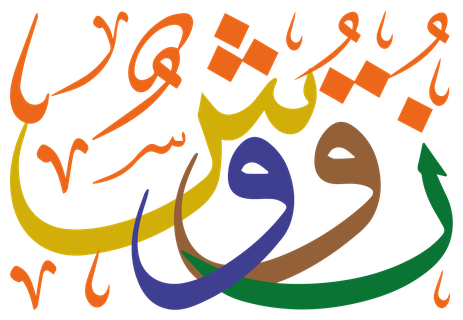
تَقُولُ: إِذَا بَدَا بَدْرِي تَرَانِيكَمَا تَهْوَى وَلَنْ يَخْفَى عِيَانِي
وَلَمَّا أَنْ تَجَلَّتْ فِي بَهَاهَاصَعِقْتُ وَلَمْ يَعُدْ عِنْدِي اتِّزَانِي
وَمُنْذُئِذٍ وَرُوحِي فِي شَتَاتٍتُحَاوِلُ أَنْ تُجَمِّعَنِي بِشَانِي
بِنُورِ الْقَلْبِ أُدْرِكُهَا فَأَحْظَىبِأَبْهَى مَا يَكُونُ مِنَ الْعِيَانِ
«تَرَانِي» قَدْ تُفَسَّرُ فِي الْمَعَانِيبِتَحْقِيقِ الْحُرُوفِ بِ «لَنْ تَرَانِي»
You Will See Me = You Will Not See Me1
- She says: “When my full moon appears, you'll see me
just as you wish; my face won't hide from your sight.” - But when she revealed herself in all her splendour,
I fell struck senseless2, and my balance took flight. - And ever since, my soul has lain in scattered pieces,
trying to gather me back into myself and set me right. - By the heart's light I perceive her, and so am granted
the loveliest of all that meets the sight3. - “You will see me” may be read, in its meanings,
once its letters are truly weighed4, as “You will not see me.”
Notes
- The title and the poem play on the Qurʾanic story of Moses, who asked God, ‘My Lord, show Yourself to me, that I may look upon You’, and was answered: lan tarānī, ‘You will not see Me’ (Qurʾan 7:143). The beloved here promises the opposite, tarānī, ‘you will see me’, and the poem ends by showing that the promise comes to the same thing as the refusal. ↩
- In the Qurʾanic verse, ‘when his Lord revealed Himself (tajallā) to the mountain, He made it crumble to dust, and Moses fell down struck senseless (ṣaʿiqan)’. The poet uses the same two words, tajallat and ṣaʿiqtu: the beloved’s appearing overwhelms him as the theophany overwhelmed Moses. ↩
- Sufi thought holds that what the eye cannot bear, the heart may see by an inward light. Having lost his senses at the sight of her, the lover gains a truer vision within. ↩
- Taḥqīq al-ḥurūf means examining the letters closely; in Sufi usage taḥqīq is also ‘realisation’, grasping a truth from within. The conclusion is paradoxical: ‘you will see me’ turns out to mean ‘you will not see me’, because the sight she promised is one that the eye cannot survive, and only the heart can receive. ↩
English translation prepared by artificial intelligence and reviewed against the Arabic for accuracy of meaning and rhetoric.